Campaign history
Since 1984, the image of the Marca España tourism brand has been associated with the famous Sol de Miró, the Spanish tourism logo that has since been used in the advertising campaigns organised by Turespaña. This logo was created in 1983 by Joan Miró, who offered it free of charge to the Spanish government for the promotion of Spain abroad. It continues to serve as a global benchmark, having been imitated by a variety of countries. Between this logo being adopted and the launch of the current “Spain is part of you” campaign in 2017, nine advertising campaigns were launched communicating a modernised image of Spain to turn it into a leading tourist destination.
Until the end of the 1960s, advertising was aimed mainly at cultural tourism, visitors from upper classes, rather than a specific seasonal or geographical location. These were the years of “Spain is different”, a slogan that has become legendary in the history of advertising in our country. Subsequently, and until practically the end of the 70s, advertising focussed in particular on sun, sand and partying, pursuing a more recreational and popular form of tourism.
Spain. Everything under the sun (1984-1990)
In 1984, the advertising campaign was launched with the slogan "Everything under the sun", possibly one of the most brilliant, long-lasting (it was used for nine years) and effective in recent Spanish advertising. The campaign focusses mainly on sun, sea and sand tourism, developed under the “Everything New Under the Sun” slogan, marking a shift towards a more diversified and higher quality promotion of the destination.

Passion for life (1991-1994)
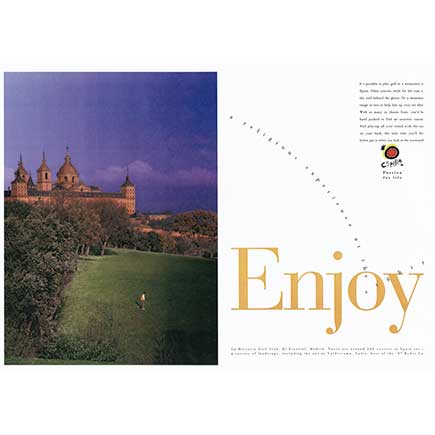
In 1991, the new “Passion for life” slogan evoked an increasingly active and lively tourism, reflecting our passionate character that encourages those who visit us to enjoy their holidays. Spain was shown as a destination that responded to the visitor's pursuit of different experiences and emotions.
Spain By (1995-1997)
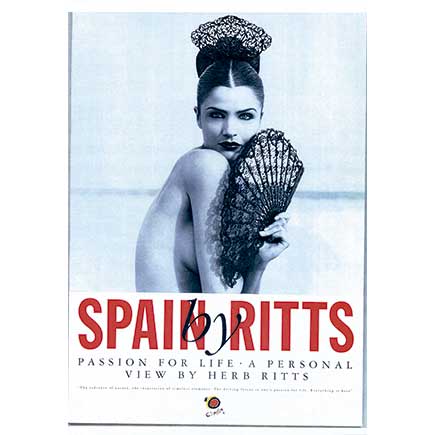
Campaign in which some of the most renowned photographers in the international market interpret their vision of Spain. Images by Herb Ritts, Elliot Erwitt and Annie Leibovitz show a different and impressive country with style. Towards the end of this campaign, under the same slogan, less personal images were used although they had a very careful aesthetic, which more clearly reflected the diversity of the destination's attractions.
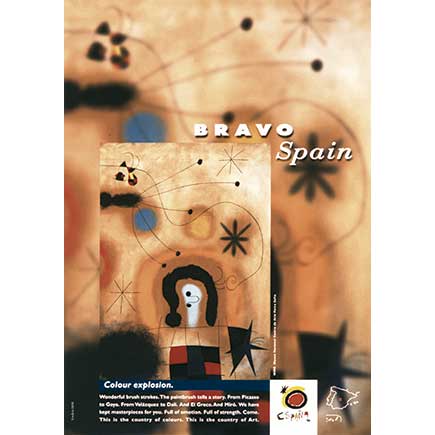
Bravo Spain (1998-2001)
In 1998, a new communication campaign was created with a resounding and memorable slogan - “Bravo Spain” - which is easy to pronounce and the same in all languages. It conveyed an image of Spain as a modern country, boasting quality and diversity, which sought to attract alternative visitors to those looking for sun, sea and sand options, attracting tourism with greater spending capacity.
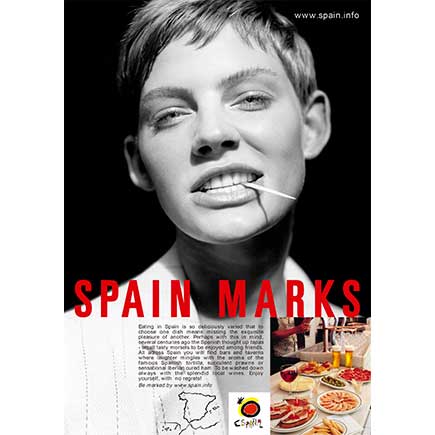
Spain marks (2002-2003)
A groundbreaking advertising campaign, which bases its creative axis on considering Spain as a tourist destination with its own personality, a way of understanding life that does not leave visitors indifferent, who will remember their experience for the rest of their lives. This original campaign, with a little douse of irony and packed with aesthetic beauty, featured black and white images that contrasted with the slogan superimposed in red.
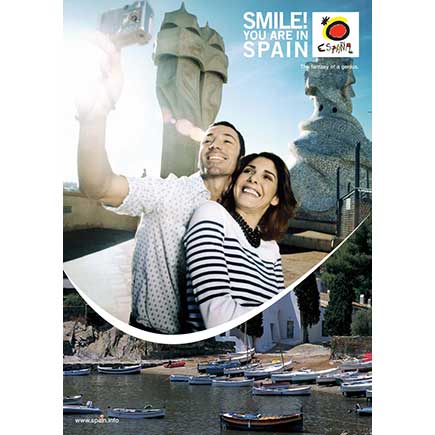
Smile! You are in Spain (2004-2009)
A campaign that highlights the emotional and friendly component of visiting Spain, the fun and relaxed nature of the experience, whose images stand out with the trace of a smile. This emphasised the way of life and lifestyle in Spain, relaying value of Spanish culture and customising the diversity of its attractions. From a creative perspective, it was a conservative campaign that captured casual moments enjoyed by foreign tourists on their visit to Spain.
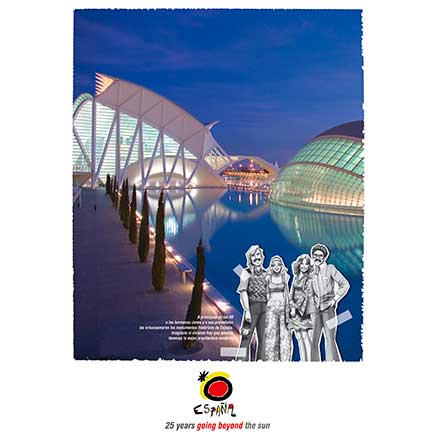
Spain. 25 years beyond the sun (2008)
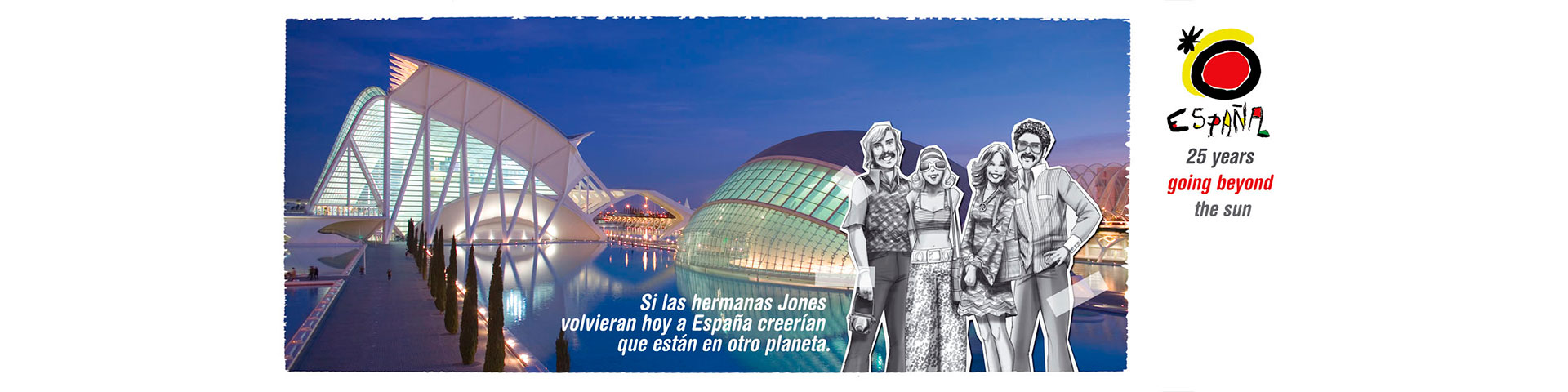
In 2008, Turespaña commemorated 25 years of the Spanish tourism logo, created by Joan Miró, with a dedicated campaign that ran for three months alongside the general campaign. The aim of this advertising campaign was to enhance our image as a first-class tourist destination. The creative concept was a "journey through time" in which tourists from 25 years ago enjoy modern-day Spain and its main attractions: sun and beaches, gastronomy, culture, contemporary architecture, and shopping.
I need Spain (2010-2016)
A study on the positioning of the Marca España tourism brand performed in 2009 revealed that Spain remained in a solid position as a tourist destination throughout Europe, although it was always excessively associated with sun, sea and sand tourism. At the same time, this study confirmed Spain's weak position in emerging markets, in particular in Asia.
This led to the adoption of a new strategy based on a dual objective: the repositioning of the Spain brand in European markets, to showcase the diversity of Spain's tourism offerings; and the positioning of the Spain tourism brand in emerging markets, with the aim of strengthening its visibility in high-potential markets where it was less well known.
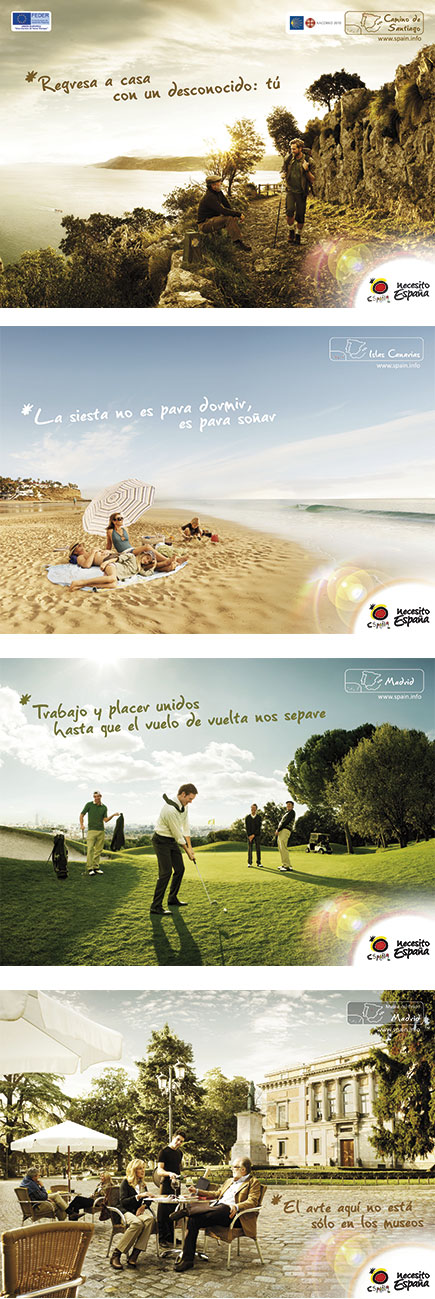
With this in mind, the I Need Spain campaign was launched in 2010, which aimed to renew the image of Spain as a tourism brand based on one of its main assets: Spanish lifestyle.
The campaign's graphic, audiovisual and online formats involved internationally renowned photographers, including Erik Almas and Ale Burset, filmmakers such as Julio Medem, and the collaboration of brand ambassadors from the world of gastronomy, such as Ferrán Adrià, and sport, including Gisela Pulido and Spain's national football and basketball teams.
The aim of the campaign was to reflect the diversity of Spanish tourist destinations and products through a wide range of visuals and spots. It was also the first campaign to include creative materials exclusively designed for the Asian market.
The campaign was developed around two main creative lines: one linked to a differentiation campaign, and the other linked to a segmentation campaign. The first involved the creativity inherent to an image campaign in which the aim was to show Spanish lifestyle as a differentiating factor of Spain as a tourist destination. The second saw creativity associated with a product campaign to reflect the different elements that are part of the product portfolio being promoted by Turespaña.
Spain Addicts 2011
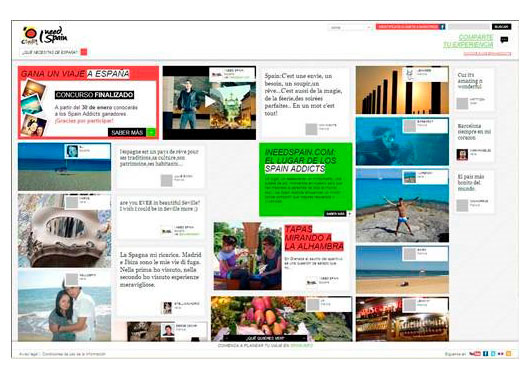
With a view to reinforcing the advertising strategy in conventional media, in June 2011, Turespaña launched a communication campaign in digital media structured around the fact that Spain ranks first in the world for visitor loyalty, with more than 85% of the 53 million foreign visitors to Spain returning to visit us. This was reflected in social media, which the campaign drew on by offering users the opportunity to become ambassadors for Spain as a brand by sharing their personal experiences. To this end, www.ineedspain.com was set up, where tourists could share photos, videos and messages about their experiences.
Spain is part of you (2017-2020)
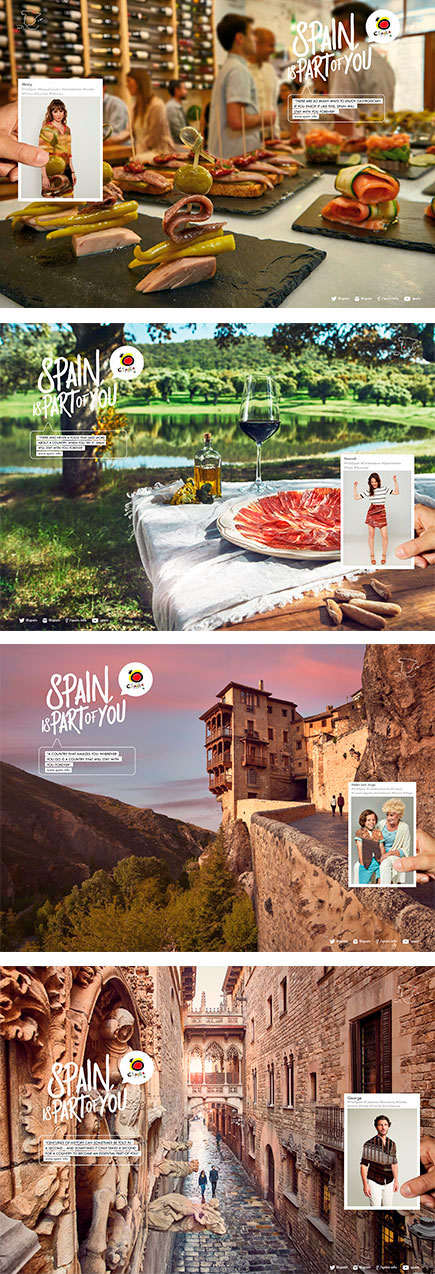
The international advertising campaign: "Spain is part of you" was designed with the main objective of promoting quality tourism in our country by targeting a very specific audience: the cosmopolitan tourist. This target audience is understood as a trendsetting consumer, with a high propensity to spend at their destination, and with a strong affinity for experiential activities: art and culture, shopping, food and wine, urban tourism, nightlife, and charming routes and itineraries.The campaign slogan, “Spain is part of you,” refers to how a trip to our country leaves a lasting impression on tourists, so that a part of their visit—be it a place, a product, or an experience—remains with them long after they leave. This idea is reflected in the visuals, which present a destination or situation with superimposed “Polaroid” photographs in which tourists appear to have pieces of the background clinging to their clothes or figures.This campaign aimed to attract the aforementioned cosmopolitan tourist by showcasing a more aspirational and welcoming image of Spain, pursuing three basic objectives:- To be relevant, appealing directly to each source market. This was the first campaign that was not only translated but also culturally adapted to each source market, with changes to the messages, actors, and backgrounds.- To be credible, showing a real Spain, not so well-known to our target segment, but presenting a captivating and aspirational image of Spain, far removed from typical, conventional portrayals. The campaign showcases a multitude of locations throughout our country, allowing potential international travellers to broaden and refine their understanding of Spain.- To offer diversity within a unique and high-quality experience, satisfying the diverse motivations of the tourists who visit us. To this end, the campaign materials tailor the messages to the interests of our potential tourists, including a wide range of tourism products and experiences.
Back to Spain (2020)
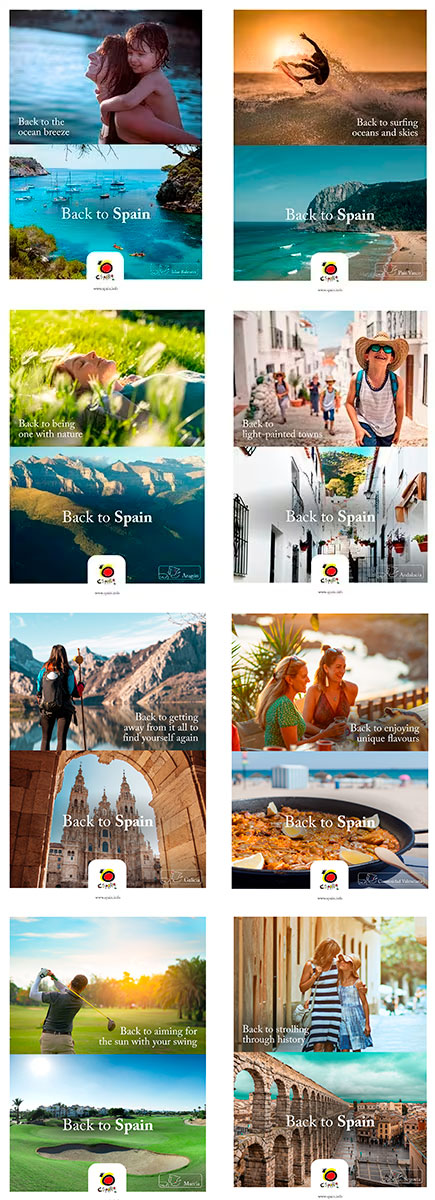
In 2020, the world suffered a health, economic, and social crisis with an unprecedented impact on the tourism sector. Spain, the world's leading holiday destination, felt the effects of the pandemic even more severely. To mitigate these devastating effects, Turespaña launched an advertising campaign in the summer of 2020, tailored to this critical and unprecedented moment, unlike anything experienced in recent decades.Given the widespread reluctance of tourists to travel abroad and the enormous difficulties long-distance travel presented at that time, the campaign targeted European tourists, a familiar market where 50% have visited multiple times and are therefore familiar with the country and likely to return.“Back to Spain” was aimed at the type of tourist who feels Spain is their second home, those who have an emotional connection to Spanish destinations, where they have had unique and unforgettable experiences, and where they hold their fondest memories. For these tourists, Spain is synonymous with going on holiday, the best time of the year has arrived, and it's time to return to Spain.The campaign focuses on highly emotional creativity. Each piece conveys the emotions that tourists long for and relive in our country, emotions even more vivid after the difficult months of the pandemic. Spain offers them relaxation, tranquility, fun, a chance to disconnect, and the enjoyment of "their time and their loved ones."The campaign consisted of 10 graphic pieces that reflect the diversity and richness of our tourism offerings, attributes, and destinations, targeting different audiences with diverse socio-demographic and motivational profiles.The campaign was primarily disseminated through digital media to achieve greater precision in the message’s reach, adapting it to both the country of origin and the target audience, and showcasing the most relevant creative elements. The digital strategy was complemented by advertisements in print media and on social networks to communicate to international tourists that: “we are waiting for you, its time for you to come back.”
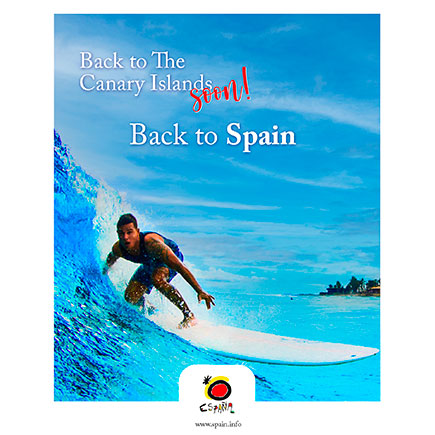
Back to the Canary Islands
In autumn 2020, following the opening of safe tourist corridors between the Canary Islands and different European source markets, the campaign concept was adapted to focus on the Canary Islands as a safe destination.
Aimed at mature European markets, its graphic materials reflect the breadth of the Canary Islands' tourism offerings, targeting the following demographics: sun and beach relaxation, sun and beach sports, lifestyle, and nature.
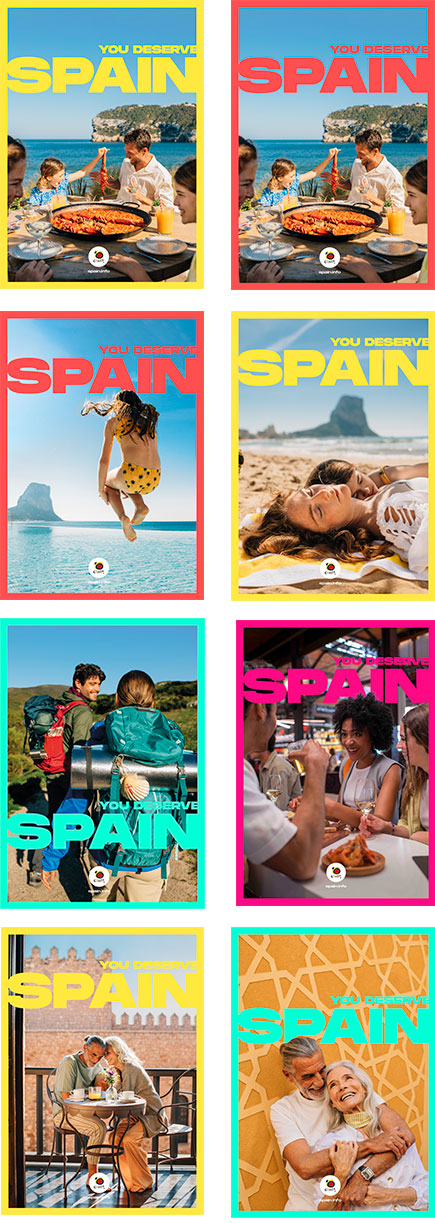
You Deserve Spain (2021-2024)
The ‘You Deserve Spain’ campaign responded to the exceptional situation caused by the pandemic and was designed to reinforce Spain's position as the leading holiday destination for key source markets. Its objective was clear: to achieve a rapid and robust recovery of international tourism activity starting in the summer of 2021.In its first phase, its main challenge was to attract international tourists by overcoming three obstacles: deciding to travel, travelling abroad, and ultimately, choosing Spain as their holiday destination. "You deserve Spain" was synonymous with trust, safety, and quality—three attributes that encouraged travel to our country. The campaign emphasised the benefits of visiting Spain for tourists: because coming to Spain is a real holiday, a place to enjoy and relax without worries.The creative approach of this campaign, primarily video-based, targeted four different audiences (young people, adults, families, and seniors) and revolved around situations experienced during lockdown, which were transformed into extraordinary moments enjoying unique holidays in different environments: sun and beach, the Camino de Santiago, urban or inland settings, and nature.In May 2022, the campaign moved into its second phase with a new campaign, “You Deserve Spain,” which evolved with the specific objective of advancing economic recovery and maintaining Spain's leadership as a holiday tourist destination. The “You Deserve Spain” concept brought a renewed approach, adapted to the new situation. With this in mind, its creative approach appeals to positive emotions and focuses on unique moments for enjoying unforgettable holidays in Spain.The protagonists of the new creative pieces in this campaign are young people, adults, families, and seniors who are now fully enjoying different parts of the country: major urban destinations, natural landscapes and the Camino de Santiago, Mediterranean beaches, and inland cities.