
A route among forums, mosaics and Roman villas of Navarre
Guided tours, water engineering and tastings allow visitors a glimpse into the everyday life of ancient Hispania
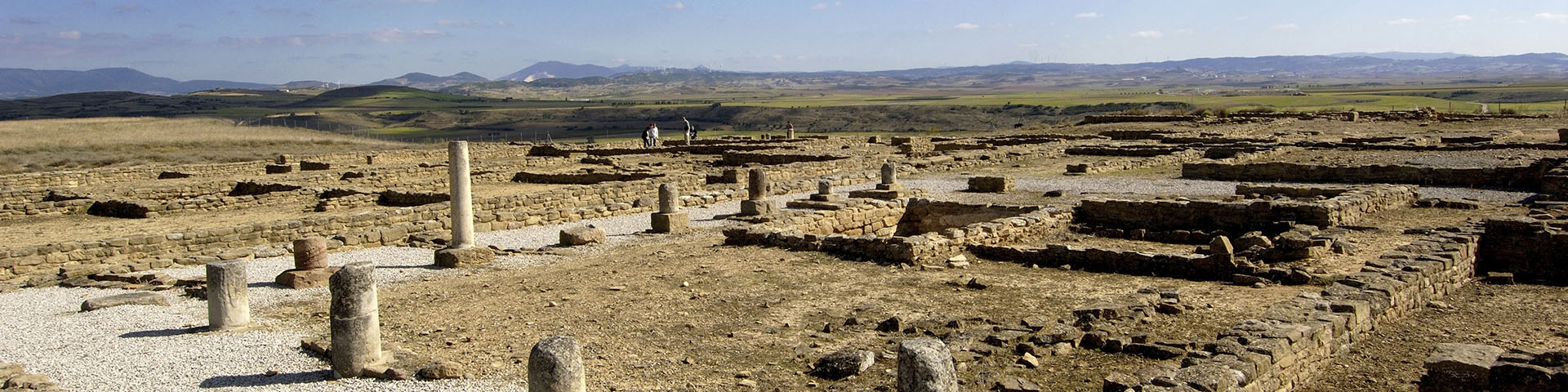
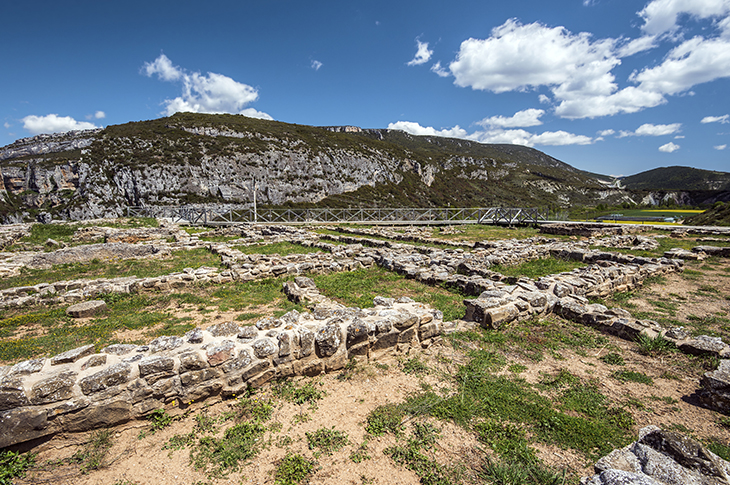
The forums of Santa Criz, the water engineering at Andelos and the villas of Arellano and Liédena trace a route through Roman Navarre, connecting cities, agricultural estates and vineyard landscapes. Between guided tours, mosaics and tastings at an archaeological site, the route gives an insight into the daily life of ancient Hispania and finishes off the experience in Pamplona, where the Museum of Navarre preserves pieces from this heritage. Following the course of the water is a way to delve into the past of Andelos. Mendigorría preserves remnants of a system of catchment, conveyance and distribution with reservoirs, dams and aqueducts. Andelos reached its full glory during the 1st and 2nd centuries A. D. Its baths and paved streets laid out along the cardo and decumanus axes help recognize the city's organization. The archaeological museum associated with the site allows for a deeper understanding of the day-to-day life of a settlement that depended on this hydraulic network. In Arellano, near Estella, history changes scale, taking guests to a rural estate. The Villa of the Muses, inhabited between the 1st and 5th centuries A. D., takes its name from the mosaic of the nine goddesses, the original of which is preserved in the National Archaeological Museum. The winery, cistern and residential quarters allow us to learn about both its agricultural activity and its later transformation into a luxurious country residence. The site is partially accessible for people with reduced mobility. Wine also accompanies the stop at Santa Criz de Eslava. Among hills and vineyards, the remains of the monumental forum, the necropolis and the domestic structures allow the exploration of a further Roman city. The visitor centre rounds out the informative walk with a selection of pieces, scale models and learning resources. The Eslava and wine experience adds a tasting at the site itself, a visit to the exhibition space and a guided tour of Bodega Eslava to learn about its production process. With the Foz de Lumbier gorge in the background, Liédena still preserves the traces of a villa that featured over fifty rooms surrounding a central courtyard. The olive oil mill, wine press, baths and dwellings were part of an estate that produced grains, wine and oil and maintained its own livestock. Access is open to all and free of charge, and a wooden walkway furnished with informative panels accompanies the observation of the ruins.
Pamplona adds the history of ancient Pompaelo to the route. In the year 75 B. C., Pompey the Great established the Roman city on top of a Vascon settlement located near the present-day cathedral. Its organization included streets fanning out from the cardo and decumanus, a forum, a market and baths. Beneath the old town, archaeological finds allow visitors to learn about the settlement that preceded the current city. At the Museum of Navarre, the tour continues among pieces that are no longer preserved in their original archaeological sites. The geometric mosaics and other finds from Liédena share a space with sculptures, inscriptions and pieces originating from Pompaelo. After touring the villas and cities, pausing in front of these objects allows one to appreciate their details and imagine the role they played in the daily lives of their inhabitants.
Location
Navarre is located in northern Spain. Its main access points are Pamplona airport, located in Noáin, and the train stations of Pamplona and Tudela. The airports of Bilbao, San Sebastián and Biarritz offer alternative routes of arrival.