Paradores progresses towards its centenary with its renewed network
Paradores de Turismo is approaching the final stretch of 2026 immersed in one of the most significant transformations in its recent history, with expectations of closing the year with 60% of its network renovated and its sights set on the 2028 centenary. This process opens a new era of accommodation in Spain: more contemporary, efficient, and accessible, yet true to an identity built on heritage, culture, nature, gastronomy, and hospitality. The renovation has been planned not merely as a building update but as a means to reinterpret the journey through spaces imbued with history. Castles, convents, palaces, and unique sites are preparing to meet visitors’ new expectations without losing what makes them special: their ability to turn the accommodation into an experience deeply connected to the local area. The plan seeks to modernize more than half of its network establishments within five years, in collaboration with Turespaña and European funding. This momentum is reflected in the reopening of the Paradores in Tordesillas, Cardona, Limpias, Sigüenza, Vic-Sau, Cáceres, Cuenca, Bielsa, Jarandilla de la Vera, and Vielha. Joining them is the inauguration of the Parador de Molina of Aragón, in Guadalajara, and the opening of the Parador de Ibiza, the first in the network located in the Balearic Islands.

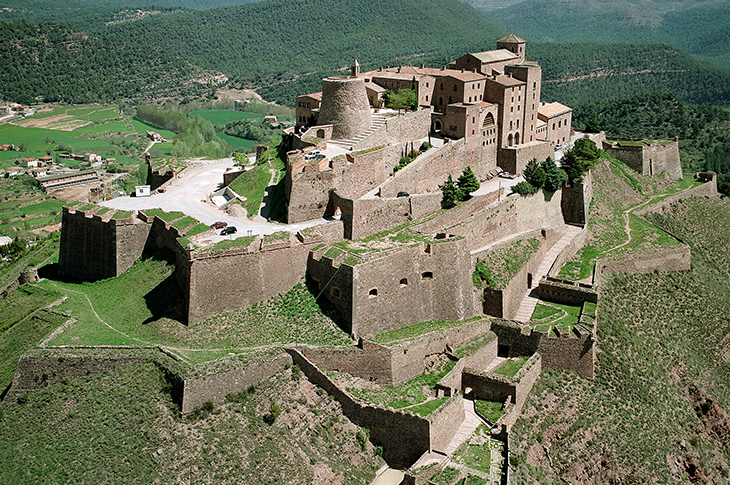
Each intervention offers a distinct perspective on this new chapter of Paradores. At Cardona, in the province of Barcelona, the establishment, classified as a Site of Cultural Interest and regarded as a jewel of Catalan Romanesque architecture, has undergone a renovation worth nearly 3 million euros, including roofing, exterior carpentry, thermal insulation, wifi network renewal, new elevators, video surveillance, accessibility improvements in rooms, and redecoration of common areas. Turespaña also invested more than 200,000 euros in the Castle of Cardona to restore stone elements, renew pavements, clean the facades, improve lighting, and draft a Conservation Master Plan.
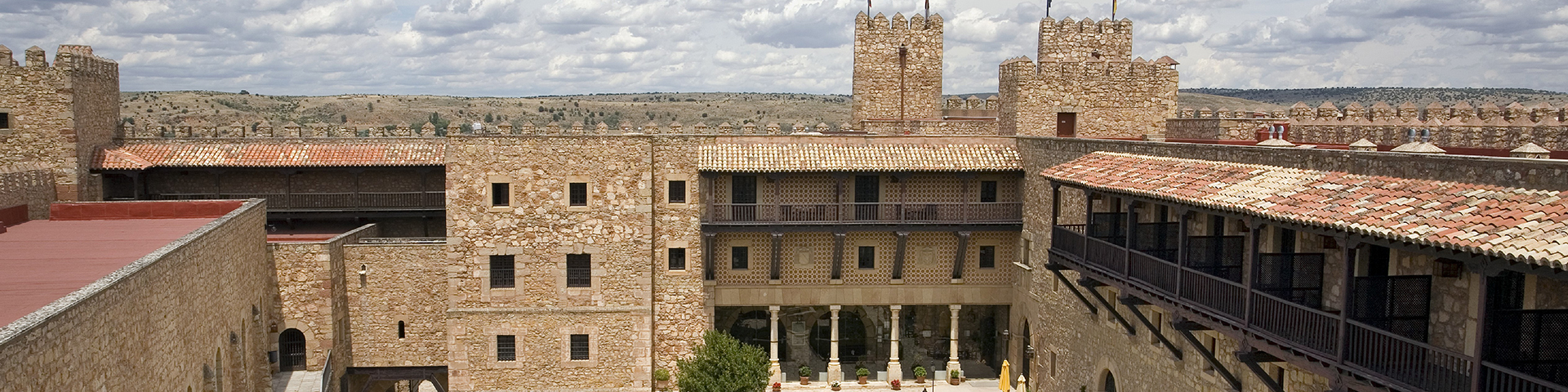
In Limpias, in Cantabria, an investment of 2 million euros has strengthened sustainability and customer experience through the renewal of pipelines, installation of aerothermal systems, a BMS system, elevator replacement, new fire-fighting group, and the conversion of tennis and paddle courts into a multi-sport court. Decoration work is also planned for the reception, cafe, restaurant, and corridor areas. Sigüenza, in Guadalajara, inaugurated in 1976 and located in a 12th-century castle built upon the remains of an Arab alcazaba, represents another dimension of this renewal. The intervention, costing more than 10 million euros, has modernized the kitchen, equipment, en-suite bathrooms, air conditioning, carpentry, insulation, lighting, textiles, and furniture of the Parador. Turespaña’s heritage works have included the restoration of the barbican, the recovery of the rampart, the habilitation of the northwest tower’s rooftop as a visitable space and Starlight point, as well as improvements to the entrance, façades, and monument lighting. Cuenca completes this vision from the former convent of San Pablo, with an investment of 1.3 million euros, the renovation of its 63 rooms and common areas, improvement of parking, and refurbishment of the boiler room. The intervention by Turespaña, exceeding 2.4 million euros, will strengthen the façades, cloister, atrium, and outer wall, and will also turn the Aljibe Tower into a viewpoint overlooking the Hanging Houses and the historic quarter. Thanks to the 2025-2028 Sustainability Plan, the forthcoming Universal Accessibility Plan, and the campaign Paradores, for everyone, the network is progressing towards a more open, responsible, and recognizable model. The goal is not only to reach its centenary renewed, but to do so with an offer capable of inspiring new ways to discover Spain.