Four Spanish cities stand out for their performance in sustainability
Bilbao, Barcelona, Madrid and Valencia combine environmental policies, responsible tourism and new urban models
Bilbao, Barcelona, Madrid and Valencia figure among the top 40 destinations with the best results in the 2026 GDS-Index 2026, an international ranking evaluating tourism sustainability and its associated events. These positions reflect a range of different urban realities: from the transformation of a former industrial city to new ways of exploring cities or holding congresses. Together they demonstrate how the visitor experience can be linked to mobility, care for the environment and the well-being of those living in these destinations. Bilbao has transitioned from being an eminently industrial city to placing quality of life at the heart of its transformation. Today it leads Spain’s representation in the ranking at position 13 with a score of 85.41%. Its profile connects this evolution with its environmental policies and the collaboration between businesses, institutions and citizens. Bicycles are gaining prominence as an alternative to public transportation, thanks to the expansion of bike lanes and a bicycle loan scheme. Bilbao also stands out for its initiatives in waste recycling and water purification. Its Convention Bureau promotes training among suppliers on the reutilization of materials and sustainable food. An impressive 54% of its electricity comes from renewable sources, while 60% of hotel rooms hold sustainability certification. Barcelona ranks twentieth with 83.06%, incorporating sustainability into the decision-making that accompanies the stay. Turisme de Barcelona consolidates an offering that includes certified accommodations, agencies specialized in accessibility, restaurants and urban tours. The Catalan capital, known as the “Count’s City”, also holds the Biosphere certification as a responsible tourist destination and promotes low-emission public transport, cycling and electric vehicles. This commitment even extends to congress tourism. In Barcelona, the Biosphere criteria for urban destinations were revised and the possibility of including companies and services in the destination’s sustainability commitment was opened up. According to this index, 81% of hotel rooms, 100% of event spaces and 85% of companies that organize conventions and manage destinations hold sustainability certifications. This offer expands the options for planning visits and meetings with sustainable criteria. Just one position behind at number 21 is Madrid, with 82.8%. In the capital, attention is also paid to the legacy an event can leave once the stage has been dismantled. Its sustainability guide for meetings and congress tourism links the organization to the Sustainable Development Goals, while the PLUS platform incorporates criteria for social, economic and environmental legacy right from the planning phase. The choice of a venue can be part of a longer-term relationship with the city.

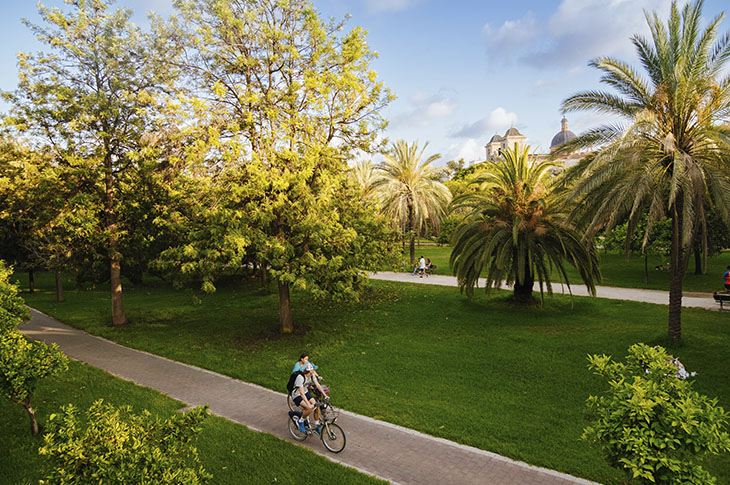
The GDS-Index profile also records actions related to public transport, bike lanes, pedestrian areas, water management and green spaces. In the social sphere, community participation, accessibility and heritage conservation are worth a particular mention. Sustainability certification is held by 69% of hotel rooms and 50% of event spaces, two indicators that can provide guidance in the planning of stays and meetings. Valencia ranks 29th in the classification, with 78.35%. It is distinguished by its agenda of concrete objectives and indicators: a carbon emissions reduction target of 84% by 2030, 714 hectares of green areas per 100,000 inhabitants and 78% of hotel rooms with sustainability certification. Similarly, 17% of convention organizing and destination management companies also hold this certification. Visit València has developed a strategy for sustainability and communicates all its results, which make it possible to observe the city’s evolution in both its urban environment and its tourism offer.