
Ten towns and ten altarpieces: a journey through the Renaissance in eastern León
This itinerary links 16th-century art, small churches and scenery in a little over 75 kilometres
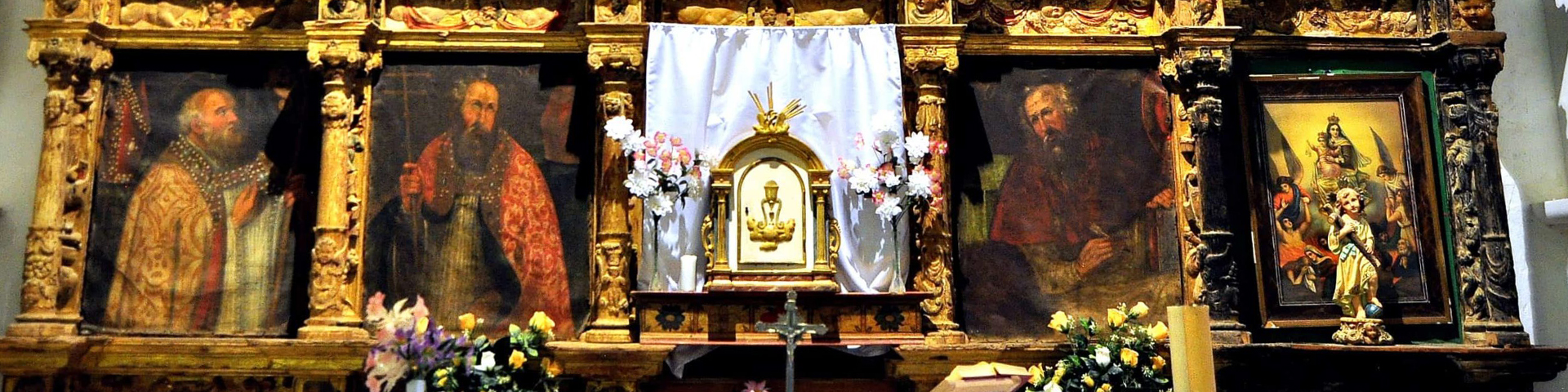
The Route of the Plateresque Altarpieces of the East of the province of León connects ten small localities and as many churches across just over 75 kilometres, between León’s Tierra de Campos and Montaña Oriental Leonesa. Each temple opens a door to 16th-century art, with altarpieces that merge the richness of sculpture and painting with religious architecture. This itinerary offers a deep dive into a rural heritage that preserves the memory of the communities for whom the Renaissance became part of their identity. Before becoming a stop on an accredited route, these altarpieces were the expression of an era of prosperity. During the 16th century, the wool trade with Flanders combined with particularly fruitful harvests allowed small rural municipalities to invest in religious art as a manifestation of faith, power and local pride. The proximity of the Monastery of Trianos, a Dominican hub of artistic influence, also favoured the arrival of sculptors and painters. Five centuries later, that same vitality remains in churches where the building’s intimate scale contrasts against the ambition of the works it preserves. Much of the ensembles are linked to the so-called “Junian School of León” and reflect the imprint of Juan de Juni and his followers. The journey reveals the horizontal development, structures organized in tiers and bays, reliefs and panel paintings. Flemish and Italian influences intertwine in religious scenes that show how Renaissance languages made their way to the small towns of eastern León. The slightly more than 75 kilometres of this route link Vallecillo, Gordaliza del Pino, Sahagún, Joara, Celada de Cea, Valdescapa de Cea, Villaselán, Valdavida, Cistierna and Yugueros. The experience changes in each church. Valdescapa de Cea preserves a main altarpiece from the mid-16th century attributed to Juan de Angers and Guillén Doncel, followers of Juan de Juni, with paintings influenced by Flemish and Italian styles. The altarpiece of Saint Peter the Apostle in Vallecillo, created around 1560, features reliefs, sculptures and panel paintings.

Sahagún introduces a unique overlapping of eras: its Passion Altarpiece incorporates Renaissance bas-reliefs from the now vanished Monastery of Santa María de Trianos into an 18th-century Baroque structure. In the church of San Andrés, Joara preserves an exceptional ensemble within the province’s rural sacred art, thanks to its stylistic unity and original elements that have remained intact, with paintings commissioned in 1541 from the painter Cristóbal de Colmenares. Two different ways to immerse oneself in the 16th century: through reutilization and conservation. The route continues through Celada de Cea, whose altarpiece is dedicated to Saints Justus and Pastor; Villaselán, where the artwork occupies the main chapel; Valdavida, with a recently restored set from the last third of the 16th century; Cistierna, featuring an altarpiece from the former church of Santa Cruz de Valderas; and Yugueros, where the main altarpiece was created in 1553. Gordaliza del Pino rounds out the route with one of the most valuable pieces in the Church of Our Lady of Arbás. This itinerary was brought to life in 2020, promoted by the Balle de Scapa Cultural Association, with the aim of rescuing a lesser-known heritage, encouraging its conservation and turning it into a driver of culture and tourism. Collaboration with the Las Edades del Hombre Foundation gave the route visibility within the scope of the exhibition held in Sahagún in 2021, while its subsequent integration into the Monument Opening programme expanded public access to the temples. This work takes on special significance in a territory of low population density, with sections of the route where the density is around three to five inhabitants per square kilometre. The beginnings of this proposal were accompanied by theatrical tours, publications, festivals and local exhibitions. Today, the Route of the Plateresque Altarpieces of the East of the province of León offers a way to get to know this legacy via villages and their churches, combining artistic contemplation with the unhurried discovery of a rural landscape marked by small communities.
Location
The province of León is located in the northwest of Spain, within Castile and León. Its main road accesses are the A–6, A–66/AP–66, A–231 and AP–71. It boasts a railway station in the city of León, providing high-speed, long and medium-distance services, as well as the León Airport six kilometres from the capital.