
Asturias guarantees accessible and verified tourism
Spacious urban walks, adapted transport, beaches with mobile lifts and verified accommodations
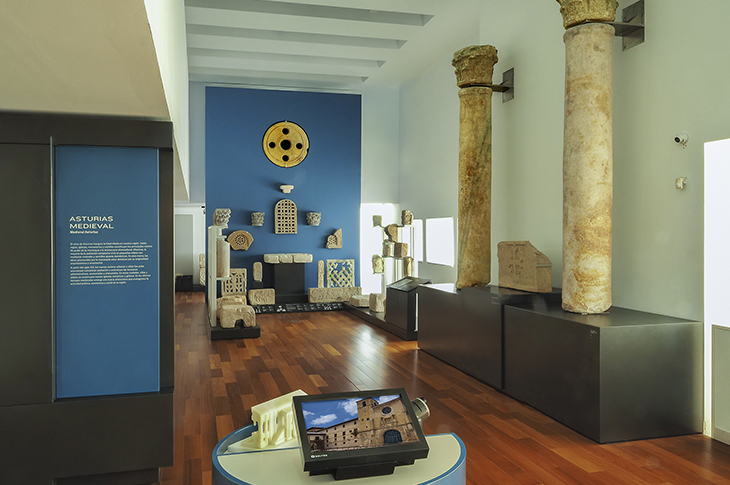
The Principality of Asturias invites travellers to explore a geography where the Cantabrian coast and the charm of its historic towns coexist alongside a tourism offer firmly committed to accessibility. Adapted pedestrian routes in six iconic towns, beaches with technical assistance for bathing, museums with tactile and sensory resources and a network of establishments with detailed information on their accessibility conditions allow for experiences to be tailored to different needs. In Luarca, the route through the commercial centre and the Wharf Promenade is complemented by a visit to the Giant Squid Museum, whose entrance has a 14% incline ramp as well as spacious interior routes and an adapted toilet. In Avilés, the route between the Niemeyer Centre – equipped with lifts and parking spaces for people with reduced mobility – and the Escuelina Market allows for exploration of the historic centre, although some sections do feature slopes or uneven pavements. The market features level access points and adapted toilets. The capital, Oviedo, offers an accessible pedestrian route from the North Station to the vicinity of the historic centre. There, the Archaeological Museum of Asturias offers tactile replicas of representative pieces from different eras, explanatory texts in braille and adapted indoor routes. Several kilometres from the capital, the House of the Wolf in Belmonte de Miranda features an accessible visitor centre and an adapted trail running one and a half kilometres along the Pigüeña River.
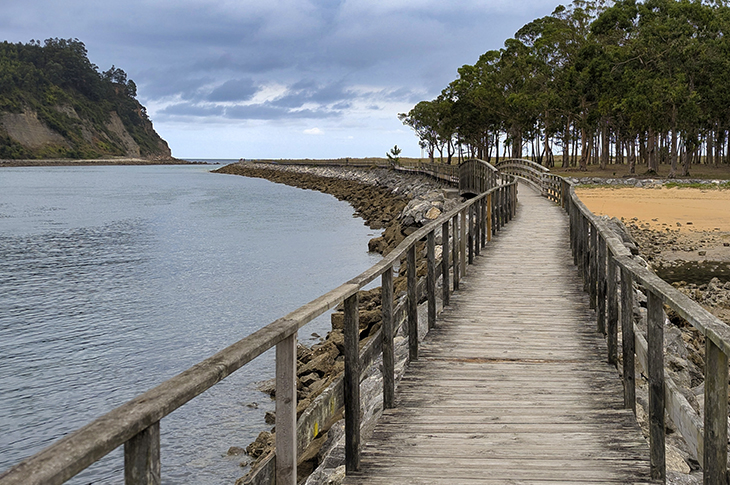
On the coast, Gijón has adapted resources at the Railway Museum and the Bioparc Aquarium. The city also boasts a fleet of accessible urban public transport. Its adapted beach area in Poniente is equipped with walkways and shaded zones, accessible bathrooms with showers, adapted changing rooms, mobile lifts, amphibious chairs, bathing crutches, tactile directional flooring and informational panels in high relief and braille. This offer is complemented by the free loan of OPair and VeloPlus bicycles, the latter equipped with an adjustable ramp and anchoring system for wheelchair users. On the eastern coast, Villaviciosa offers walks through Pelambre Park and the option of visiting the Villaviciosa Estuary Partial Nature Reserve, at the mouth of which lies the Rodiles beach. This sandy area features walkways approximately 1.80 metres wide, amphibious chairs, crutches available to loan and assisted bathing services by specialized personnel. In Colunga, the Jurassic Museum of Asturias offers parking spaces reserved for people with reduced mobility, an outdoor walkway measuring 90 centimeters wide, adapted audio guides, guides and interpretive tables in braille and high relief, as well as subtitled videos.
This experience can then culminate in Ribadesella, where various streets in the town’s centre are marked with a blue line identifying accessible routes. Among its attractions are the waterfowl lookout and the Tito Bustillo Cave Art Centre, equipped with lifts and adapted toilets. Relaxation and gastronomy round out this offering with rural manor houses, urban hotels, tourist apartments and various cider houses with verified accessibility. The combination of landscapes, hospitality and adapted tourist resources encourages more informed planning and allows visitors to enjoy Asturias with greater autonomy, comfort and confidence.
Location
Asturias is located in the north of Spain, between Galicia and Cantabria, bordered to the south by Castile and León and to the north by the Cantabrian Sea. Its main access points include Asturias Airport in Castrillón; the railway stations of Oviedo and Gijón with high-speed connections to Madrid; and the ports of Gijón and Avilés.