

Following in the footsteps of El Cid: an epic journey through Spain’s most surprising inland areas
Discover a monumental route that links fortresses, rural villages, and unforgettable landscapes
The Way of El Cid offers a literary and cultural journey across Spain from northwest to southeast, following in the footsteps of Rodrigo Díaz de Vivar, known as El Cid Campeador, through territories in which the history and epic tale of the Cantar de mío Cid live on today. The itinerary crosses Castile and León, Aragon, Castile-La Mancha, and the Region of Valencia, inviting travelers to discover castles, natural spaces, and villages marked by authenticity. The Way of El Cid is one of Spain’s most outstanding cultural routes—an invitation to immerse oneself in an epic narrative that blends literature, history, and territory. Along more than 1,200 miles, this itinerary connects landscapes and towns that still maintain direct or indirect references to the Cantar de mío Cid, the great Hispanic epic poem recounting the feats of this Castilian knight.
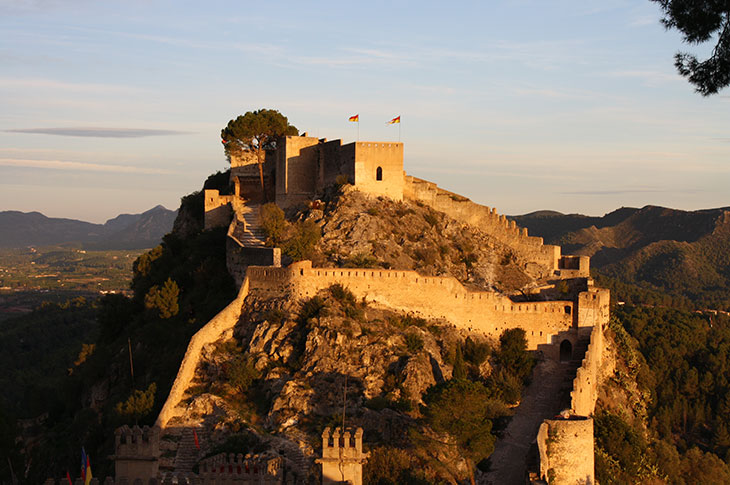
The route crosses four Spanish regions with remarkable landscape and heritage diversity. Castile and León, Burgos, and Soria bring together monasteries linked to El Cid, fortifications, and villages preserving traditional architecture. Aragon offers up border castles, Mudéjar towers, and landscapes that reflect the historical complexity of the territory. Castile-La Mancha adds its plateaus, plains, and towns associated with the knight’s exile. The Region of Valencia opens up the itinerary toward the Mediterranean through historic orchards, Gothic heritage, and cities that evoke the final stretch of the poem. Those who travel the Way of El Cid enter a vast, diverse, and uncrowded territory, suitable for hikers, cyclists, or travelers seeking a more leisurely pace. The route connects more than 70 protected natural areas, from juniper groves and moorlands to ecological lagoons and mountain ranges that showcase the geographical variety of inland Spain. The itinerary offers up constant contrasts: rivers flowing beneath medieval fortresses, gorges connected to defensive routes, and agricultural fields shaped over generations.
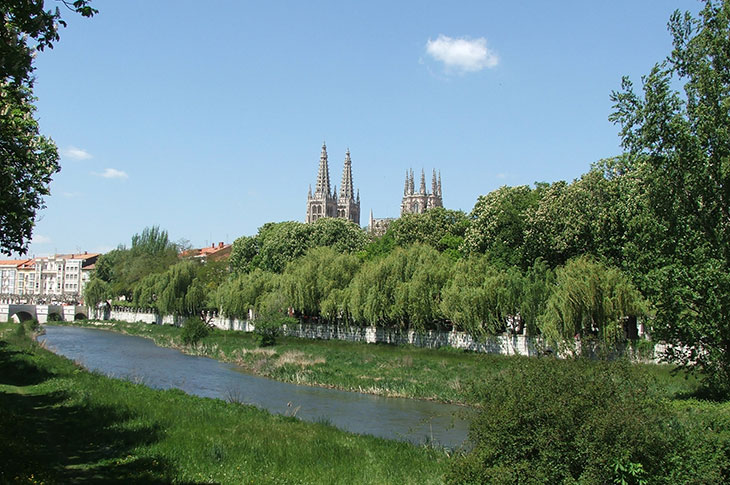
Meanwhile, towns dotted along the way add an essential human dimension. Many preserve historic-artistic ensembles with Islamic walls, Romanesque temples, arcaded squares, and medieval old town centers. In them, travelers find a calm daily life and direct contact with local traditions that form part of the route’s appeal. Weekly markets, patron-saint festivals, and family businesses help us to understand the identity of each territory. The route also stands out for its defensive heritage. More than two hundred castles, watchtowers, and documented fortifications make up this itinerary. Some sites still preserve Arab structures carved into rock, while others present robust fortresses that once controlled strategic passages. These are key points to interpreting the peninsula’s complex medieval history and understanding the borderland context that gave rise to the Cantar de mío Cid. Altogether, the Way of El Cid offers a cultural experience that combines landscape, heritage, and local gastronomy. For the international visitor, it represents an exceptional route to discover inland Spain through a themed itinerary keeping the spirit of one of Europe's great epic narratives alive.