
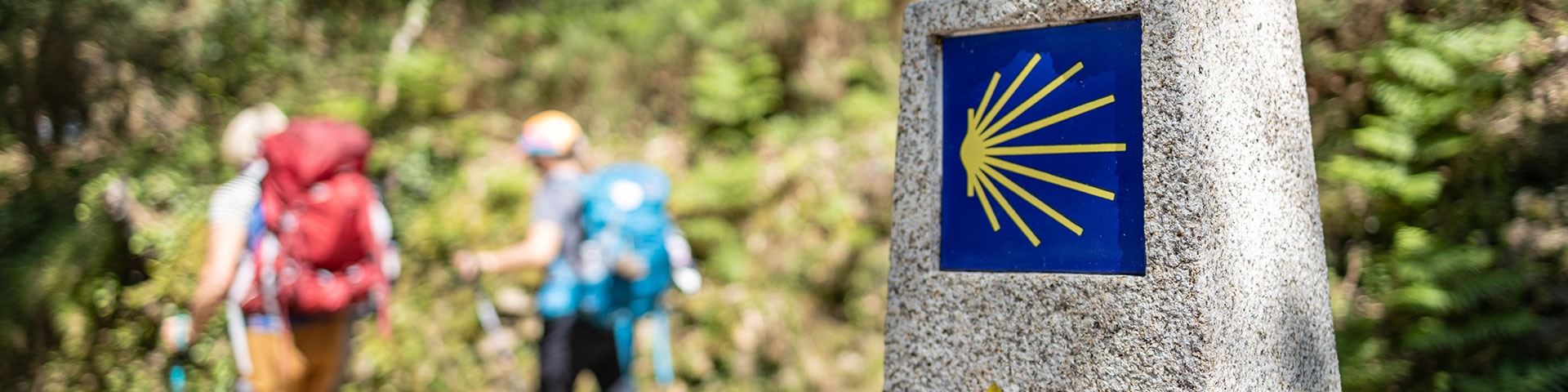
Villages that render meaning to the Galician Way of St. James
160 kilometers of discovery amidst mountains, villages and hospitality
In the northwest of Spain, the French Way crosses Galicia along a route of some 160 kilometers that encapsulates the essence of a leisurely life and purposeful travel. Amidst mountains, forests and stone villages, pilgrims venture into a land where time stands still. Every step invites you to discover Galician hospitality, its heritage and its gastronomy, in an experience that transcends tourism and becomes an encounter with oneself. The Way of St James is a mosaic of villages that breathe history, culture, silence and authenticity. From the entrance through Pedrafita do Cebreiro to the arrival at Santiago de Compostela, the Galician section offers travelers an intimate and transformative experience.
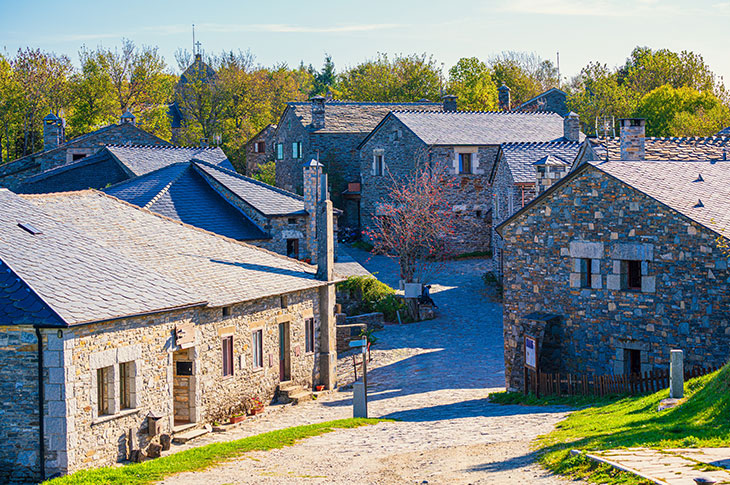
The stages wind through mountains, rivers and oak forests. In O Cebreiro, where one of the most famous legends of the Way was born —the miracle of the Holy Grail— the ancient pallozas and the pre-Romanesque church of Santa María welcome pilgrims with the calm of an ancestral world. Further on, Samos stuns with its Benedictine monastery, a witness to centuries of spirituality. In Sarria, the pace of the Way becomes even more human: many pilgrims begin their journey there in search of the Compostela, which symbolizes the end of the route and the beginning of something new. Each village preserves its identity. Portomarín offers its reborn history: the Church of San Nicolás was moved stone by stone after the construction of the Miño reservoir, while Monterroso and Palas de Rei offer a more rural Galicia, where the paths smell of damp earth and freshly baked bread. In Melide, the aroma of pulpo á feira (boiled octopus) and the atmosphere of the pulperías (octopus restaurants) invite you to pause. Finally, in Arzúa, the local cheese and the green landscape remind you that Galicia is there to be savored.
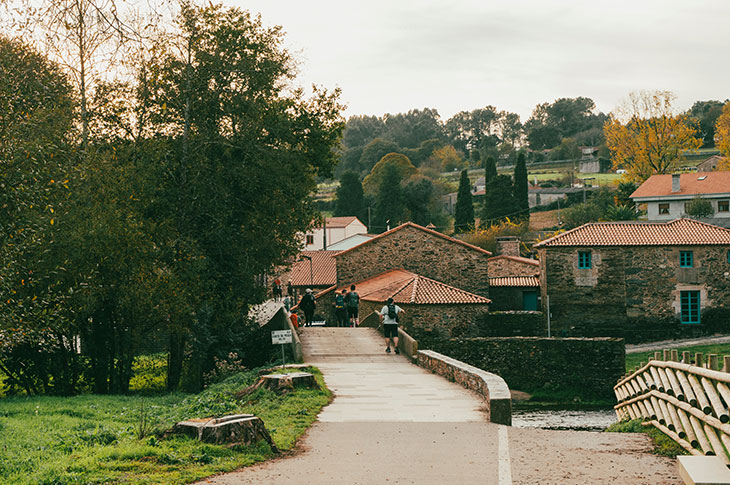
Throughout all these stages, pilgrims find more than just rest: they enjoy conversation, nature and the feeling of belonging. The Galician and Leonese municipalities that form the Mancomunidad del Camino Francés care for this shared heritage, offering the visitor a free experience, without constraints or schedules. When travelers finally glimpse the towers of the Cathedral of Santiago from Monte do Gozo, they realize that they have not reached the end, but rather a new beginning. The Way does not end at the finish line: it remains in your memory as an invitation to return or, at least, to keep walking in another way.