
The soul of Valencia burns in its Fallas: the tradition that inspires
The World Heritage that embodies art, satire and Valencian identity
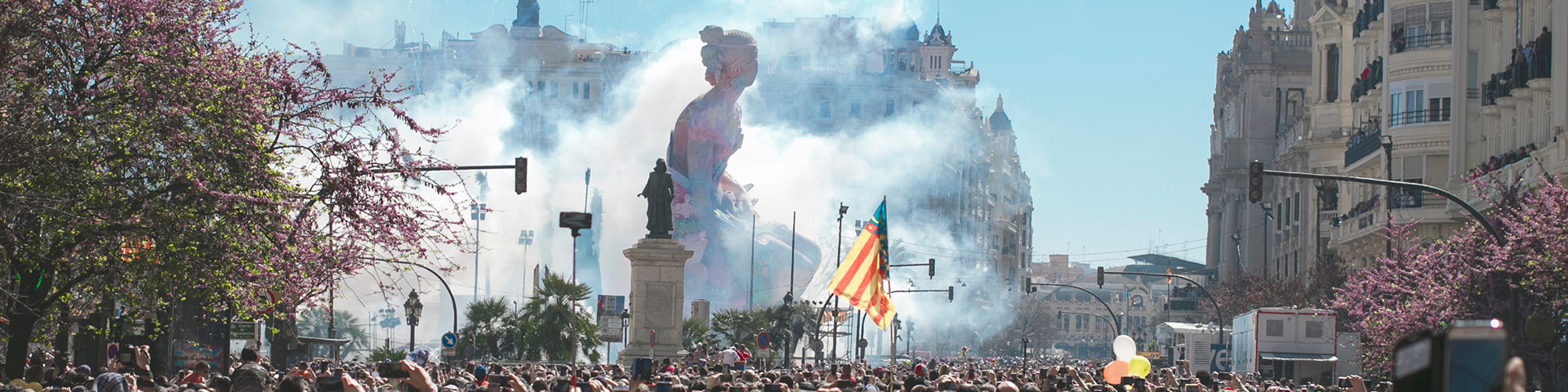
Every March, Valencia ignites in a unique spectacle that combines art, fire and devotion. Las Fallas, declared Intangible Cultural Heritage by UNESCO, turn the city into an open-air museum where several colossal papier-mâché monuments are built only to later succumb to the flames. It is the grand celebration of Valencian ingenuity, a sensory experience that beats to the rhythm of gunpowder and moves all those who witness it for the first time. From the last Sunday of February, when the falleras mayores proclaim the famous “Ja estem en Falles!” from the Serranos Towers, Valencia begins a countdown that culminates amid gunpowder, music and fire. It is the most awaited event for Valencians and a revelation for foreign visitors drawn by the promise of a festival where emotion becomes art. Every corner of this city in the Region of Valencia turns into a stage. More than 800 Fallas monuments, true ephemeral masterpieces, spring up in streets and squares to tell stories full of humor, social criticism and creativity. For four days, Valencians watch, photograph and celebrate them, knowing that on the night of the Cremà they will all burn in a catharsis of fire and light symbolizing rebirth. The air vibrates every noon with the Mascletà, a symphony of explosions that is felt more than heard. Thousands of people fill the Town Hall square to experience this pyrotechnic ritual that embodies the sonic soul of Las Fallas. And when night falls, fireworks fill the sky with breathtaking bursts, especially on Nit del Foc, March 18th.
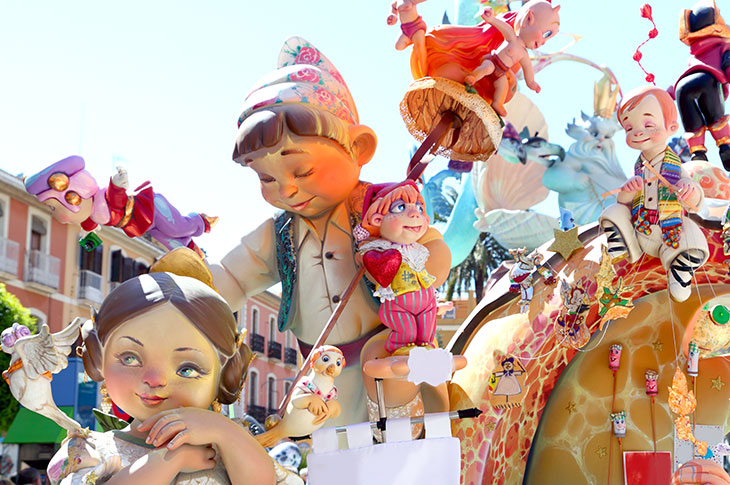
But Las Fallas are also pure emotion, as demonstrated by the flower offering to the Virgin of the Forsaken, which transforms the heart of the city into a tapestry of color and fervor. Thousands of falleros parade in their traditional costumes, jewels of Valencian craftsmanship, to pay tribute to their patron saint amid tears, music and applause. Visitors can complete their experience by exploring the Ciudad del Artista Fallero, where the ninots that will shape the Fallas are born, or lose themselves in the beautiful neighborhoods of Ruzafa and El Carmen, where the celebration continues with street parties, gastronomy and hospitality. Among pumpkin fritters, horchata and the inevitable paella, travelers discover that Valencia not only celebrates but shares. To see the Fallas in person is to experience a centuries-old tradition that reinvents itself each year and, beyond satire or devotion, summarizes the essence of the Mediterranean: the passion of those who, seeing their creation burn, smile knowing they will rebuild it.
Location
Valencia is located on the eastern coast of Spain, in the Region of Valencia, overlooking the Mediterranean Sea. The destination features Valencia Airport, Valencia Port, a high-speed rail connection at the Joaquín Sorolla Station and road access via the A–3 and A–7 highways, linking it to Madrid and the Mediterranean corridor.