
Castile-La Mancha: summer with family among inland lagoons and rivers
Bathing and outdoor activities for the whole family in protected landscapes and authentic environments
In the summer, Castile-La Mancha reveals a unique proposal that redefines the bathing experience away from the coast: freshwater beaches, crystal-clear lagoons, and authorized river stretches integrated into national and nature parks of great environmental value. Amid a region in which almost a quarter of the land is protected, water serves as the common thread throughout these authentic experiences, in direct contact with biodiversity and landscapes that combine serenity, wide-open expanses, and real character. These bathing areas allow you to enjoy the warmth in locations where respect for the environment forms an essential part of the experience. Rivers, wetlands, and reservoirs can be found nestled within pastures, Mediterranean forests, canyons, and mountain ranges that invite you to extend your stay beyond the dip, integrating hiking, wildlife watching, and interpretive tours. These versatile offerings are perfectly aligned with family tourism, where nature, learning, and leisure come together in settings far from urban hustle and bustle. The Cabañeros National Park, located between Ciudad Real and Toledo, is a key landmark. Considered one of the best representations of the Mediterranean forest and sometimes nicknamed the Spanish Serengeti, it plays host to deer, wild boars, roe deer, lynxes, and emblematic birds of prey such as the Iberian imperial eagle and the black vulture. Waterways such as the Estena River offer 4x4 routes, hiking, and astrotourism: a refreshing complement that enriches visitors’ immersion in the landscape.
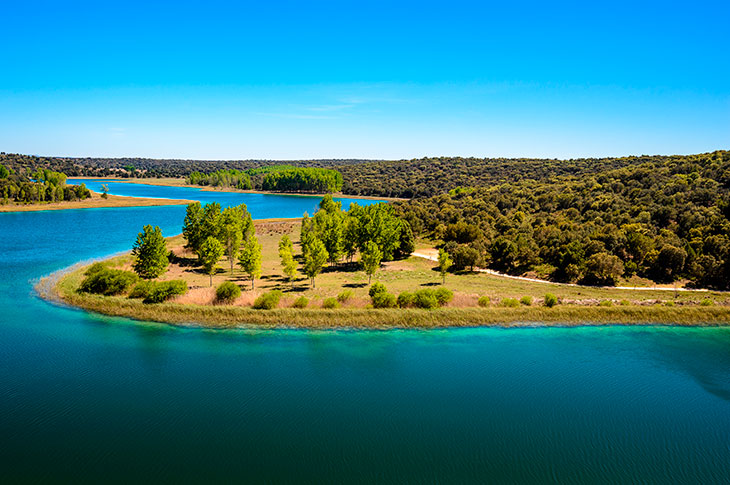
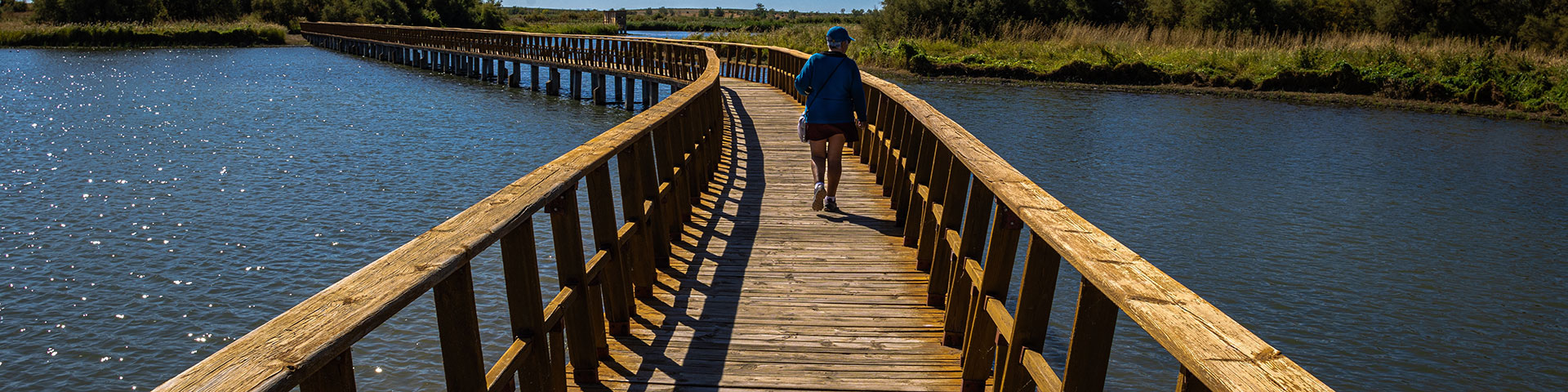
In the Las Tablas de Daimiel National Park and Biosphere Reserve, water shapes a dynamic and ever-changing ecosystem. The seasonal lagoons, accessible via wooden walkways, allow for the observation of flamingos, herons, and a whole host of species in an area of high ornithological value. The interpretation center adds an educational dimension that broadens the site's appeal. Among the region’s nature parks, the Ruidera Lagoons Nature Park stands out for its succession of 15 stepped, crystal-clear lagoons connected by waterfalls and streams, forming one of the most unique lakeside landscapes in the Iberian Peninsula. Activities such as kayaking, paddle surfing, diving, or cycling excursions make it possible to tailor this stay to different ages and activity levels, making the site a real must-visit for multigenerational trips. The Alto Tajo Nature Park, recognized as a UNESCO Global Geopark, features cliffs and gorges, enhancing the experience with panoramic viewpoints and activities like rafting. The Sierra Norte Nature Park of Guadalajara—home to the Tejera Negra Beech Forest, included in the Ancient and Primeval Beech Forests of Europe World Heritage declaration—combines dense forests with villages offering up unique identity. The Barranco del Río Dulce Nature Park, the Serranía de Cuenca, the Alcudia Valley and Sierra Madrona, and the Calares del Río Mundo y de la Sima round off a mosaic of caves, waterfalls, and river gorges. In Castile-La Mancha, freshwater swimming becomes the core of a balanced summer, where protected nature, outdoor proposals, and peaceful environments carve out a solid alternative for those looking to combine relaxation and shared family time.
Location
Castile-La Mancha is located in the center of the Iberian Peninsula, in inland Spain. It is connected by the A–2, A–3, A–4, A–5, and A–42 highways, and by a high-speed rail network with stations in the cities of Toledo, Ciudad Real, Puertollano, Cuenca, and Guadalajara. Its main air access is ensured by Adolfo Suárez Madrid–Barajas Airport.