
Literary routes in Spain: journey through the settings that inspired timeless tales
Renowned authors have transformed towns, cities and landscapes into unforgettable travel destinations.
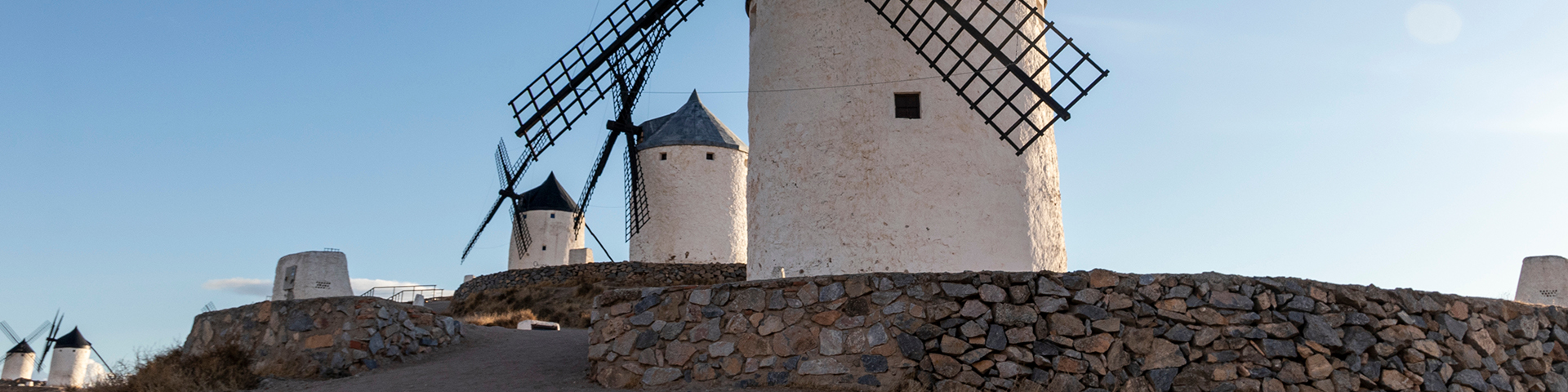
Spain offers an extraordinary literary map where books come alive and turn into a journey, with routes that connect Manchegan windmills, medieval castles, historic cafés, poets’ streets, Andalusian countryside, grand cities and riverbanks, tracing the footsteps of El Cid, Lazarillo de Tormes and other celebrated authors. The country offers this with a rare intensity: reading its landscapes as you travel through them, discovering how a windmill can turn into a giant, how a plaza still echoes the voices of the Golden Age and how a country lane still holds the breath of a poem. The Don Quixote Route is perhaps the quintessential symbol of the combination of literature and travel. Its varied suggestions traverse the provinces of Albacete, Ciudad Real, Toledo, Cuenca and Guadalajara, linking towns and cities where Miguel de Cervantes’ famed masterpiece comes to life. Campo de Criptana and Consuegra showcase their iconic windmills against the horizon; El Toboso beckons visitors into Dulcinea’s world through the Cervantino Museum; Argamasilla de Alba preserves the Medrano Cave, said to be where Cervantes began penning the adventures of the ingenious gentleman; while Toledo offers its monumental heritage, winding alleys and rich cultural tapestry, deepening the storytelling power of the journey. The Camino del Cid proposes an epic adventure. Inspired by the epic poem The Song of My Cid, the route winds through Castile and León, Castile-La Mancha, Aragón and the Region of Valencia, showcasing castles, city walls, open fields and historic towns. Albarracín, Covarrubias, Medinaceli, Morella, Burgos, Teruel, Sagunto and Valencia form an extensive route where medieval verses resonate with stunning landscapes, inviting travelers to pause, reflect and embrace the journey’s legendary spirit.
Not all routes require vast distances. In Madrid, the Literary Quarter preserves the legacy of Cervantes, Lope de Vega, Quevedo and Góngora within just a few blocks. The Lope de Vega House Museum, the Church of San Sebastián, the workshop where Juan de la Cuesta printed the first edition of Don Quixote, Plaza de las Cortes and Calle de las Huertas outline a culturally rich urban stroll —perfect for experiencing how literature can live in a street corner, a façade or a quaint secondhand bookstore. In Soria, the experience takes on a poetic heartbeat. The Bécquer Route connects Bécquer’s Corner and the Marqués de Alcántara Palace with the Monastery of San Juan de Duero, while the Machado itinerary includes the Antonio Machado Institute, the Main Square and the porch of Espino Church, where an elm tree commemorates the one celebrated by the poet. The city, understated and peaceful, reveals itself as a unique realm woven with verses, ruins, memories and the flowing Duero River. Pamplona holds a different kind of allure: that of Ernest Hemingway, his novel The Sun Also Rises and the San Fermín Festival. Plaza del Castillo (Castle Square), Café Iruña, the Bullring, Calle Eslava, Paseo de Sarasate, Gran Hotel La Perla and Santo Domingo Hill let visitors follow the footsteps of a writer who found joy, cuisine and breathtaking scenery there. Beyond the city, Burguete, Lekunberri and Aribe broaden the landscape toward relaxation and fresh air; Aribe also brings the route closer to the banks of the Irati River. The Washington Irving Route starts in La Rábida, Huelva, passes through Seville and concludes in Granada, connecting Palos de la Frontera, Moguer, Carmona, Écija, Marchena, Montefrío and Alhama de Granada —traveling through Hispano-Muslim heritage, Columbian history, countryside and legends. The La Alcarria Route, inspired by Camilo José Cela, winds through Cifuentes, Brihuega, Torija, Trillo and Sacedón, featuring the Journey to La Alcarria Museum housed within Torija Castle. The Hernandian Way begins in Orihuela and, passing through towns such as Redován, Cox and Elche, ends in Alicante. Meanwhile, the Lazarillo de Tormes Route crosses the province of Toledo, from Almorox to the capital, passing through Escalona, Maqueda and Torrijos amid pine forests, castles, churches, convents, guild streets and a picaresque heritage still deeply woven into the landscape. These routes turn literature into a unique way to explore Spain: leisurely, culturally enriching and deeply connected to the character of each region. By tracing the footsteps of characters and authors through cities, villages,# and landscapes, travelers not only discover literary settings but also tap into a cultural heritage that diversifies tourism, channels visitors to lesser-known destinations and demonstrates that, in Spain, every journey can begin with the turn of a page.