
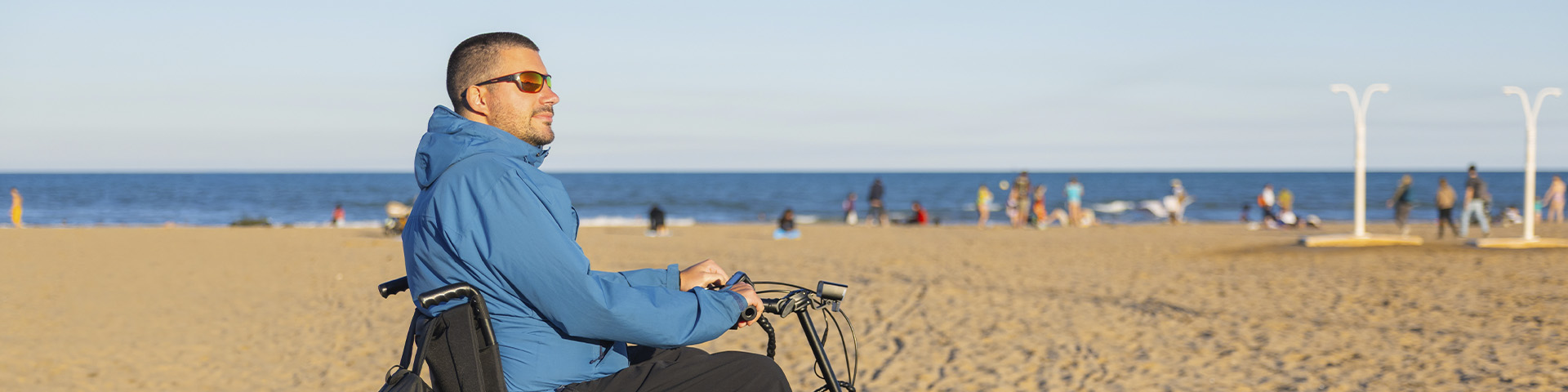
Accessible beaches in Spain with adapted services
Amphibious chairs, comfortable access points, and specialized support are transforming the experience along the Spanish coast.
Spain has made accessibility a key feature of its coastline, with beaches designed so that people with limited mobility, seniors, and their companions can enjoy the sea with greater independence, safety, and comfort. Walkways leading to the water's edge, amphibious chairs, accessible shower and restroom facilities, support staff, and reserved parking spaces come together to create an environment that turns a day at the beach into a comfortable, inclusive, and fully shared experience. In a country where summer naturally draws people to the coast, accessible beaches are no longer seen as a mere added convenience, but as an expression of hospitality. Every well-placed ramp, every sturdy walkway over the sand, and every assisted-access swimming area expand the travel options for those who, for years, have found the coast to be a desirable destination —but one that hasn’t always been easy to enjoy. This development reflects a broader vision of inclusive tourism, understood as tourism for everyone. Universal accessibility involves removing architectural, visual, or auditory barriers and designing environments that can be used by anyone without having to rely on makeshift solutions. On urban beaches, this concept translates into accessible routes from parking lots or public transportation to safe facilities, proper signage, and services designed to ensure a barrier-free experience. Spain has more than 600 beaches with accessible facilities and services of varying degrees. This network extends across very diverse autonomous communities and combines large urban sandy beaches, tranquil bays, family-friendly beaches, and established tourist sites. Nova Icària, in Barcelona; La Concha, in San Sebastián; Los Peligros, in Santander; San Juan, in Alicante; Poniente and Levante, in Benidorm; La Misericordia, in Málaga; Gorliz, in Vizcaya; Son Maties and Santa Ponsa, in Mallorca; Amadores, in Gran Canaria; and Las Teresitas, in Tenerife; are among the examples associated with adapted resources.
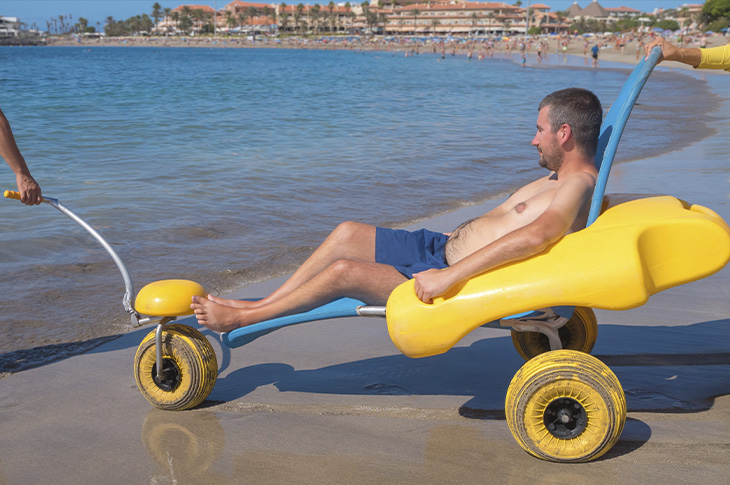
The difference lies in the details. An amphibious chair makes it safer to enter the water; a designated shaded area provides a place to rest and shelter; an accessible shower or restroom makes it easier to end the day; and a team trained in swimming assistance reduces risks and builds confidence. For many people, these services mean regaining the ability to make their own decisions: choosing when to go to the beach, sharing the experience with other family members or caregivers, and participating in vacation activities on an equal footing. The impact also affects those who are with them. At beaches that are not accessible, getting to the water's edge can be physically demanding, uncertain, and pose a risk of falling. When there are walkways, technical support, and specialized staff, the visit becomes easier, safer, and more enjoyable for everyone. It is still a good idea to plan your visit. Some services are available mainly during the high season and may require advance booking, especially the use of amphibious chairs or assisted bathing. Contacting tourist offices, city halls, or support organizations allows you to confirm schedules, availability, and conditions. Thus, the Spanish coastline reinforces a simple yet powerful idea: the sun, the breeze, and the sea belong to everyone.