
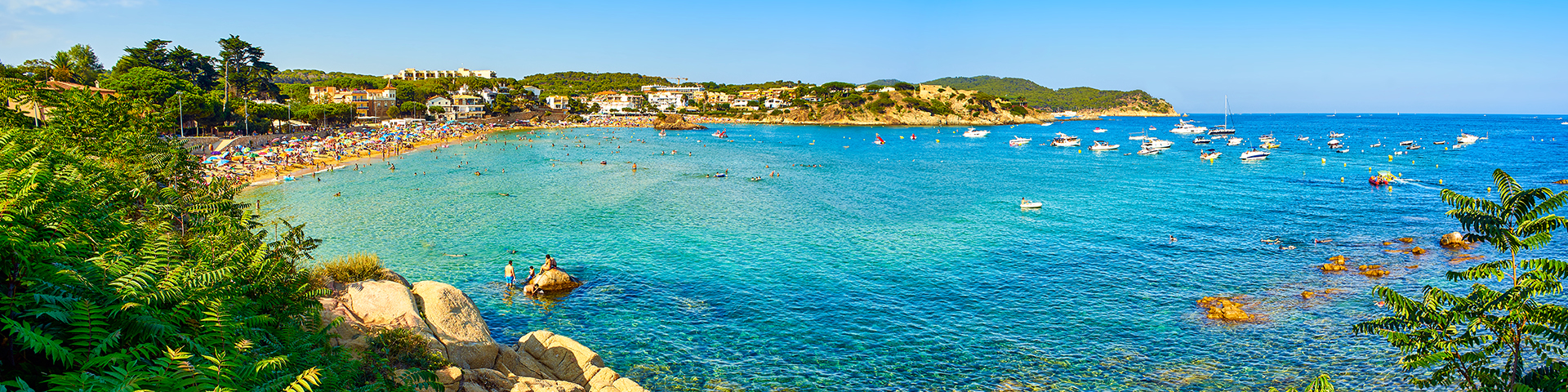
Spain sets a new record for the number of Blue Flags in 2026
Environmental quality, safety, and accessibility strengthen Spain's coastal appeal with 794 distinctions
Spain is strengthening its global leadership in Blue Flag distinctions in 2026, reaching a total of 794 awards distributed among beaches, marinas, and tourist boats, a result that consolidates environmental quality, safety, and accessibility as strategic assets of its coastal offer. With 677 beaches recognized, 35 more than the previous year, the country has set its best record since the program's inception in 1987, projecting an image of a competitive, sustainable, and diverse destination. The map of recognitions places the Region of Valencia at the forefront, with 151 beaches across 48 municipalities, followed by Andalusia, which totals 143 in another 48 localities; Galicia, with 118 in 38 municipalities; and Catalonia, which maintains 101 beaches in 40 destinations. The Canary Islands have 52; the Balearic Islands and the Region of Murcia have each collected 33; Asturias has 16; Cantabria has kept 11; Extremadura has eight; the Basque Country has four; Melilla got 3; Ceuta has two; and Madrid has one. For tourism the interpretation of this data goes beyond the tally. Each flag serves as a recognizable benchmark for travelers seeking well-maintained environments, reliable services, and a bathing experience aligned with environmental standards. In a market increasingly attentive to sustainability, the territorial breadth of the awards makes it possible to strengthen destination narratives from the Mediterranean to the Atlantic, including islands, inland areas, and cities with unique bathing spots. In this edition, 713 beaches were nominated and 95% received the distinction, which demonstrates the high quality of the candidacies. Fourteen beaches received the Blue Flag for the first time and 32 beaches regained it in a movement that expands the national offer and provides new arguments to promote municipalities that find coastal quality to be a distinguishing feature.
Marinas also consolidate their role within the nautical offer. Spain is home to 111 recognized facilities, nine more than in 2025, with Catalonia at the forefront, followed by Andalusia, the Region of Valencia, the Balearic Islands, Galicia, the Canary Islands, the Region of Murcia, Asturias, and Extremadura. This program rewards the rational use of resources, protection of the marine environment, and sustainable navigation, valuable attributes when connecting leisure, sport, and environmental awareness. On top of these, six tourist vessels were added, four in Andalusia and two in the Region of Valencia, distinguished for their good environmental practices and for bringing marine biodiversity closer to those exploring the coast. Together, they confirm Spain's capacity to articulate a broad, recognizable coastal offer aligned with a demand that values both enjoyment and care of the environment.
The Blue Flag program has run for 40 consecutive years, operating in 51 countries and in more than 5,000 locations. Spain accounts for 15% of all Blue Flag beaches worldwide and also boasts the only seven beaches and two marinas in the world that have held this distinction continuously since 1987.