

New Entry/Exit System digitalizes border control
The European Union launches the EES, replacing manual passport-stamping with an automated digital-registration system
Starting 12 October 2025, the European Union is now implementing the Entry/Exit System, a digital mechanism that replaces manual passport stamping with an automated electronic record of entries and exits for travelers from non-EU countries. Its gradual rollout, which will continue until April 10, 2026, forms part of the broader digitalization of border procedures within the Schengen Area. The system will be used at the air, land, and sea borders of all participating states, aiming to electronically register transit data for non-EU travelers on short stays. What is the Entry/Exit System? The EES (Entry/Exit System) is an automated computer system designed to record every crossing of the EU’s external borders by third-country nationals. This is a routine procedure in other destinations—such as the United States, South Korea, and Malaysia—familiar to international travelers and designed to streamline border formalities. It replaces manual passport-stamping, while securely storing information such as the date, time, and place of entry or exit, alongside personal and biometric data—including four fingerprints and a facial photograph. The system also automatically calculates the duration of each stay within the Schengen Area, ensuring compliance with rule that limits short visits to 90 days within any 180-day period. The EES is now active in 29 European countries forming part of or associated with the Schengen Area, including Spain, France, Germany, Italy, Norway, Switzerland, and Iceland.
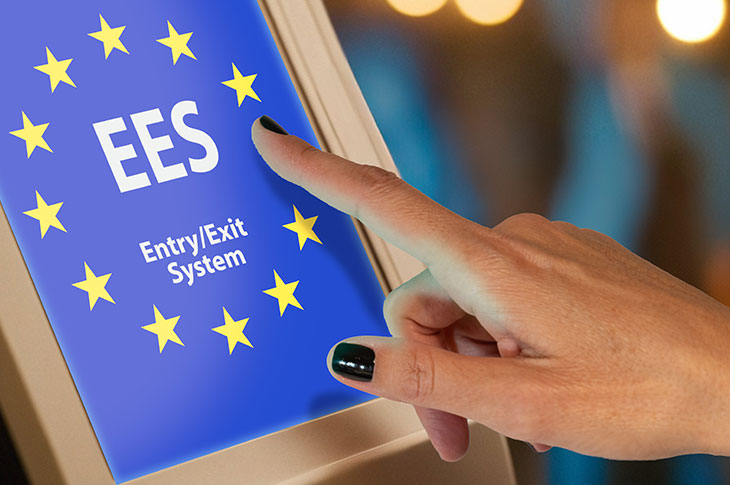
Scope of application and exceptions This system applies to third-country nationals crossing the European external border for short stays, whether or not they require a visa. However, specific exemptions are outlined in European Union regulations. This does not apply to: - Nationals of European countries participating in the system, as well as those from Cyprus and Ireland. - Third-country nationals holding a residence card who are direct family members of an EU citizen. - Third-country nationals holding a residence card or permit, as well as family members of a third-country national who can travel throughout Europe as any EU citizen would. - Third-country travelers entering Europe for intra-company transfers, research, studies, internships, volunteering, educational programs, exchanges, or au-pair placements. - Holders of residence permits or long-stay visas. - Nationals of Andorra, Monaco, and San Marino, as well as holders of passports issued by the Vatican City or the Holy See. - Individuals exempt from border inspections or those granted specific privileges when crossing borders. - Holders of valid local border-traffic permits. - Crew members of passenger and freight trains on international journeys. How automated registration works When a non-EU traveler crosses an external border, the Entry/Exit System (EES) automatically records their personal and biometric data, linking it to their travel document. At airports, seaports, and land crossings, passengers use self-service kiosks or automated booths at which they’ll present their passports; their fingerprints and facial images are captured and stored in the central European database. During the gradual rollout phase, some border points may continue to operate manual checks temporarily. Implications for travelers The system applies to nationals of third countries, including British citizens who, following Brexit, are regarded as non-EU travelers. The first time they cross an external border, they must complete the full registration process. Then, on subsequent visits, the process will be quicker and smoother thanks to the automatic reuse of biometric data.