
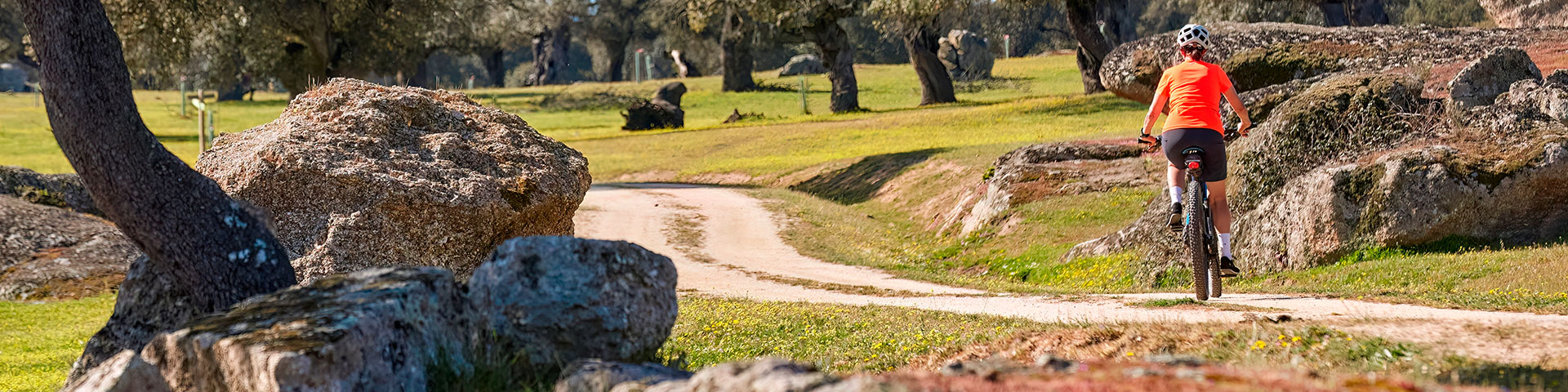
Over 1,200 miles to discover on two wheels in Extremadura
Protected nature and historical heritage drive cycling tourism in Extremadura
In Extremadura, the booming cycling-tourism movement has found a destination specially prepared to meet this growing demand. With 1,200 miles of cycle routes and a structure supported by MTB Centers, Greenways, and major historic axes, this region has crafted a coherent proposal that connects protected nature, cultural heritage, and well-preserved rural environments. Territorial diversity is one of its main assets. In the Sierra de Gata, ten mountain routes totaling nearly 150 miles traverse peaks and valleys with a distinctive Atlantic character. The 15-mile-long Las Fuentes Route, of medium difficulty, links sites such as Almenara Castle, the Hoyo Convent, and the Puerto Castilla archaeological site, integrating historical architecture and landscape within a circular trail. The Jerte Valley expands the offering with 110 miles distributed across 6 MTB routes connecting its 11 municipalities. The Umbría de Cabezuela Route leads to the Garganta de los Infiernos Nature Reserve and Los Pilones, where granite potholes and waterfalls form an iconic landscape. The significant variation in altitude ensures a striking diversity of ecosystems, providing scenic dynamism throughout the year.
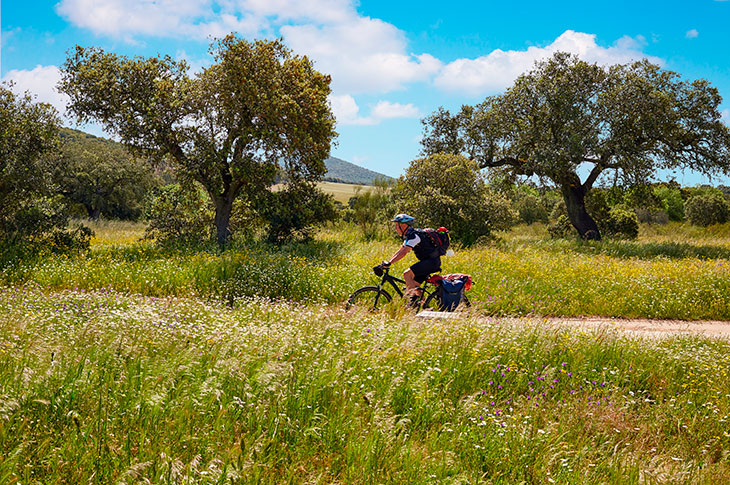
The Greenways offer up low-difficulty routes along former railway infrastructure. The Vegas del Guadiana Greenway, spanning 35.83 miles between Villanueva de la Serena and Logrosán, runs alongside protected areas such as the Villuercas-Ibores-Jara Geopark, and features 11 rest areas and viewpoints. The Monfragüe Greenway runs close by seven protected natural areas in just 10.5 miles. For those seeking a longer-distance journeys, the Silver Way is the quintessential historic trail. Its 200 miles within Extremadura link Monesterio and Baños de Montemayor, while the stage running between Villafranca de los Barros and Alcuéscar makes it possible to integrate the experience with the Roman archaeological ensemble of Mérida, declared World Heritage by UNESCO. As travelers begin to prioritize open, uncrowded destinations, this region offers a structured product capable of positioning itself internationally, supported by territorial authenticity and landscape continuity.
Location
Extremadura is located in the west of Spain and borders Portugal and the regions of Castile and León, Castile-La Mancha, and Andalusia. By road, it is mainly accessed via the A–5 (Madrid–Badajoz) and the A–66 (Silver Route). It enjoys transport links thanks to an airport in Badajoz and railway connections with Madrid and Seville. The nearest ports are located in the cities of Huelva and Seville.