
Logroño: a journey to the heart of La Rioja through vineyards and wineries
The capital of La Rioja invites you to experience wine among its architecture, emblematic vineyards, and tradition
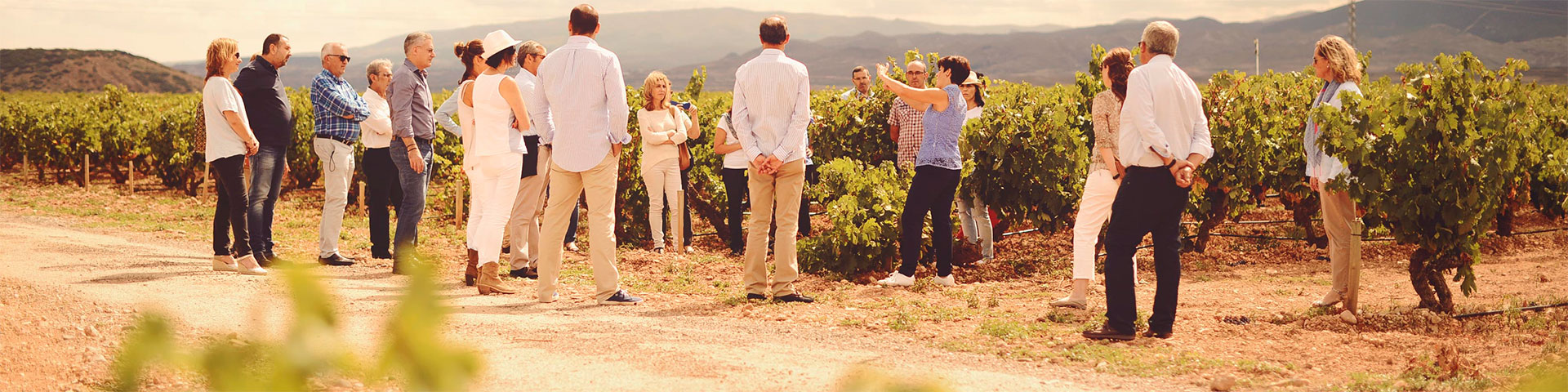
In Logroño, capital of La Rioja and epicenter of the D.O. Calificada Rioja, wine culture permeates daily life—from the medieval cellars in the historic center to the wineries that surround the city. Traveling this route means diving into a land where tradition and innovation coexist, and where architecture, enology, and gastronomy naturally come together. Logroño offers one of the most comprehensive and accessible wine routes in Spain, supported by its wine heritage that has shaped local life for centuries. In the old town, ancient cellars preserve the memory of those who have been making wine in their homes since the Middle Ages, while the most iconic streets demonstrate how the city has managed to integrate this wine heritage into its contemporary development. For visitors, wine reveals itself not just as a product, but as an identity and cultural landscape in itself. This experience is enhanced with a number of wineries that open their doors to visitors and act as a bridge between past and present. In the heart of the city, Bodegas Franco-Españolas—founded in 1890—invites tourists into its spaces to understand the evolution of La Rioja and its connection to the city. A short distance away, Bodegas Ijalba asserts its pioneering role as the first organic winery of the DOCa Rioja, while Taller de Vinos Arizcuren revives the spirit of urban wineries through its artisanal production focused on the historic vineyards of Rioja Oriental.
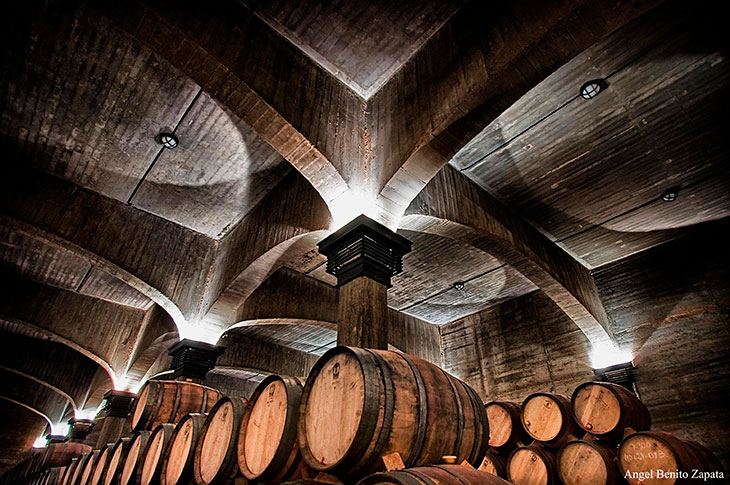
Outside the urban hub, Logroño is surrounded by wineries, each offering up complementary perspectives of the local land. Campo Viejo fuses architecture and sustainability in facilities designed to harmonize enology and the landscape; Marqués de Vargas applies the château concept with its own vineyards in Rioja Alta; Bodegas Olarra stands out for its iconic structure of 111 hexagonal domes, an architectural landmark in the region; Marqués de Murrieta invites visitors to tour the Ygay Estate and Ygay Castle, the cradle of modern La Rioja; and Ontañón transforms the visit into an artistic route where mythology and wine intertwine. Rounding off this mosaic, we have the Bodegas Valoria: one of the oldest wineries, whose history dates back to the 19th century. These visits allow travelers to learn about different winegrowing techniques, explore production and aging rooms, participate in tastings—including with blindfolded experiences—or discover wellness offerings linked to vinotherapy. Finally, all this is complemented by a gastronomic culture inseparable from La Rioja wine, making each pairing a sensory journey through the region’s character. The wine routes of Logroño culminate in the city itself, as the taverns, bars, and streets of the old town keep the social tradition of La Rioja alive and kicking. There, the landscape of wineries, vineyards, and wine cellars is transformed into an accessible narrative to help visitors understand how this land has made wine a central element of its identity and its means of connection with time itself.
Location
Logroño is located in northern Spain, in the La Rioja region. The city is connected via the A–12 and A–68 highways and relies on the Logroño-Agoncillo Airport for air connections. It also has a railway station and is connected to the major roads of the Ebro valley.