
Lanzarote, where volcanic nature enhances the potential of every professional event
Air transport links, specialized hotels, and unique venues place the island as a MICE destination.
In Lanzarote, MICE tourism has taken on a unique dimension thanks to its volcanic landscapes, sustainability trajectory, and air-transport links connecting the island with over 20 countries, ensuring easy access to a compact territory where nothing is out of reach. A specialized fleet of hotels and iconic venues created in dialogue with nature complete a destination capable of transforming every meeting into a unique experience. Lanzarote has established itself as a key MICE destination thanks to the unmistakable personality of its territory, shaped by volcanoes, a culture linked to the landscape, and a development model that has made sustainability a structural priority. This approach, endorsed by milestones such as its recognition as a Biosphere Reserve and its Biosphere Responsible Tourism certification, reinforces its positioning among organizers on the lookout for responsible and inspiring environments.
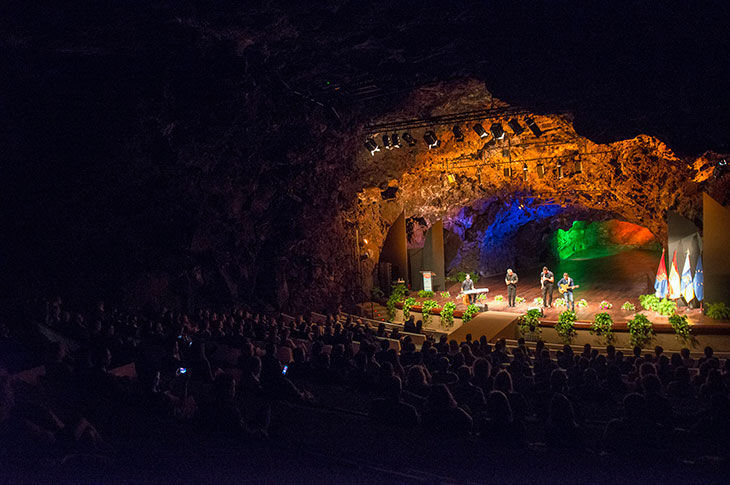
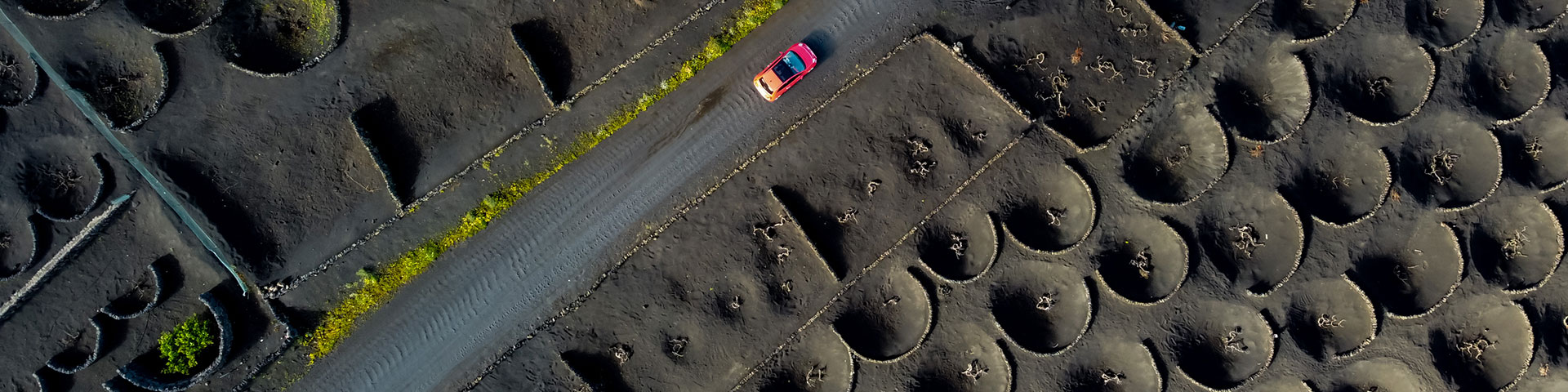
One of the key pillars of its MICE competitiveness lies in its air transport links. The island is connected to more than 60 destinations in over 20 countries through more than 600 direct weekly flights. This accessibility facilitates the mobility of international groups and reduces travel times. On top of all this, the island's territorial structure makes it possible to travel from the airport to the farthest accommodation in about thirty minutes. A range of specialized hotel facilities consolidates this advantage. Lanzarote brings together 4,254 rooms and 8,668 beds in four- and five-star hotels equipped with meeting rooms, forming a system capable of hosting everything from small incentives to larger-scale conventions. The destination’s distinctive character can be felt in its unique venues, designed to integrate art, nature, and architecture. Here, Jameos del Agua stands out as its most emblematic space, with a 500-seat auditorium nestled inside a volcanic tube. The Mirador del Río viewpoint, suspended above the Famara Cliff, offers unique views of La Graciosa; while the El Campesino House-Museum, the Cactus Garden, and the Los Verdes Cave offer up versatile settings capable of transforming any professional gathering. Incentive experiences further broaden the destination’s possibilities. Its 132 miles of coastline allow for a range of nautical activities, while its volcanic landscapes promote team-building proposals and exclusive tours. On top of all this, the island offers a range of experiences linked to wellness and wine tourism, with vineyards cultivated in picón soil that make up one of the most unique agricultural landscapes in Europe. Overall, the island proves that it is possible to combine operational efficiency, sustainability, and creativity in a compact, accessible destination prepared to host events looking to leave a positive impression on participants and organizers alike.
Location
Lanzarote is a Spanish island in the Atlantic belonging to the province of Las Palmas (Canary Islands), located in the northeast of the archipelago. It is mainly accessed via César Manrique–Lanzarote Airport. The island is organized via island roads, while the Port of Arrecife offers a number of maritime connections with other islands, including La Graciosa, and mainland Spain.