
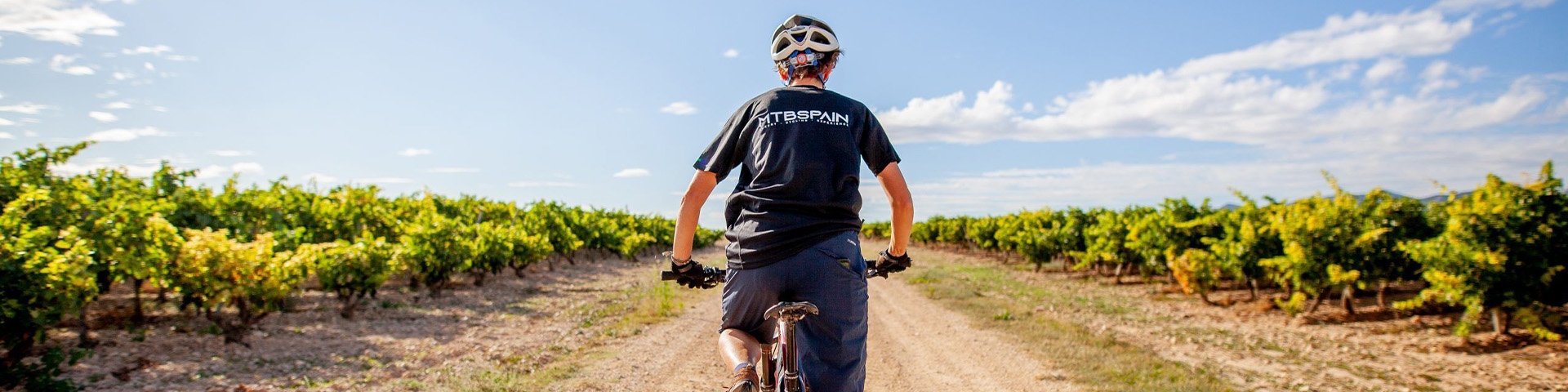
Cycle tourism among unique routes and vineyards in La Rioja
European routes, long-distance itineraries, and mountain ranges establish La Rioja as a cycle-tourism destination
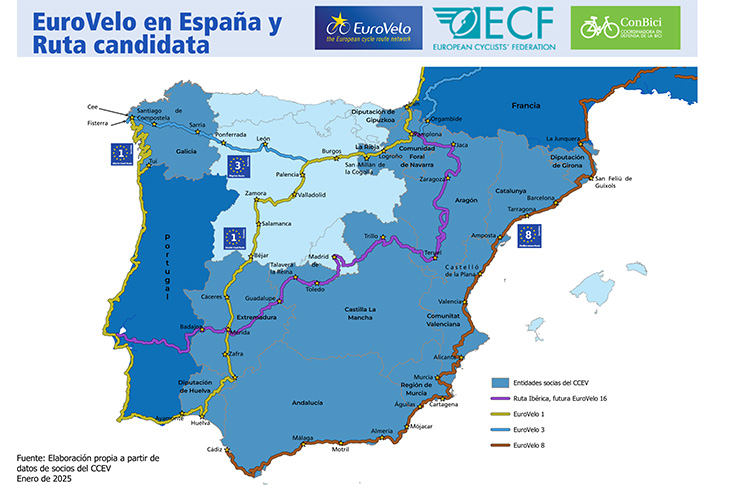
La Rioja is consolidating its cycle-tourism profile with an offering that links major European corridors, long-distance routes, and new mountain proposals, structuring a travel narrative in which landscape, heritage, and sustainability all advance at the same pace. Among vineyards, monasteries, mountain ranges, and villages with unique identity, La Rioja has shaped a two-wheeled experience that attracts both cultural cycle tourists and sport travelers seeking depth, tranquility, and direct contact with the surrounding area. Through cycling, visitors can experience La Rioja on a different scale, closer to the landscape and its transitions. With every pedal stroke, visitors link together a series of very diverse natural settings, with classic sections associated with the Way of St. James, inland valleys, mountain areas, and wine-growing horizons that give character to the journey. One of the fundamental pillars of this positioning is the EuroVelo 1, or the Atlantic Coast Route, which crosses La Rioja as part of a long-distance European network. Passing through the community, the itinerary enters from Navarre, reaches the city of Logroño and continues toward Navarrete, Ventosa, Nájera, Azofra, Alesanco, Cordovín, Badarán, Berceo, San Millán de la Cogolla, Manzanares de Rioja, and Gallinero de Rioja, before arriving at Santo Domingo de la Calzada and advancing, via Corporales and Morales, to Grañón. This route connects the vineyard landscape with heritage landmarks such as the monasteries of Suso and Yuso, in San Millán de la Cogolla, or the La Rioja section of the Way of St. James.

Added to this international dimension, tourists can explore the EuroVelo 3—the Pilgrims’ Route—which makes its way across the region and reinforces La Rioja’s reputation as a place intersected by major cultural and cycle-tourism itineraries. The combination of both routes projects an image of a connected, recognizable destination aligned with demand that values sustainable mobility, the authenticity of the landscape, and slow-paced travel. Meanwhile, cycle tourism in La Rioja is expanding its reach with other, more athletic and experiential proposals. The Iberian North circular route, with a 340-mile itinerary, offers an ideal self-guided summer journey with no fixed starting point, designed for fans of self-sufficient cycle tourism. This route connects the Demanda, Cameros, Cebollera, and Alcarama mountain ranges, as well as the territories of Soria, Navarre, and Álava, tracing an extensive immersion in the northern Iberian System.
Ezcaray boosts this evolution with plans for a mountain-bike park set to expand this town’s appeal beyond the snow season. This proposal includes new trails specifically designed for mountain biking, zones differentiated by difficulty, routes accessible directly from the town center, and a layout designed to harmoniously coexist with the landscape and surrounding land uses. From European corridors to circular routes and technical mountain trails, the destination reveals a unique identity on two wheels, capable of attracting a diverse range of profiles and turning every pedal stroke into a more conscious way of discovering its landscapes.
Location
La Rioja is located in northern Spain, bordered by the Basque Country, Navarre, Aragon, and Castile and León. By road, it is mainly accessed via the AP–68, the A–12, and the N–232. It is connected with a train station in Logroño and an airport in Logroño–Agoncillo; neighboring areas also offer the airports of Bilbao, Pamplona, and Zaragoza, and the port of Bilbao.