
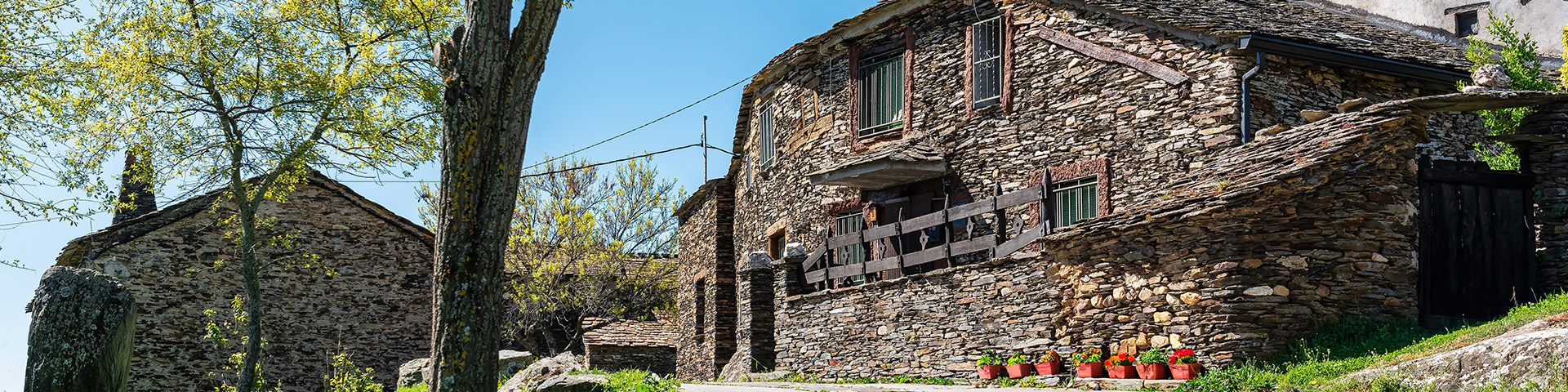
The magic of slate: a journey to the Black Villages of Guadalajara
A tour through Umbralejo, Valverde de los Arroyos, Campillo de Ranas, La Vereda and Roblelacasa
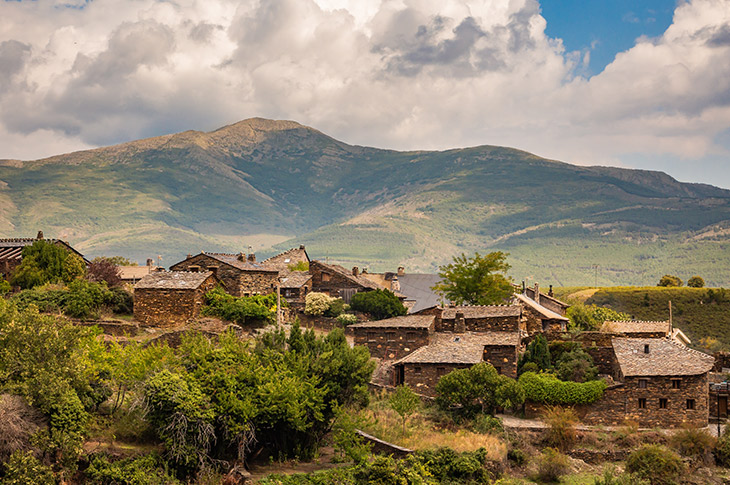
Just over an hour and a half from Madrid, nestled in the foothills of the Ayllón mountain range, the Black Villages of Guadalajara offer a getaway to a world seemingly frozen in time. Built entirely from slate, these small rural settlements ooze a one-of-a-kind character. Their restrained, harmonious architecture blends seamlessly into the mountainous landscape, revealing a hidden Spain where history, authenticity and tranquility remain undisturbed. Umbralejo. In the valley of the Sorbe River lies a village that has been given a new lease of life after decades of abandonment, thanks to the National Programme for Recovery and Educational Use of Abandoned Villages (PRUEPA). Its cobblestone streets preserve the original medieval layout and it is home to a house-museum that encapsulates centuries of rural life. Open to visitors year-round, this enclave offers a one-of-a-kind educational and cultural experience, surrounded by the silence and awe-inspiring natural beauty of the mountains. Valverde de los Arroyos. Nestled at the foot of Ocejón Peak, Valverde de los Arroyos is the most renowned of the Black Villages. Its Main Square and the Church of San Ildefonso, both constructed in slate, form the heart of a village seemingly frozen in time. The Ethnographic Museum offers an insight into its agricultural and livestock heritage, while the nearby Chorreras de Despeñalagua waterfall adds the perfect natural finishing touch to this route.
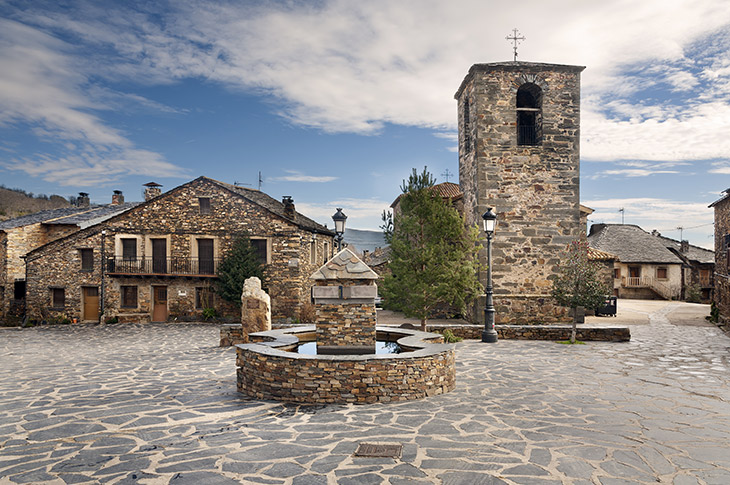
Campillo de Ranas. Regarded as the heart of Black architecture, this village preserves a historic layout of winding streets and dark stone façades that whisk you back through the centuries. The sunset views are truly breathtaking from the Fuente de las Ranas viewpoint. A trailblazer in hosting same-sex weddings, the town blends authenticity with modernity amidst a stunning natural backdrop, the perfect spot to set off on numerous hiking trails that lead up to Ocejón Peak. La Vereda. Abandoned since the 1950s and revived by the Hijos de La Vereda Cultural Association, this village is an inspiring example of heritage preservation. Among its treasures are the Church of the Immaculate Conception and its ethnographic museum. The surrounding area is calling out for you to explore the El Vado reservoir, the Aljibe waterfalls and the Cistercian monastery of Bonaval, all serene and virtually untouched natural wonders. Roblelacasa. Situated on the southern slopes of the Ayllón mountain range, Roblelacasa keeps the spirit of Black architecture alive. Its homes, linked by narrow alleys, blend seamlessly into a landscape of labdanum trees and rolling hills. A stone’s throw away, the Aljibe waterfall and the Jaramilla Canyon trail offer a truly immersive authentic and natural experience. It is the perfect way to finish off a route unveiling one of the most genuine and captivating sides of rural Spain.
LocationGuadalajara is situated in central Spain, within the autonomous community of Castilla-La Mancha. It borders Soria and Segovia to the north and Madrid to the west, about 60 kilometres away. It can be reached via the A-2 motorway and the Madrid-Barcelona railway line, and is easily accessible from the Adolfo Suárez Madrid-Barajas Airport.