
Álava’s black gold unveils a trail through mines and industrial heritage
Natural asphalt from Montaña Alavesa leads a distinctive journey through tunnels, villages and lush landscapes.
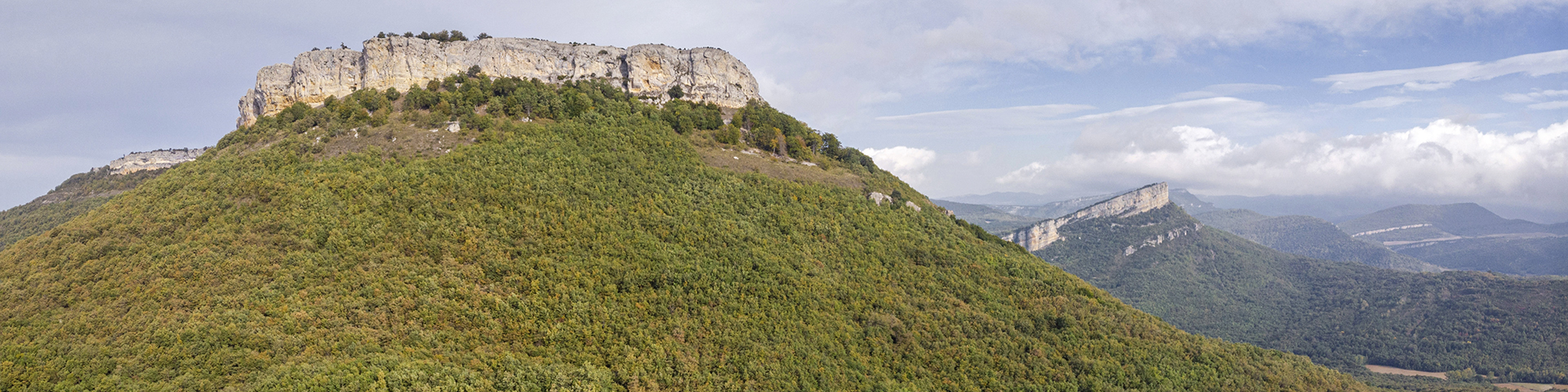
Beneath the forests and trails of Montaña Alavesa, Lucía Mine reveals an underground story where natural asphalt still oozes from the rock. Explored with helmets and headlamps, the old galleries offer an immersive experience where Álava’s so-called black gold transforms into a journey through industrial heritage, stunning landscapes, mining history, unique geology, green trails and a fresh perspective on the region from within. The story begins in the earth itself, in its fissures and in that glossy darkness which for decades anchored much of Montaña Alavesa’s economic and social life. Natural asphalt is not a metaphor here; it is a dense, black, viscous substance that seeps from the walls of Lucía Mine due to the unique natural temperature and humidity, allowing it to continue oozing even a century after mining operations ceased. Situated in Atauri, within the Montaña Alavesa region and the Izki Natural Park, Lucía Mine operated from 1872 until the 1920s. Today, it welcomes visitors on guided tours through nearly 300 meters of hand-excavated galleries, allowing them to pass beneath massive supporting pillars, observe marks left by tools and explosives, and appreciate how a silent mine can tell a living story.

The uniqueness of this site is captured in one key fact: it is one of only two natural asphalt mines open to visitors in Europe. Its value lies not only in its geological rarity but also in its power to illustrate an industry that left a lasting imprint on villages, roads, factories and collective memory. Numerous mines operated in the area, many of them named after women, and Lucía Mine serves as the spokesperson for this mining landscape that spread across Arraia-Maeztu, San Román de Campezo, Corres and Leorza. The process unveiled during the visit offers a fresh perspective on a familiar material. The asphalt rock was extracted from the deposit, transported by carts or pack animals, and taken to factories to be crushed and processed into blocks or tiles. Asphalt from Lucía Mine and other regional mines was used in different projects including the Maestu pelota court, the Madrid Stock Exchange building and several streets in Paris. The journey continues along the Natural Asphalts Route, an itinerary that is nearly 40 kilometers long, that can be completed in stages by foot or bike, linking key sites such as the Leorza factory, Atauri train station, the San Ildefonso mining village, the San Román de Campezo mines and Lucía Mine itself. Its recommended 14.9-kilometer route links three complementary perspectives: the Izki Natural Park Visitor Center in Corres; the Old Vasco-Navarro Railway Visitor Center in Antoñana; and the historic Atauri railway station. Amidst damp mine galleries, lush forests, the Vasco-Navarro Railway Greenway and villages rich in character, Álava's “black gold” unfolds as an invitation where visitors don’t just witness an industrial relic —they journey through history itself, listen to the voice of the mountains and discover how a region has transformed its mining heritage into a living legacy.
Location
Álava is situated in northern Spain, within the Basque Country, with Vitoria-Gasteiz as its capital city. Its main roadways include the A–1, AP–1 and AP–68 highways. The region features an airport in Vitoria and is conveniently close to the airports of Bilbao and San Sebastián. The Vitoria–Gasteiz railway station serves as a hub for both medium- and long-distance train connections.