
Train stations that are architectural jewels in Spain
From north to south, a journey through the country’s most beautiful and iconic stations
To travel across Spain by train is to enjoy an experience that blends history, art and motion. Stations, more than mere starting or ending points, are architectural works that reflect the soul of each region. From the colossal Atocha in Madrid to the historic Canfranc in the Aragonese Pyrenees, each stop invites you to discover a different part of the country, where the journey becomes an essential part of the travel experience. In the Community of Madrid, Atocha Station starts off the route with its tropical garden, an interior jungle of iron and glass that shows off the capital’s modern pulse. Aranjuez Station, inaugurated in 1851, retains its connection to its Royal Palace and is part of the history of the country’s oldest trains. Heading south, in Castile-La Mancha, Toledo Station displays a neo-Mudéjar style with its clock tower and artisanal ornamentation. In Andalusia, the route reveals contrasts: Jerez de la Frontera Station, colossal and light, recalls the prosperity of the wine trade, while Almería Station, inspired by French styles and a wrought iron structure, refers to the 19th-century aesthetic.
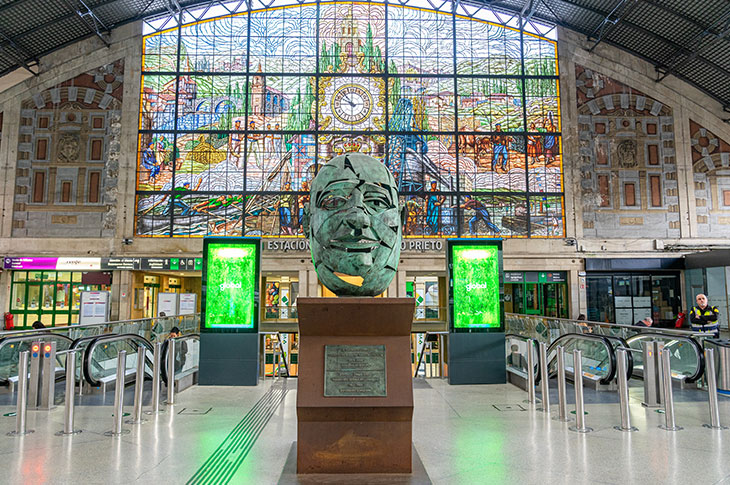
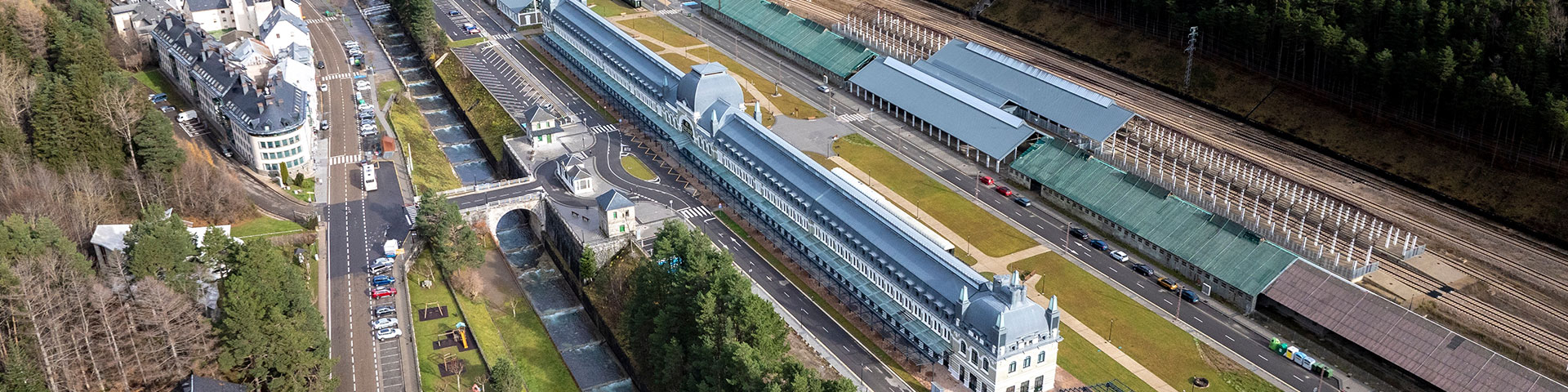
The journey ventures into the Region of Valencia, where Valencia North Station is a modernist landmark decorated with agricultural motifs. In Catalonia, Barcelona França Station stands out for its early 20th-century lobby and its iron and glass canopies, a complex comparable to the great European terminals. In Aragon, Canfranc International Station, located in Huesca, impresses with its scale and history: inaugurated in 1928 to connect Spain and France, today it is revived as a hotel space in a high mountain setting. Further north, travelers arrive in Bilbao, in the Basque Country, where La Concordia Station reveals a modernist façade facing the Nervión River and shares its prominence with Abando Station, known for its stained glass made up of more than 300 pieces. The last stop on this route is in Castile and León, where Zamora Station, in a Plateresque style with a broad façade, reminds us that in Spain trains not only connect destinations but also eras, styles and ways of traveling. To explore these stations is to delve into the soul of the country on rails. Each one preserves a unique story, accent and perspective on travel, inviting visitors to discover the country with its own horizon.