
The Gaudí Route: as the modernist genius’ legacy becomes a territorial experience
A shared project uniting heritage, education, and territory
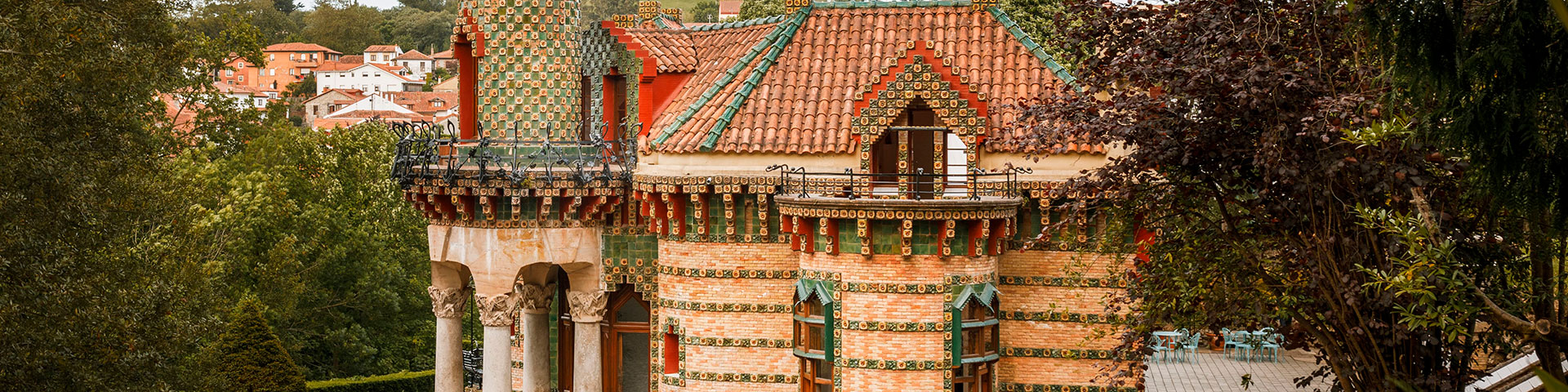
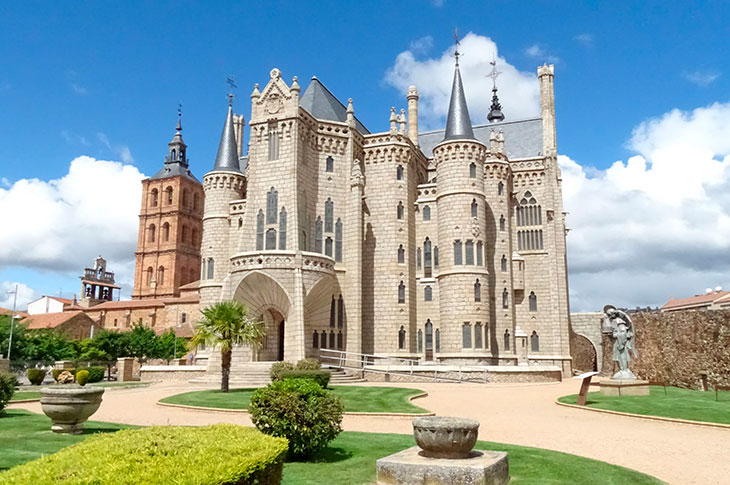
The Gaudí Route was born as a cultural and tourist initiative connecting Cantabria and Castile and León through the three buildings that Antoni Gaudí constructed outside of Catalonia. Promoted by El Capricho de Gaudí, the Casa Botines Gaudí Museum, and the Episcopal Palace of Astorga, this project articulates an offering that unites heritage, outreach, and educational action, aiming to generate a shared territorial narrative around the architect’s legacy. In Comillas, tourists will discover El Capricho de Gaudí, an early work built between 1883 and 1885, when the architect was barely 30 years old. This building, conceived as a singular “architectural sunflower,” reflects Gaudí’s ability to integrate function and form into a unique creative language. Today it serves as a house museum with a cultural management model oriented towards heritage conservation and accessible public outreach. In León, the Casa Botines Gaudí Museum is one of the key museological projects of the Castile and León Social Works Foundation. The building, originally conceived as a commercial and residential headquarters, now houses a museum that combines research, exhibitions, and the conservation of its historical and artistic heritage. The facility is intended to serve as an international reference center focused on the figure of Gaudí and, at the same time, a driving force for the city’s cultural life. The third stage leads to Astorga, where the Episcopal Palace represents one of the architect’s most unique works. This building, whose works commenced in 1889, reflects a moment of creative maturity as Gaudí reinterpreted medieval tradition through his own language, in which stone, light, and symbolism dialogue with the Leonese landscape. Currently, the palace is home to a museum dedicated to the conservation and dissemination of the artistic legacy linked to the building.
What’s more, the Gaudí Route is structured around three complementary pillars. The first is the physical route, understood as a cultural journey connecting emblematic buildings, monumental cities, and landscapes with their own identity. Each stage offers a distinct narrative: Comillas as a creative laboratory and Indiano town (home to the returning emigrants who made their fortune in the Americas) open to the Cantabrian Sea; León as a monumental city in which Gaudí engages with urban modernity; and Astorga as a symbolic destination where architecture, spirituality, and history come together. The second pillar centers on knowledge with a clear educational outreach role. The project seeks to bring Gaudí's figure closer to new audiences, especially children and young people, through educational materials, workshops, and proposals adapted to the family environment. This dimension transforms the journey into a cultural mediation tool, aligned with the new demands of educational and experiential tourism. The third pillar is philanthropic, aimed at supporting child and youth talent related to artistic and cultural disciplines through awards, scholarships, and specific actions. This approach strengthens the project’s transformative nature and places it beyond conventional tourism promotion. As a result, the Gaudí Route is imagined as an offering that transcends mere monument visits to become a shared territorial narrative. Connections between Comillas, León, and Astorga offer up an interpretation of Gaudí's work from new perspectives, while reinforcing cultural cooperation among destinations that share heritage, history, and a commitment to dissemination.