
Landscapes on the big screen: a journey through Castile-La Mancha and cinema
A route to experience the real settings of major productions among castles, lagoons, and plateaus
Castile-La Mancha presents itself to the visitor as a grand natural set where fantasy, history, and the epic come together, unveiling prestigious castles, monumental cities, and karst landscapes that have brought mythical worlds, medieval battles, royal intrigues, and far-off settings to life. Traveling through the region offers the chance to discover the iconic filming locations of movies and series, as well as uncovering sites with remarkable narrative power that goes beyond the screen. Each stop demonstrates how its authentic settings have been transformed into legendary worlds that brought to life epic heroes, futuristic warriors, court intrigues, and fantasy tales. For international travelers, the region presents the opportunity to visit the very sites where emblematic shoots took place.
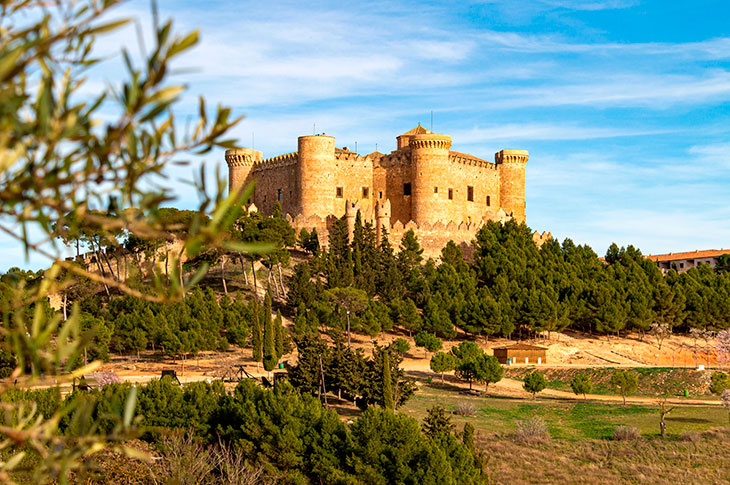
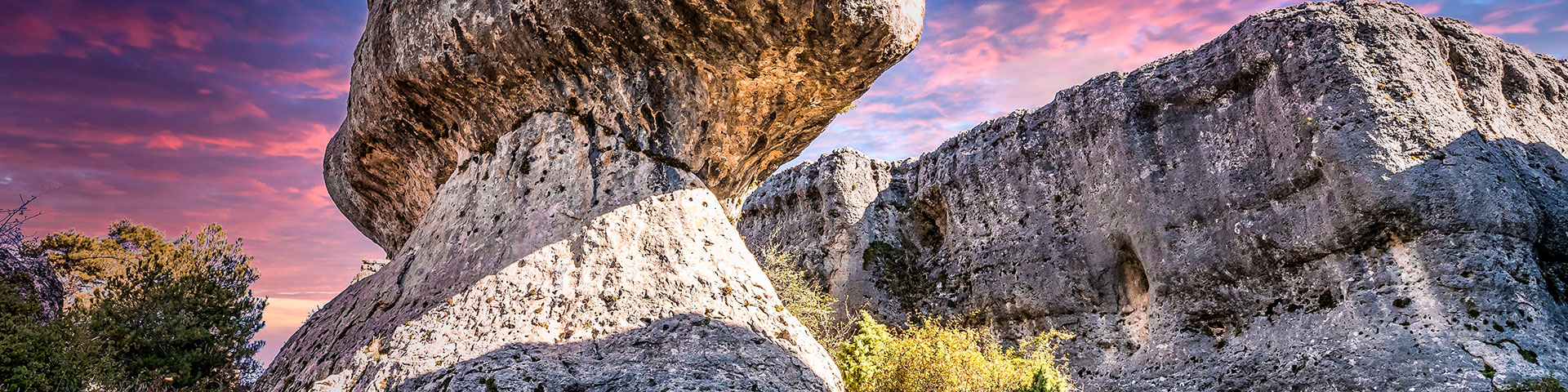
Cuenca reveals its karst formations as a natural backdrop shaped over millennia. Its copses and passageways served as Cimmeria for the film Conan the Barbarian, while Las Majadas recreated landscapes for the movie The World Is Not Enough, from the James Bond saga. Decades later, thrilling scenes for Terminator: Dark Fate were filmed at the Buendía reservoir, establishing the area as a must-visit for action cinema. Amid these landscapes, adventure finds its recognizable and versatile stage. Also in the province of Cuenca, lies Belmonte Castle, whose 15th-century profile has made it one of the most frequently used settings in the region. For example, it served as a key location for Flesh and Blood and in the medieval tournament featured in El Cid (1961). Its walls, interior halls, and Mudéjar elements help us understand why it remains a real benchmark for historical productions. The route continues towards environments where nature takes on a leading role. The Alto Tajo Nature Park, with gorges and canyons, was the setting for El río que nos lleva, recreating the journey of the wood workers. Further south, the Ruidera Lagoons hosted part of the filming of Miguel and William, showcasing landscapes associated with Spain’s Golden Age.
Toledo, one of the most filmed cities in the country, appears in productions of various genres. Its old town served as the setting for The Conspiracy and the recreation of the shady locations of Roman Polanski’s The Ninth Gate. Palaces, convents, and alleys offer a unique setting that combines heritage and cinematic aesthetics, reinforcing its role as a recurring backdrop. The journey concludes in Consuegra, where the windmills—reminiscent of Cervantes—were the location for The Man Who Killed Don Quixote, directed by Terry Gilliam. Facing them, it becomes clear why so many directors have found in Castile-La Mancha a destination capable of inspiring new narratives. Castile-La Mancha invites you to discover a destination where cinema, landscape, and heritage come together to create a cultural experience that connects real locations with stories forming part of the collective imagination.
Location
Castile-La Mancha is located in the center of Spain, south of Madrid. The region is connected via the A–3, A–4, A–5, and A–42 highways, as well as the A–2 in its eastern sector. It is served by AVE high-speed train stations in cities such as Toledo, Cuenca, and Albacete, and is connected by road to the Madrid-Barajas and Valencia airports.