
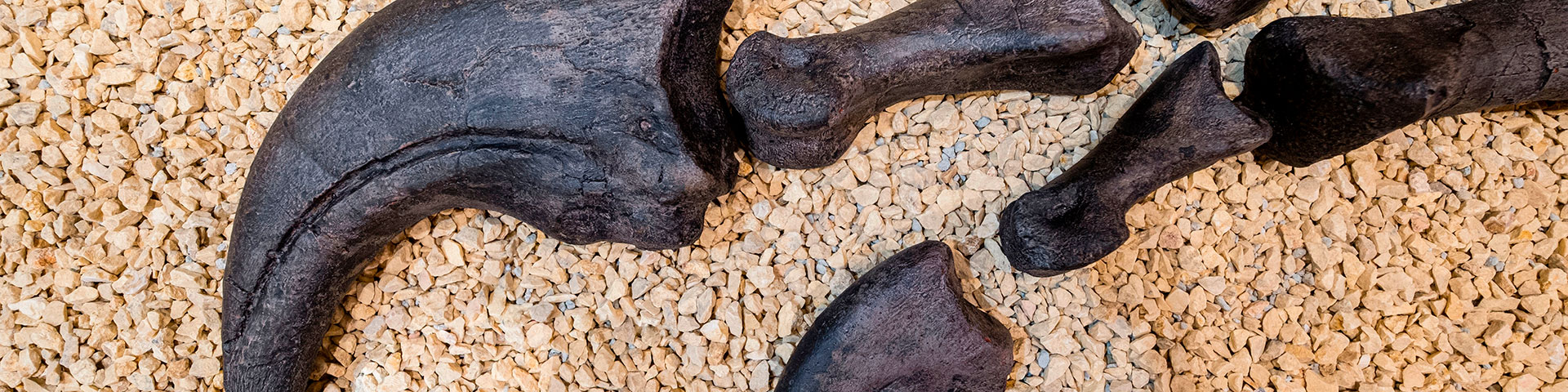
Jurassic La Rioja: a paleontological corridor made up of 140 sites
The Dinosaur Route combines science, landscape, outreach, and leisure in the Cidacos valley
In the south of La Rioja, between the upper valley of the Cidacos River and the mountain ranges marking the border with Soria, one of the largest sets of fossilized footprints in the world stretches out. More than 140 sites spread across about twenty municipalities and thousands of fossil footprints make it possible to reconstruct the presence of dinosaurs that inhabited these lands between 140 and 110 million years ago. The Dinosaur Route structures this paleontological heritage through accessible sites, interpretation centers, and outreach and leisure proposals that transform the region into a leading scientific and tourist destination on the international stage. Enciso is the main hub of this route, with close to 1,400 footprints cataloged within its municipality. Several marked itineraries depart from the Paleontological Center towards Navalsaz, connecting various sites accessible both by road and by trails. Among them, Virgen del Campo stands out, preserving 506 footprints accompanied by other exceptional traces: skin marks, scratches produced while swimming, signs of interaction between carnivorous and herbivorous dinosaurs, undulations of ancient dunes, and the traces of a fossilized earthquake.
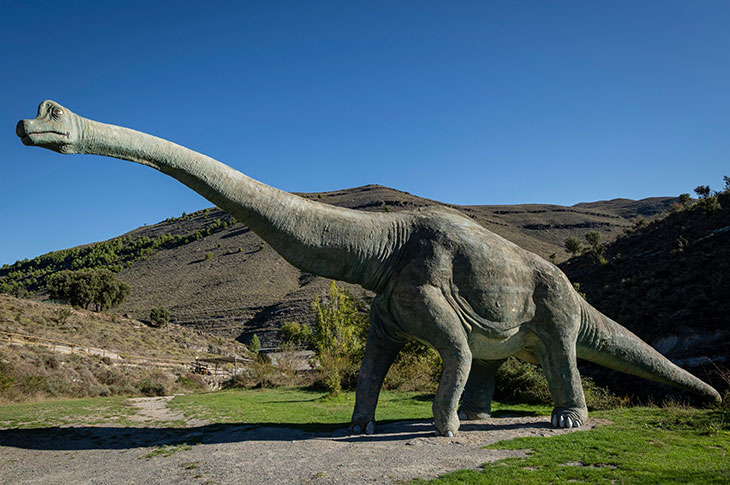
Another of the most educational sites is Valdecevillo, where four perfectly defined theropod footprints can be observed, alongside a possible family group of iguanodons that has been recreated with sculptures, and 59 impressions attributed to a large sauropod. It was in the surroundings of El Villar-Poyales that the footprint of the Theroplantigrada encisensis was identified for the first time, attributed to a plantigrade dinosaur with a possible interdigital membrane (webbing): an adaptation suggesting a lifestyle linked to wet or aquatic environments. The route continues towards Cornago, where the Los Cayos complex gathers hundreds of footprints from large carnivorous dinosaurs, and towards Munilla, where the Peñaportillo site preserves a 42-foot track formed of 17 consecutive footprints. On the other hand, nearby destinations such as Las Mortajeras or Malvaciervo round off this paleontological corridor that stretches across southeastern La Rioja.
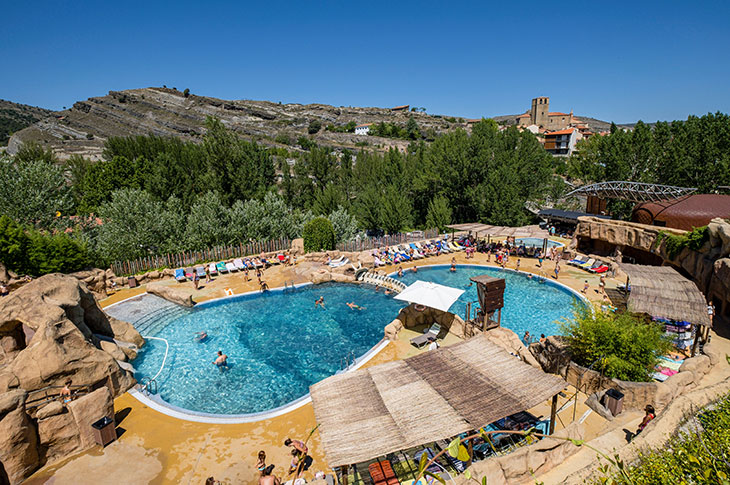
Igea adds an educational dimension to the experience with the La Rioja Paleontological Interpretation Center, a space dedicated to explaining the sites’ geological origin and the presence of dinosaurs in the area during the Jurassic and Cretaceous periods. This route is also supported by life-size reconstructions, audiovisual resources, and scientific materials that offer an understanding of the region’s paleontological wealth. Just a few miles away, lies a 36-foot-long fossilized conifer trunk, in another unique testimony to the prehistoric landscape that occupied these lands. Finally, this attraction is rounded out by the El Barranco Perdido paleo-adventure park, located in the municipality of Enciso, which combines outreach, science, outdoor activities, and museum spaces around the so-called Cretaceous Museum. The final result is a structured tourist product that brings together research, interpretation, and landscape, positioning La Rioja as one of the most significant paleontological destinations in Europe.
Location
La Rioja is located in northern Spain, in the Ebro valley, between the Basque Country, Navarre, Aragon, and Castile and León. Its capital is Logroño. The destination is connected via the AP–68 motorway and the A–12 highway. It also enjoys transport links via a train station in Logroño and an airport in Logroño–Agoncillo, with nearby connections in Bilbao, Zaragoza, and Pamplona.