
Covarrubias Route: an architectural itinerary through cities of La Mancha
Un recorrido renacentista que conecta arquitectura, territorio y legado artístico
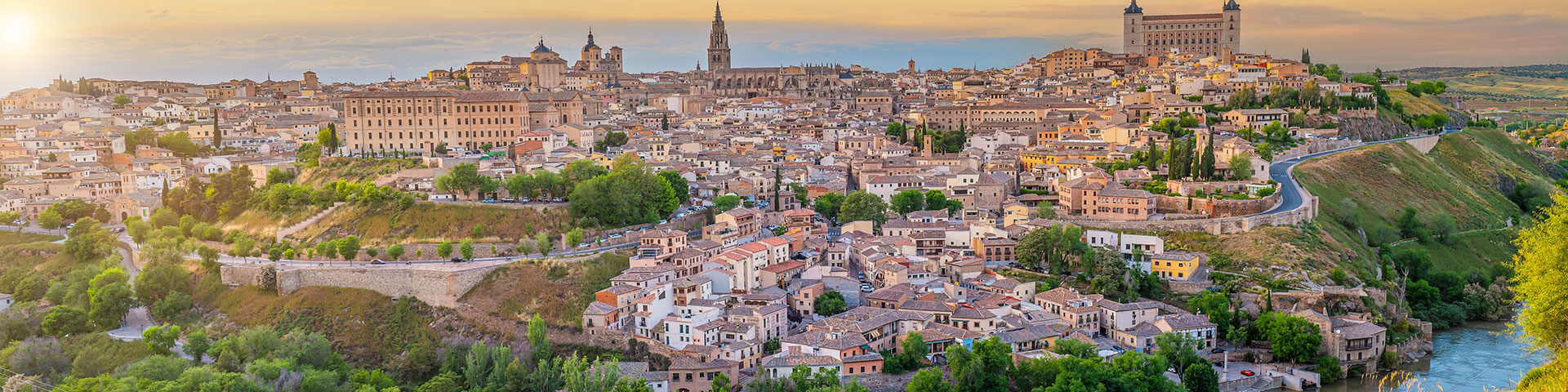
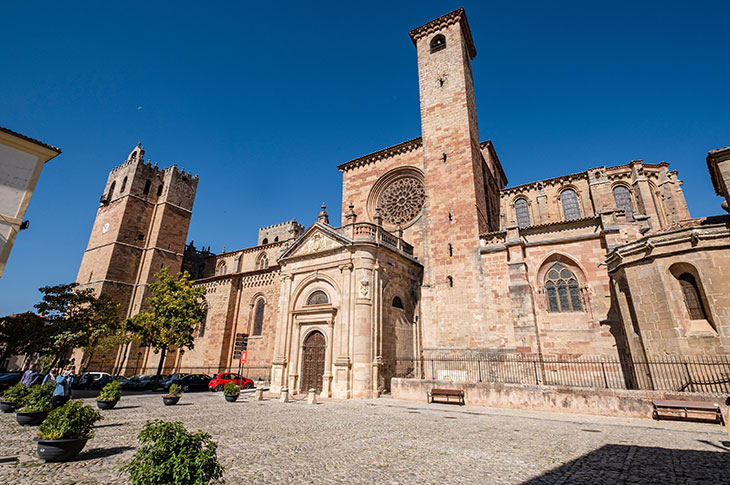
Following the Covarrubias Route will allow visitors to discover Spain from a different perspective: through the legacy of Renaissance architecture. This cultural itinerary links historic cities and monumental spaces associated with the work of Alonso de Covarrubias, one of the great architects of the 16th century. Churches, palaces, cloisters, and cathedrals form a slow and coherent journey, aimed at those who understand tourism as an experience of knowledge. The Covarrubias Route invites visitors to explore the Spanish Renaissance from an architectural perspective, viewing buildings not as isolated pieces but as part of a territorial and artistic narrative. The itinerary centers around the figure of a key 16th-century architect and the main introducer of the principles of "a la antigua" architecture to Spain, whose work enables us to follow the aesthetic evolution of an entire era. The journey takes place primarily in Castile-La Mancha, with special prominence given to Toledo and its province. In this historic city, Renaissance architecture is incorporated into an urban core with a high heritage density. Chapels, portals, hospitals, and palaces engage in dialogue with the medieval past and reflect the transition towards an architecture based on proportion and monumental sobriety. Visiting these sites allows visitors to understand how the Renaissance adapted to an already established city. Torrijos, where Alonso de Covarrubias was born, offers an initial perspective on the itinerary. This town hosts some of his earliest works, still linked to Gothic forms, enabling visitors to understand the later evolution of his architectural language. This stop also introduces the traveler to the formative process of a creator attentive to innovation and the changes of his time. The route continues in Sigüenza, where the cathedral and spaces such as the sacristy of the Heads or the altar of Santa Librada reinforce the monumental dimension of this route. These are buildings where architecture becomes a spatial experience and allows visitors to observe construction solutions and some characteristic volumes of the Spanish Renaissance in its mature stage.
Pastrana includes the Ducal Palace, a prominent example of civil architecture from the period, in the itinerary. Alongside this site, towns such as Lupiana, Yepes, Talavera de la Reina, and La Puebla de Montalbán expand the map through convents, cloisters, hospitals, and churches, thereby showing the dissemination and adaptation of a single architectural language in different territorial contexts. Beyond the buildings, the Covarrubias Route is designed to be a slow and reflective travel experience, aimed at travelers interested in heritage, art history, and destinations discovered on foot. Each stop adds new layers of meaning and transforms the journey into a coherent cultural immersion. Location Castile-La Mancha is located inland in Spain, to the south and east of Madrid, in the Southern Plateau. It is accessed via highways A–3, A–4, A–5, A–31, and A-42; and has AVE rail connections between Madrid–Andalusia and Madrid–Levante. Airports: Albacete and Ciudad Real; near Madrid–Barajas, Valencia, and Alicante. Nearby ports: Valencia and Alicante.