
Clunia, the Roman city that is redefining cultural travel in Burgos
A destination for travelers seeking history, landscape, and living memory
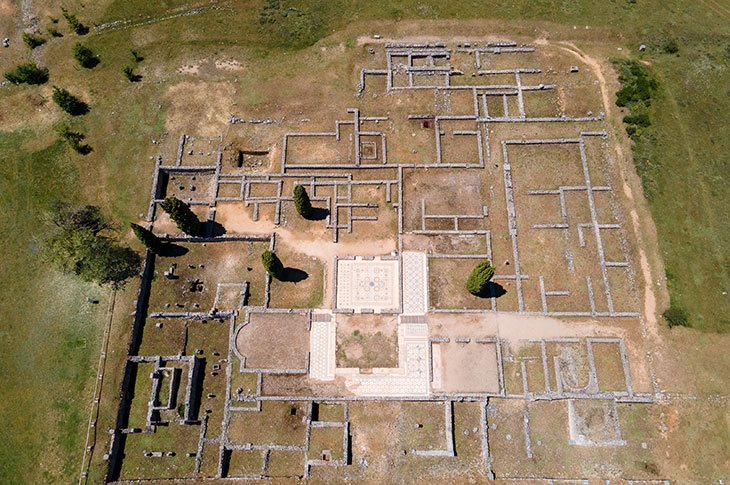
On the Alto del Castro mountain, between the Burgos villages of Peñalba de Castro and Coruña del Conde, lies Clunia Sulpicia, an ancient Roman city that flourished thanks to its strategic position, advanced mastery of water, and monumental urban layout where forums, baths, domus and one of the most significant theaters of Roman Hispania coexisted. Its historical pulse continues to accompany today’s travelers as they explore this unique archaeological landscape in the Burgos, which has also become an ideal space for shared cultural discovery across generations. Visiting Clunia offers an opportunity to enter a city that shaped the political, administrative, and cultural pulse of northern Hispania Citerior Tarraconensis. Situated on the plateau of Alto del Castro, its location was no accident. The Romans chose this hill because of its commanding position over the territory and the presence of a significant underground water reserve, now known as Cueva Román, exploited through a system of wells and galleries designed to supply a growing population. This hydraulic infrastructure now makes the visit an experience highly recommended for family tourism, as Roman engineering can be explained visually and accessibly to audiences of all ages. Visitors exploring the site will discover an urban enclave that reflects the city’s ambition. The forum, the hub of politics, religion, and business, served public life through buildings such as the basilica, the Aedes Augusti, and a large temple elevated on a podium. This space symbolized the consolidation of Clunia Sulpicia as a Roman city, endowed with local magistrates, minting capabilities, and a key administrative role as the capital of the Clunian legal convent. Surrounding the forum were the tabernae, the macellum and several areas of economic activity that demonstrate the enclave’s vocation for urban centrality. The residential areas complete this historical narrative, with insulae intended for rent and domus arranged around courtyards and noble rooms, where mosaics and heating systems such as the hypocaust, characteristic of affluent homes, remain. Some of these residences included underground spaces designed to mitigate the extreme temperatures of the Burgos plateau.
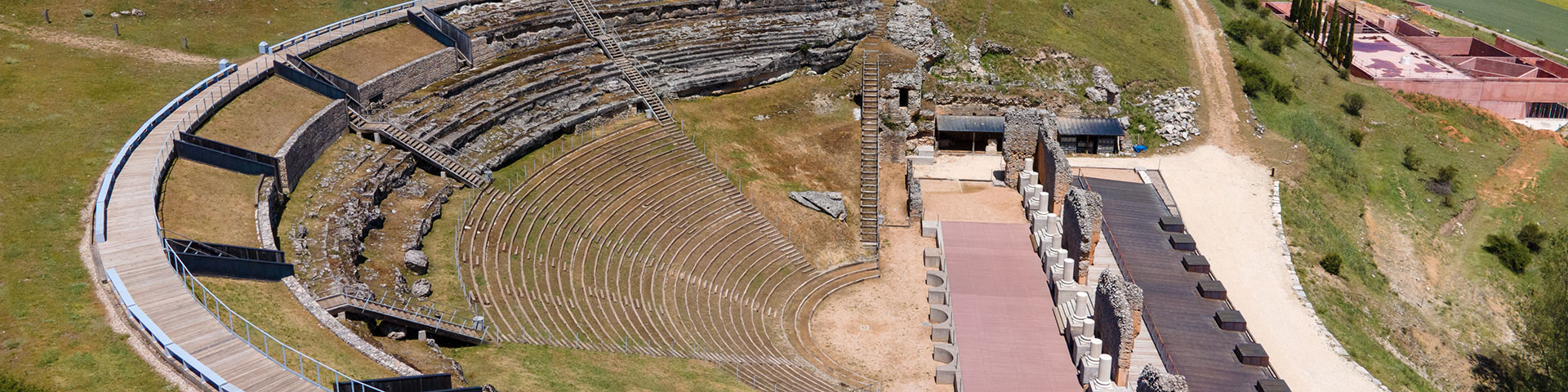
Public architecture reached its peak in the thermal baths and the theatre, one of the largest on the peninsula. With a capacity for several thousand spectators and seating carved into the hillside, it now offers an exceptional panoramic view of the surroundings. This space continues to host festivals and cultural activities in summer, reclaiming its original function as a place for gathering and collective representation. Clunia was also the setting for significant historical episodes. In the 1st century AD Servius Sulpicius Galba, then governor of the Tarraconense province, took refuge in the city before being proclaimed emperor, an event that enhanced his prestige and was reflected in various coin issues. Over time, the city adapted to new political and economic realities until its decline in Late Antiquity. The Clunia Archaeological Site, managed by the Provincial Council of Burgos, allows visitors to immerse themselves in this complex urban fabric and its historical legacy, offering an experience that combines landscape, memory, and an accurate interpretation of the Roman world in the interior of the peninsula, also establishing itself as an option for cultural and family tourism in the rural environment of Burgos. Location The province of Burgos is located in northern Spain, within the autonomous community of Castile and León. It borders the Basque Country, La Rioja, and Cantabria. It is connected via the A–1 and AP–1 highways. It has rail service on the Madrid-Irún line and nearby airports in Bilbao and Valladolid. The closest ports are those of Bilbao and Santander.