
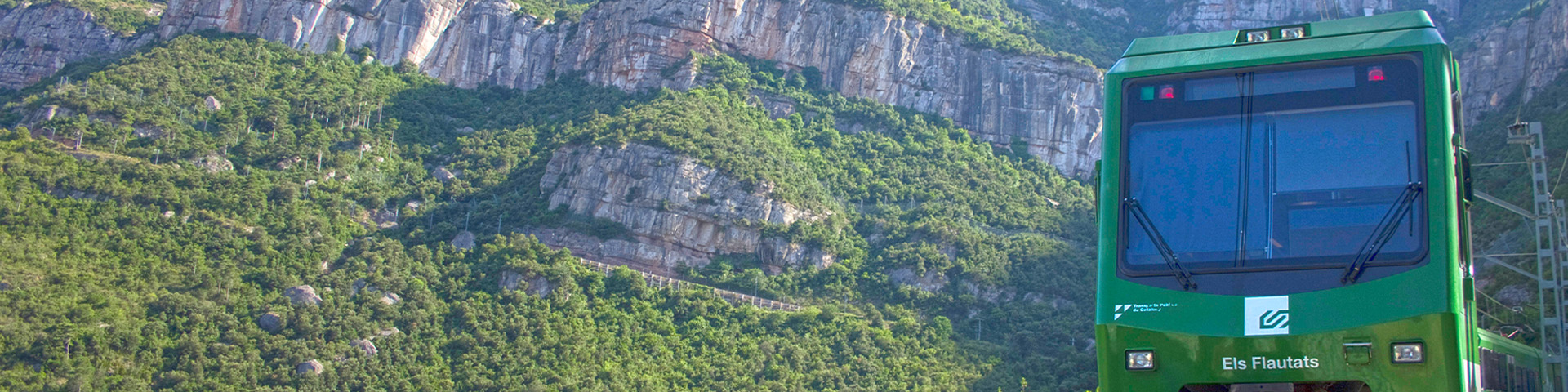
Turistren Passport to travel across Catalonia by rail.
Discounts on Montserrat, Núria, the Cement Train, and the Lake Train
Catalonia is reinforcing its railway tourism offering thanks to the Turistren Passport, a digital platform designed to structure a travel experience connected with the area’s natural, cultural, and scenic heritage. The initiative, promoted by Ferrocarriles de la Generalitat de Cataluña (FGC), transforms these tourist journeys into an invitation to link routes, discover new places, and extend the traveler’s connection with destinations, while also fostering economic activity in inland and mountain regions. This project’s scale is best understood by considering the scope of the FGC tourist network, which serves approximately 2.2 million users annually across tourist transportation, mountain stations, and the Montsec Astronomical Park. Within this context, the Turistren Passport acts as a cohesive element that organizes the traveler’s experience and transforms it into a progressive itinerary, with discounts of up to 20% from the first trip onward, and a digital mechanism based on registration, route stamping with QR codes, and benefits for future getaways. The passport groups together 6 of the 8 tourist transport services managed by FGC, organized into four major railway experiences that encapsulate much of the diversity of the Catalan territory. In Montserrat, the Rack Railway and the Funiculars provide access to one of Catalonia’s most recognizable landmarks, a space where mountain, spirituality, and landscape intertwine across a route packed full of symbolic significance. In Ripollés, the Núria Rack Railway offers a unique dimension: singular access to a high mountain environment and a journey that turns travel into a gradual immersion within the landscape.

Meanwhile, the Lakes Train reveals one of the most scenic itineraries in the network: 55 miles between Lleida and La Pobla de Segur, crossing Segrià, Noguera, and the Montsec area before entering Pallars Jussà. The route passes by four lakes, 40 tunnels, and 75 bridges. Over approximately two hours of travel, it presents a panoramic view of the transition between the Lleida Plain and the Pre-Pyrenees, while an onboard guide offers an in-depth understanding of the landscape and history of the tourist train. The Cement Train, in Bergadá, adds a heritage and industrial interpretation to the experience. Its journey links railway heritage, forests, and old facilities related to industrial activity, along a route that becomes even more attractive in 2026 with increased services associated with the Gaudí Year and a connection to the Artigas Gardens.
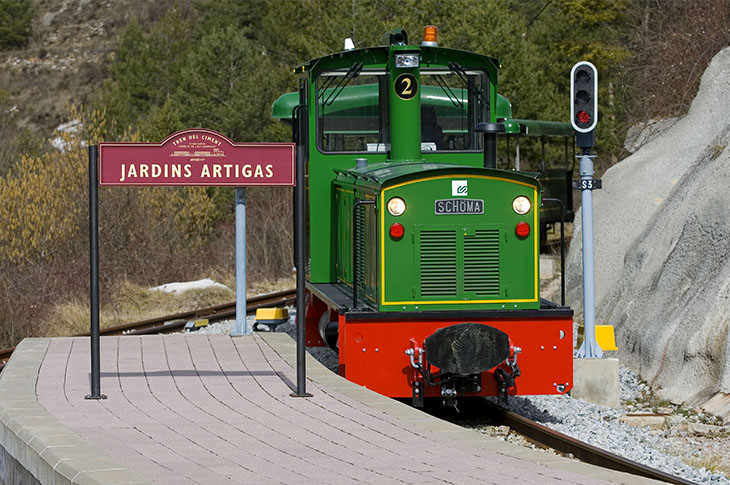
Through this approach, the Turistren Passport not only encourages repeat trips but also offers a more leisurely, sensory way to explore Catalonia, linked to the territory. The result is a proposal that turns the tourist railway into a product, a narrative, and a revitalization tool—all at once.
Location
Catalonia is located in the northeast of Spain, bordered by France, Andorra, Aragón, the Region of Valencia, and the Mediterranean Sea. Its main access points are the AP–7, AP–2, and A–2 highways; the airports of Barcelona–El Prat, Girona–Costa Brava, Reus, and Lleida–Alguaire; the ports of Barcelona and Tarragona; and the Barcelona-Sants station as a railway hub.