
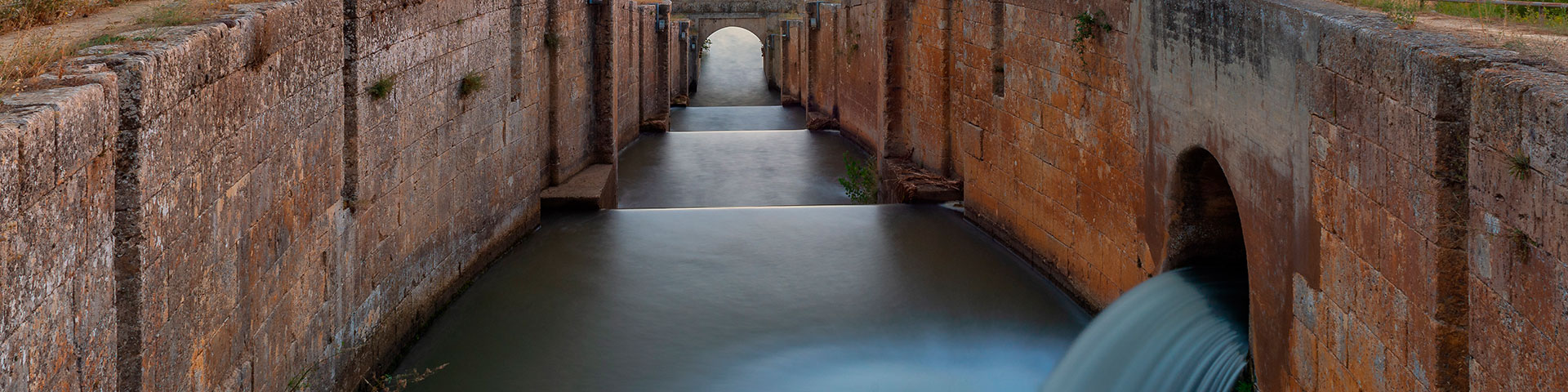
The Canal of Castilla, a blue corridor to explore Spain's inland nature
A journey along the great Castilian hydraulic artery, across locks, trails, and historic villages
As a masterpiece of 18th-century hydraulic engineering declared a Site of Cultural Interest, the Canal of Castilla makes its way through silent landscapes and the ancient towns of Palencia, Burgos, and Valladolid, offering a travel experience that combines nature, history, and serenity. Its more than 120 navigable miles allow visitors to explore locks, docks, and centuries-old branches on foot, by bicycle, boat, or canoe, inviting travelers to discover an unexpectedly blue vision of Castile and León. The Canal of Castilla reveals itself as a waterway that shapes the territory and exposes the ingenuity of a project conceived during the 18th century to transform the Castilian economy. From its three branches—North, Campos, and South—visitors will discover the opportunity to immerse themselves in the tranquil life of the provinces it crosses, always following the common thread of the canal itself.
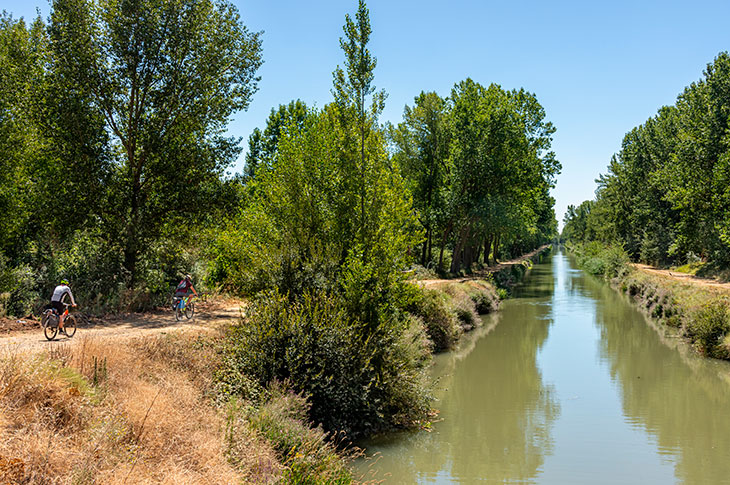
Those who opt to set off on a hike will discover one of the most comprehensive ways to experience this landscape. The various stages allow travelers to progress among poplars, aspens, and villages linked to inland navigation, while the locks set the pace for this journey. At an average of 15 to 18 miles per day, the complete route can be covered in less than eight days, with enough time to appreciate both the fauna that inhabits its banks and the Romanesque, Gothic, or vernacular architectural profiles that emerge in the surrounding towns. Spring and summer are especially favorable seasons to embark on the journey, though the canal maintains its appeal all year round. Cycling, meanwhile, offers a different interpretation of the landscape. The towpaths ensure smooth cycling among oval or rectangular locks, old flour mills, historic docks, and tourist piers. At a steady pace of 6 miles per hour, the route can be completed in four days, simultaneously enjoying the monumental heritage dotted along the way and the natural diversity that characterizes this great aquatic backbone. The perspective from the waterway itself unveils its maximum charm during boat journeys. Boats such as those of Juan de Homar or Marqués de la Ensenada offer short cruises that allow tourists to observe the locks from within and relive the spirit of ancient river transport. For those seeking an even closer connection with the water, the option of canoeing guarantees a gentle and silent journey—ideal for birdwatching or gliding alongside the ashlar walls that define the canal’s course. In short, exploring the Canal of Castilla means discovering a land in which hydraulic history coexists with the everyday life of its villages, and where each lock, bridge, or bend in the watercourse invites travelers to move at a leisurely pace with eyes ever peeled. A navigable corridor that makes Castile and León a surprising destination for those seeking beauty, authenticity, and tranquility.