
Cantabria, a destination discovered underground
Paleolithic art, living geology, and unique experiences in one of Europe's great hidden treasures
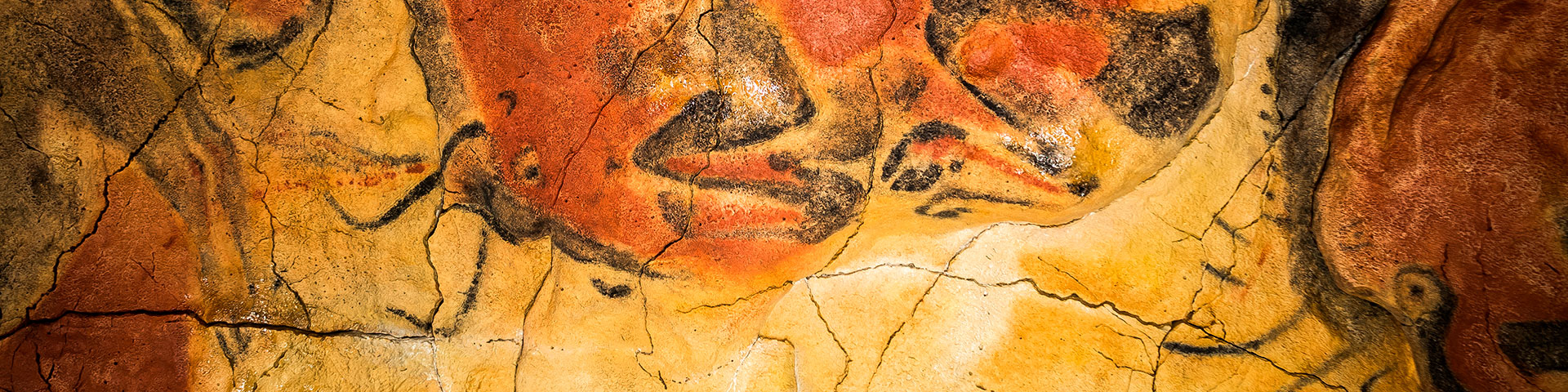
Beneath the green landscapes and the Atlantic coast of the province of Cantabria lies one of the most wonderful underground heritages in the world: more than 60 caves with Paleolithic rock art – ten of them designated as UNESCO World Heritage Sites – and thousands of geological caverns that make the region a unique destination to journey to the origin of art, spirituality, and the relationship between humans and nature, through intimate, thrilling, and deeply transformative experiences. Exploring the caves of Cantabria involves descending into a territory where time seems to have stood still. Nowhere else in Europe is there such a high concentration of caverns with Paleolithic rock art, a legacy spanning tens of thousands of years that allows a step-by-step journey through the cultural and symbolic evolution of humanity. Altamira is a great universal icon. Its polychrome bison, faithfully reproduced in the Neocave, continue to move visitors with their expressive strength and the technical sophistication achieved more than 14,000 years ago. The journey expands in Monte Castillo, located in Puente Viesgo, one of the continent's most interesting prehistoric complexes. In the cave of El Castillo, the continuity of human occupation for over 150,000 years turns this visit into a true lesson of living history, while Las Monedas amazes with a combination of some of the latest artistic manifestations of the Paleolithic with a tour among stalactites, flowstones, and extraordinarily beautiful columns. In the Asón Valley, the experience takes on a more intimate feel. Covalanas provides an opportunity for close observation of the emblematic red deer, created using the dotting technique, one of Europe's oldest and most delicate artistic expressions. Very close by, Cullalvera impresses with its monumental dimensions and an active karst system revealed through a sensory journey involving water, light, and sound beneath a gigantic entrance emerging from a Cantabrian oak forest.
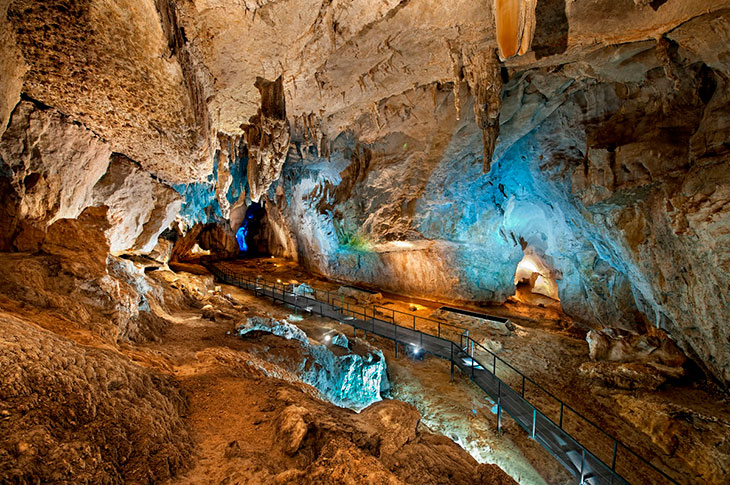
Other caves convey a more symbolic and spiritual dimension. In Hornos de la Peña, visitors pass through a narrow corridor to reach a space filled with mystery, where a human figure with raised arms suggests ancient rituals. In Chufín, crawling access and the presence of possible erotic representations reinforce the feeling of entering a reserved, almost secret place where art and nature converse beside an interior lake. Not all caves are open to visitors. La Garma, La Pasiega, and Las Chimeneas remain closed to the public to ensure their preservation, although their existence – with intact sites and rock art ensembles still under study – reinforces Cantabria as one of the great scientific laboratories of European Prehistory. The route culminates at El Soplao, a true geological cathedral where eccentric formations defy gravity and former mining activity coexists with accessible trails and adventure experiences. Here, nature demonstrates that it also knows how to create art.
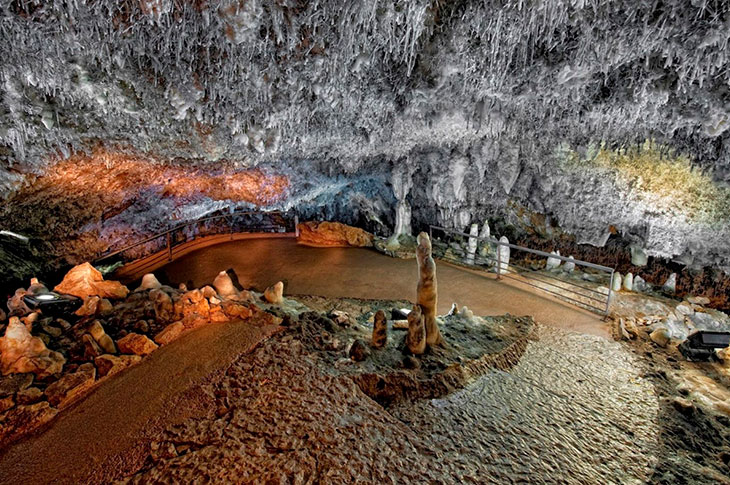
Exploring subterranean Cantabria offers a profound, sensory, and authentic experience, where the past continues to breathe beneath the rock and every descent leaves an indelible mark on the traveler’s memory. Location Cantabria is located in northern Spain, along the Cantabrian coast, bordered by the Cantabrian Sea, Asturias, Castile and León, and the Basque Country. It is accessible via the A–8 and A–67 highways, Seve Ballesteros–Santander airport, Santander port, and the Renfe and Cercanías rail networks.