

The Canary Islands: Europe’s premier paradise for whale and dolphin watching in their natural habitat
A destination where vibrant marine biodiversity meets a deep respect for nature
In the Canary Islands, the ocean transforms into a vibrant stage where over 30 species of cetaceans roam the waters year-round. Whales, dolphins, sperm whales and tropical pilot whales are frequently seen swimming freely just off the coast, in one of the world’s most captivating marine havens. Here, responsible wildlife watching and exhilarating encounters come together to create an unforgettable Atlantic experience. The archipelago’s surrounding waters are a paradise of biodiversity: temperate, crystal-clear and deep, home to permanent residents like bottlenose dolphins and pilot whales, alongside occasional visitors such as the blue whale and Bryde’s whale. In fact, you can spot up to nine different species in just one day. The secret lies in the islands’ unique position, where cold and warm waters come together, creating currents that foster a rich, vibrant ecosystem offering cetaceans abundant food, safe migratory routes and peaceful refuge. It is no coincidence that the Canary Islands are Europe’s top destination for spotting these majestic sea giants. Whale-watching tours typically set sail from various ports across the archipelago, with particular focus on those in the southern regions of Tenerife, Gran Canaria and La Gomera. These excursions are expertly guided by specialised companies, strictly adhering to guidelines that ensure the safety and peace of mind of these magnificent creatures. Authorised vessels proudly display the Blue Boat certification that ensures respect for the environment and following best practices: switching off engines when cetaceans approach, maintaining a safe distance and limiting observation time, measures that guarantee a harmonious coexistence between visitors and marine wildlife.
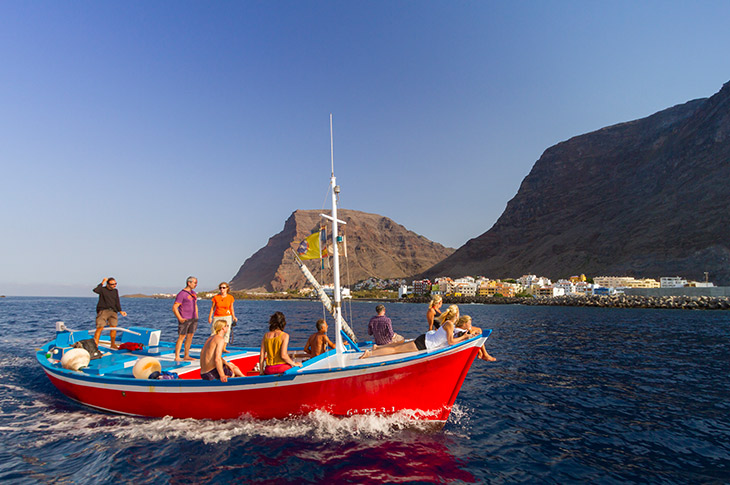
The spectacle, however, goes beyond the visual. Watching a pod of dolphins glide through the waves at dawn, witnessing the slow rise of a pilot whale’s fin, or gazing at a whale’s blow on the horizon awakens a profound connection with the ocean. Each excursion becomes a powerful lesson in respect and environmental awareness. Whale watching in the Canary Islands is much more than just a tourist activity, it is an eye-opening and transformative experience. It is about listening to the heartbeat of the Atlantic, feeling the vibrant energy of marine life and realising that true luxury lies in enjoying nature without upsetting its delicate balance. On these islands, thrill and sustainability sail together on the same vessel. Location The Canary Islands archipelago is located in the Atlantic Ocean, southwest of the Iberian Peninsula and northwest of Africa. The islands have international airports in Tenerife, Gran Canaria, Lanzarote, Fuerteventura and La Palma, along with seaports in Santa Cruz de Tenerife and Las Palmas.