
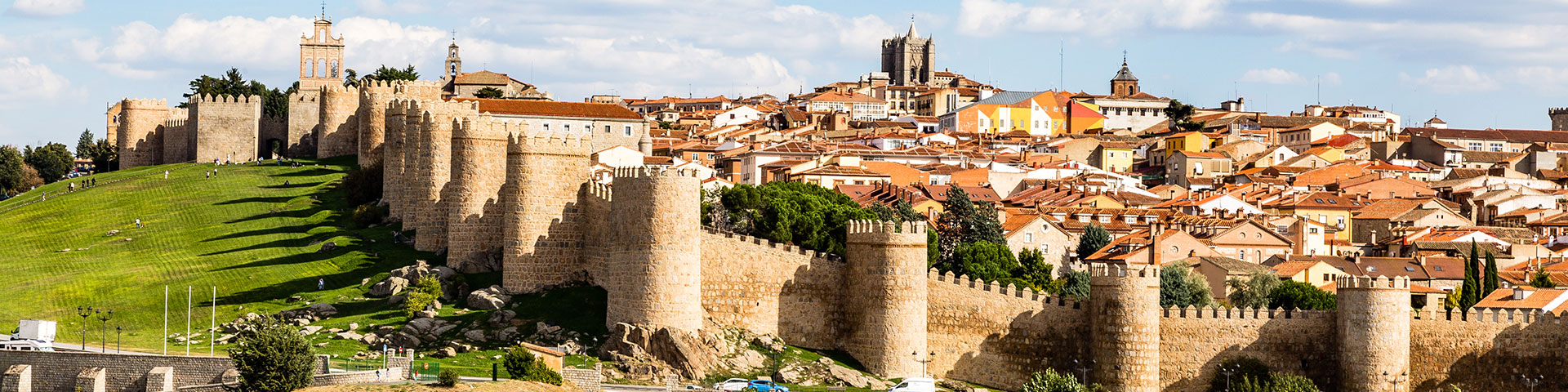
Ávila: heritage, inclusion and a wall that can be experienced without barriers
The walled city that makes accessible tourism an exemplary and universal model
Ávila presents itself to international travelers as one of the most accessible cities in the country thanks to its institutional commitment to incorporate inclusion in every corner of its spectacular heritage. Its walls, historic center and a network of adapted services provide a sensory and cultural experience. Visitors find barrier-free spaces, specific resources and an exemplary vision that makes it a highly recommended destination for those seeking authenticity, history and universal accessibility.
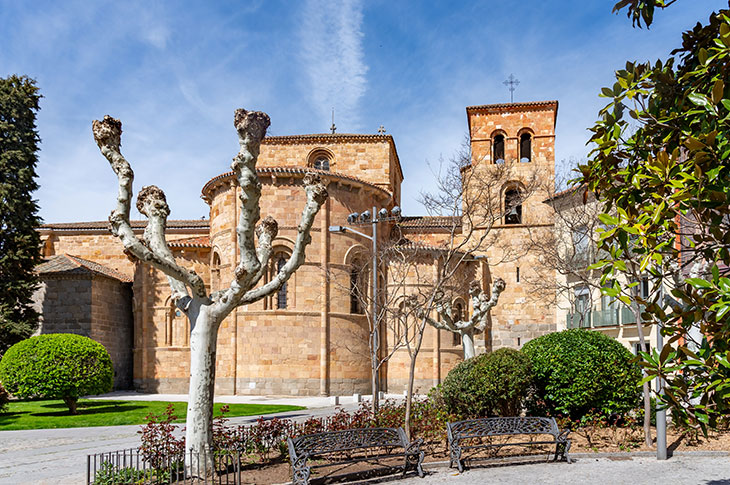
Ávila, a UNESCO World Heritage City, demonstrates that historical heritage can be accessible without losing its essence. This experience begins at the Visitor Reception Center, inaugurated in 2004 and transformed into a key space to guide and accompany tourists with reduced mobility, sensory or intellectual disabilities. Here, adapted brochures and maps are provided, a free wheelchair loan service is available, along with tools designed to enrich the visit, such as the 10 tactile models representing the city wall and each of its gates in detail, as well as documentary projections and a painting of Saint Teresa created with the Didú technique to be appreciated by touch. The city invites travelers to delve into its historical layout starting from Ronda Vieja, skirting the imposing wall and crossing the San Vicente Garden to access the center through the Flour Weight Gate. This point of access leads to Cathedral Square, a space from which the main car-free streets that structure the urban center depart. Reyes Católicos, Alemania or Comuneros de Castilla form an accessible corridor that ends at the Mercado Chico Square, the City Council offices and the point from which the city opens up to squares, palaces and sites steeped in history. The Paseo del Rastro, one of Ávila's main urban walkways, allows visitors to walk alongside the wall while advancing barrier-free towards the Gate of the Saint and the convent linked to Saint Teresa. This accessible continuity is reinforced by adapted public restrooms and cultural landmarks such as the Episcopio, the Church of San Pedro and the Superunda Palace, which are all part of a group of monuments prepared to welcome all travelers.
One of the greatest symbols of Ávila's inclusive commitment is the accessible section of the city wall, located at the Gate of the Bridge. With ramps and an elevator, wheelchair users can visit a section of the battlement walk and enjoy panoramic views of the city from above. This space also has its own multimedia information point, ensuring independence and a complete experience. This section can be accessed from the city center by walking or using a wheelchair, by city bus or with eurotaxi, which facilitates visits according to each traveler’s needs. Ávila has therefore firmly established a model of accessible tourism that transforms the way of discovering a unique walled city, demonstrating that history can also be fully inclusive and that its heritage is designed for everyone.
Location
Ávila is located in the center of Spain, in the autonomous community of Castile and León. It can be accessed via the A–51 and AP–51 highways, as well as the N–110 road. The city has a train station offering both medium- and long-distance services. The nearest airports are Madrid–Barajas Adolfo Suárez and Valladolid.