
Asturias, industrial powerhouse turned essential cultural destination
Mines, museums, and landscapes rub shoulders within the same region
In the Principality of Asturias, nature becomes the stage for an exceptional industrial legacy, where mines, historic factories, and railways tell stories of centuries of human ingenuity and transformation. This territory invites tourists to explore spaces that bring together workers' memory, monumental architecture, and mountain landscapes, crafting a profound and distinctive cultural experience for the international traveler. This northern destination reveals an industrial heritage as vast as it is moving: a universe in which the history of labor and innovation naturally integrates into its green valleys, mining basins, and protected landscapes. With more than 1,700 listed items, the region offers a real immersion in this culture that has shaped the lives of entire generations and today represents one of Asturias' most remarkable attractions. The narrative begins in iconic settings where mining and steelmaking have left an indelible mark. Museums such as the Asturias Mining and Industry Museum (MUMI) in L’Entregu (San Martín del Rey Aurelio), allow visitors to understand the harsh nature and complexity of coal extraction, while the Asturias Steelworks Museum (MUSI), in Langreo, highlights the role of factories that drove regional economic development.
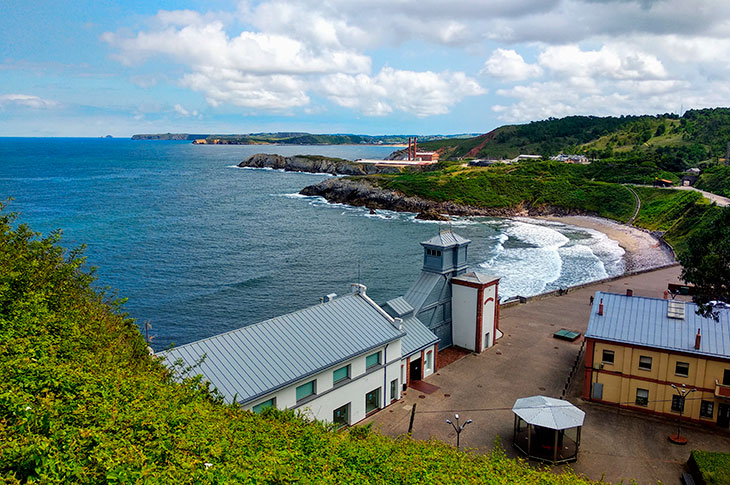
Here, visitors can also discover the human dimension of this legacy. In Mieres, the Bustiello Mining Village reflects how workers’ lives, architecture, and social planning were fundamental aspects of mining activity. In Langreo, the San Luis Shaft offers a complex of buildings representative of Asturian mining, while the Sotón Shaft (San Martín del Rey Aurelio) proposes a unique activity: descending into its galleries alongside former miners to experience the atmosphere of a mine that was active for decades. Industrial treasures can also be found along the coast. In Castrillón, the Arnao Mine, considered the oldest underwater mine in Europe, allows visitors to make their way down into galleries dug out under the sea and discover the origins of the coal industry, documented on this site since the 16th century. Near Villaviciosa, the historic El Gaitero factory reminds us that cider production also forms part of this great industrial narrative linked to trades, tradition, and a deeply rooted identity.
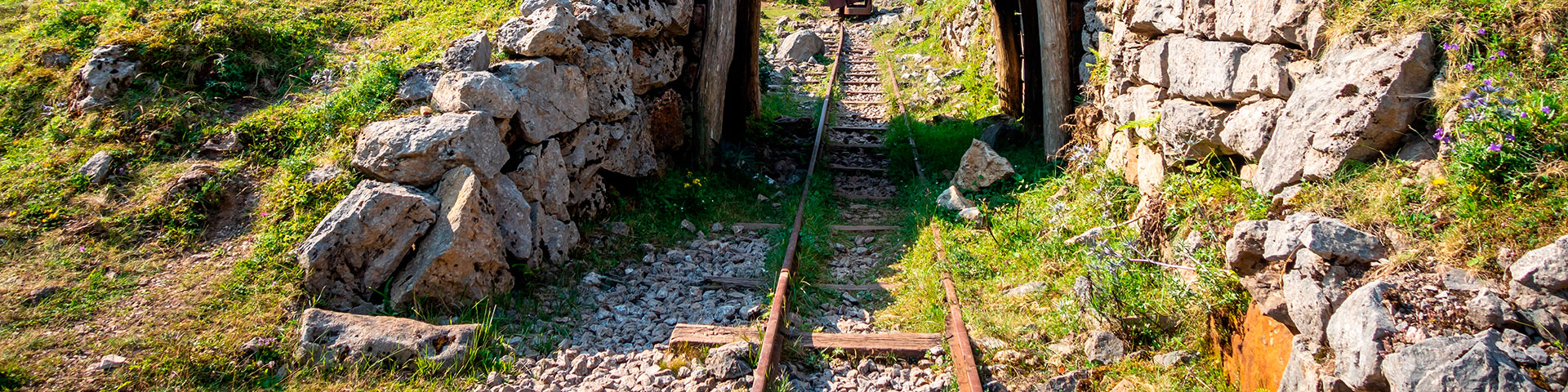
Nature—always center stage in Asturias—provides a stunning setting for this heritage. The Bear Trail, following the old mining railway route, winds through forests, gorges, and tunnels, creating a route along which history and landscape blend in the most organic way. In Somiedo, the La Malva Hydroelectric Power Plant demonstrates how 20th-century engineering was successfully incorporated with respect for the mountain environment. Industrial tourism in the Principality of Asturias is neither a technical journey nor a conventional museum route: it is an experience that connects past and present through emotion, memory, and the power of the landscape. At every mine, settlement, and greenway, visitors explore a territory that not only preserves its history, but asserts it as one of its main cultural assets.
Location
Asturias, along the Cantabrian coast of northern Spain, is connected via the A–8 and A–66 highways, Asturias Airport, and the ports of Gijón and Avilés. The Renfe and FEVE rail networks connect Oviedo, Gijón, and other municipalities with neighboring towns, facilitating both land and sea access to the region.