
Astrotourism in Green Spain: the perfect regions to discover the night sky
Forests, peaks, rural municipalities and the open sea sketch out a map for stargazing in the north of the country
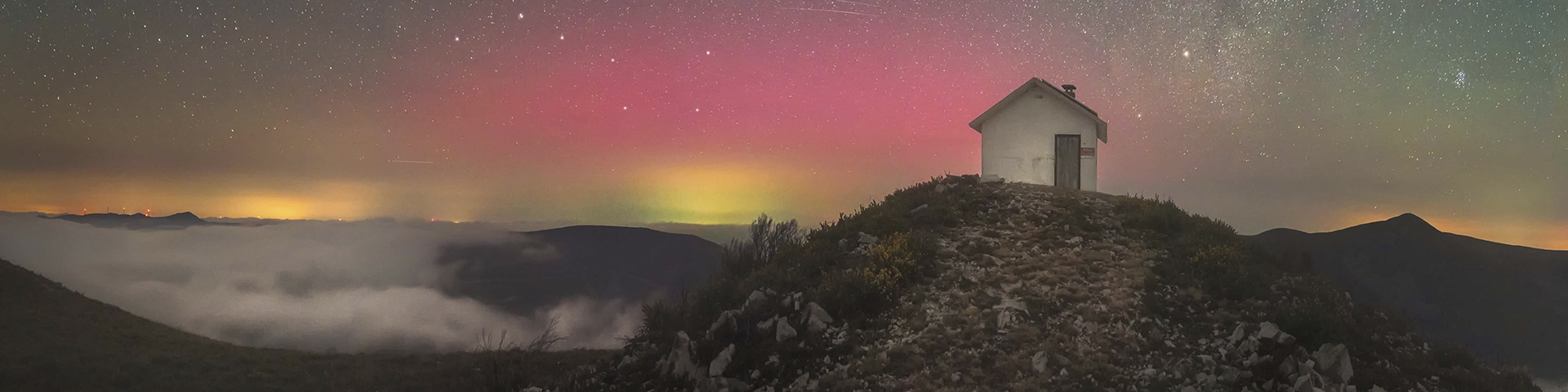
When night falls, Green Spain invites us to look at nature from another angle: with our gaze to the sky. Far from urban light pollution, the constellations and the Milky Way take centre stage above landscapes that stretch from mountains to sea. Astronomical observation can be combined with hiking or cycling routes and visits to rural heritage sites. As darkness settles on the land, nighttime photography and outings to the sea expand the experience, while outreach incentives help us understand more about what shines above our heads. Álava, in the Basque Country, features several locations especially suited to combining nature and astronomical observation. The Izki Natural Park, in Montaña Alavesa, has a cluster of forests, meadows and other hubs surrounded by nature that allow onlookers to make out constellations, track satellites and watch meteor showers thanks to the virtually nonexistent light pollution. The Behatokizki Astronomical Observatory, in Korres, includes an educational component with solar observations, night sessions, photographic exhibitions and activities centred around planets and eclipses. The experience continues in the Valderejo Natural Park, where the Milky Way can be seen with remarkable clarity, and on the Basque-Navarre Railway Greenway, which offers the option to link daytime cycling or hiking with a nighttime stop beneath the stars. The Santa Catalina Botanical Garden combines history, botany and astronomy in a space certified as a Starlight Stellar Park by the Starlight Foundation. In Biscay, Ocean World, which holds the Starlight certification, draws the gaze towards the coast with experiences that unite the sea, night observation and scientific outreach. In Cantabria, astrotourism enthusiasts will find one of the most enticing landscapes in the Áliva Meadows, between the Central and Eastern massifs of the Picos de Europa. At 1,600 metres of altitude and with virtually no nearby artificial lighting, the environment offers excellent conditions for observing the deep sky and practising long-exposure photography. The arrival itself is part of the experience: from Fuente Dé, the cable car ascends 753 metres in just four minutes. During the warmer months, Hotel Áliva serves as a venue for photography workshops, guided tours and nocturnal observation sessions. It is currently closed for renovations, with reopening planned for next summer. Saja-Besaya Natural Park, Liébana, the Picos de Europa and the Western Coast expand the Cantabrian map with enclaves where the darkness makes it possible to enjoy phenomena such as the Perseids. Galicia adds a unique dimension to stargazing tourism, permitting contemplation of the skies from the coast or even a boat. At Barra Cove and in the surroundings of Cape Home, opposite the Atlantic Islands Maritime-Terrestrial National Park, the open horizon to the west and the possibility to leave behind the coastal light pollution create an experience marked by silence, the movement of water and the vastness of the sky.
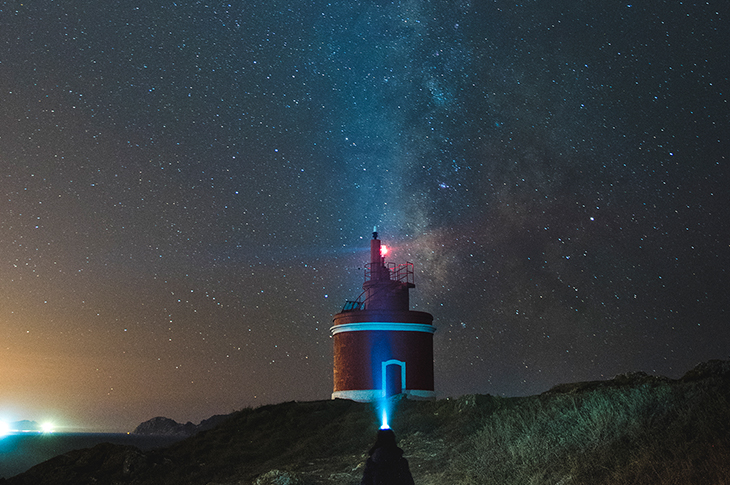
Outings departing from the seaports of Vigo or Cangas allow participants to search for areas of marine darkness where observation takes on a completely sensory dimension. During the day, beaches such as Melide or Barra complete the trip. Galicia also includes resources linked to Starlight tourism, with observation points, activities and hotels that expand the possibilities for connecting with the night sky. Asturias boasts a landmark in Allande, recognized as Spain's first Starlight Municipality.. Its mid-mountain terrain and low urban pressure create favourable conditions for viewing the Milky Way, planets and star clusters from elevated points such as the Ribón Viewpoint, Bustantigo or the Palo Pass. Workshops, night tours and events such as Allande Stars bring astronomy closer to travellers, while the stay can be supplemented with villages, traditional architecture, the Palacio de Cienfuegos or the San Chuis hillfort, noted as an attractive spot for astrophotography. In Green Spain, the night takes on its own distinctive character, as each territory proposes a different way to look to the heavens, whether from a forest in Álava, a high mountain meadow, a rural municipality in Asturias or a deck looking out over the Atlantic.