
Aragon, a land of water and rock to explore European canyoning
Unique landscapes and descents for all levels in one of Europe's premier destinations
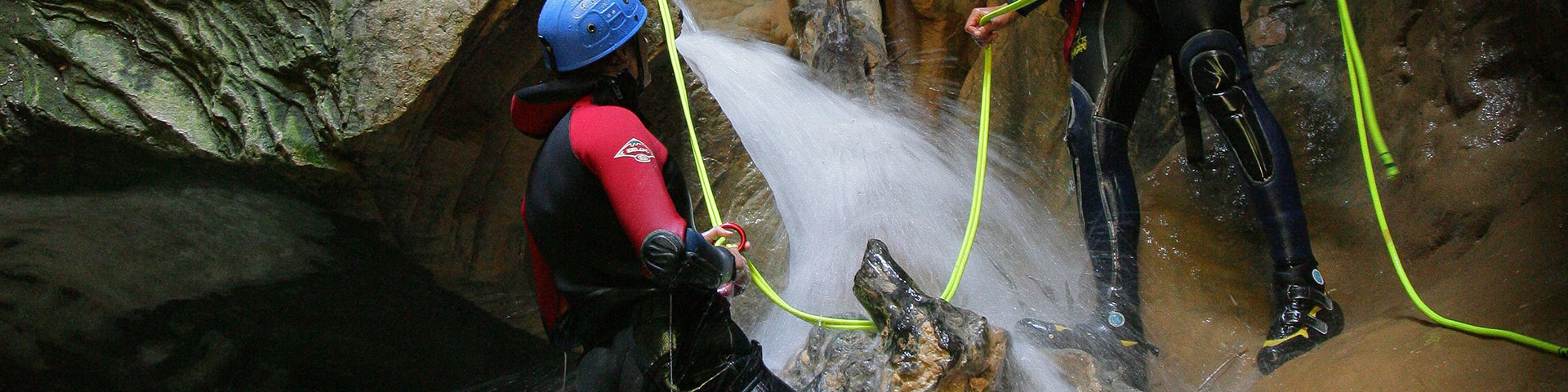
Aragon has established itself as one of Europe's most attractive destinations for those seeking active experiences in the heart of nature, with the Sierra de Guara and the Pyrenees standing out as major international canyoning landmarks. Among limestone gorges, emerald-toned pools, narrow abseils, and trails that lead into stunning landscapes of great geological value, the community offers itineraries for all levels, guided by professionals who ensure safe and accessible practice. Canyoning in Aragon: an accessible adventure in landscapes of European significance Canyoning has become established as one of the most representative activities of nature tourism in Aragon, a region where this sport has found some of its best expressions. Practice consists of descending canyons and gorges following the course of water or dry beds, combining progression techniques such as rappelling, swimming, or jumps—although these are always optional—into natural pools. This diversity of settings and levels has boosted the interest of international travelers seeking direct contact with mountain and water in landscapes of high scenic value. The Sierra de Guara, considered the birthplace of canyoning in Europe, is the hub of a unique range of itineraries. It has over 80,000 protected hectares encompassing deep gorges, conglomerate rock formations, rivers that have carved narrow limestone corridors, and flora and fauna characteristic of the Aragonese Pre-Pyrenees. Places like the Vero River, Formiga, Peonera, or Oscuros de Balcés provide intermediate-level descents, while other routes, such as Gorgas Negras or Upper Mascún, are reserved for experienced canyoners looking for more technically demanding journeys.
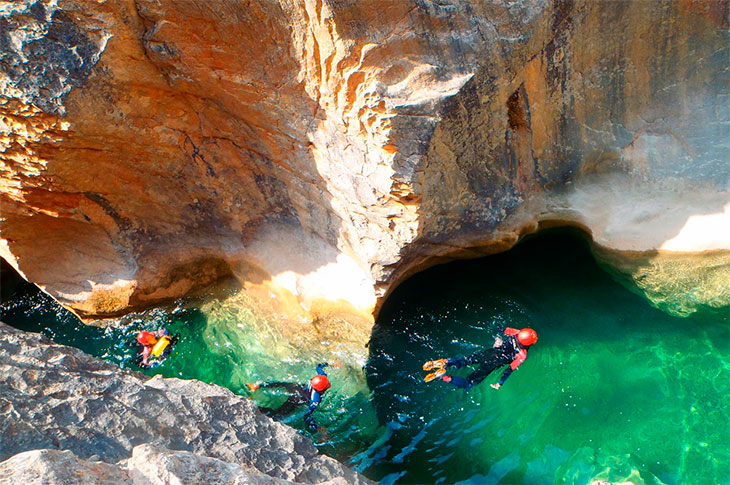
In the Pyrenees, enthusiasts can find equally diverse options. Valleys such as Tena, Ordesa, or Benasque host canyons suitable both for beginners and for those seeking high levels of difficulty. Among the most well-known is the Gorgol canyon, in Tramacastilla de Tena, whose descent combines learning basic rappelling techniques with sections of aquatic progression and a final route that ends in a large pool after a fifteen-meter rappel. For those approaching this activity for the first time, Aragon offers options designed for a wide audience: families with children from 6 years old, groups of friends, or couples seeking a simple and safe experience. The most basic level descents run through visually striking gorges, featuring natural slides, clear water pools, and flooded caves, accessible without prior experience. Specialized guides always ensure responsible practice, teaching essential techniques before and during the activity, with the only requirement being the ability to swim. The combination of landscape, accessibility, and professionalism has made Aragon a benchmark canyoning destination throughout Europe, where every season thousands of visitors discover a different way to explore the mountain: moving through the very heart of its rivers. Location Aragon is located in the northeast of Spain and borders France, the Region of Valencia, Catalonia, Castilla-La Mancha, Castile and Leon, La Rioja, and Navarre. Its main access points are the AP–2 and AP–68 highways, Zaragoza Airport, and the Madrid–Zaragoza–Barcelona high-speed train network.