
White Villages of Andalusia: a journey to the heart of the South
Towns with centuries of history reveal their identity among lime, hills, and open horizons
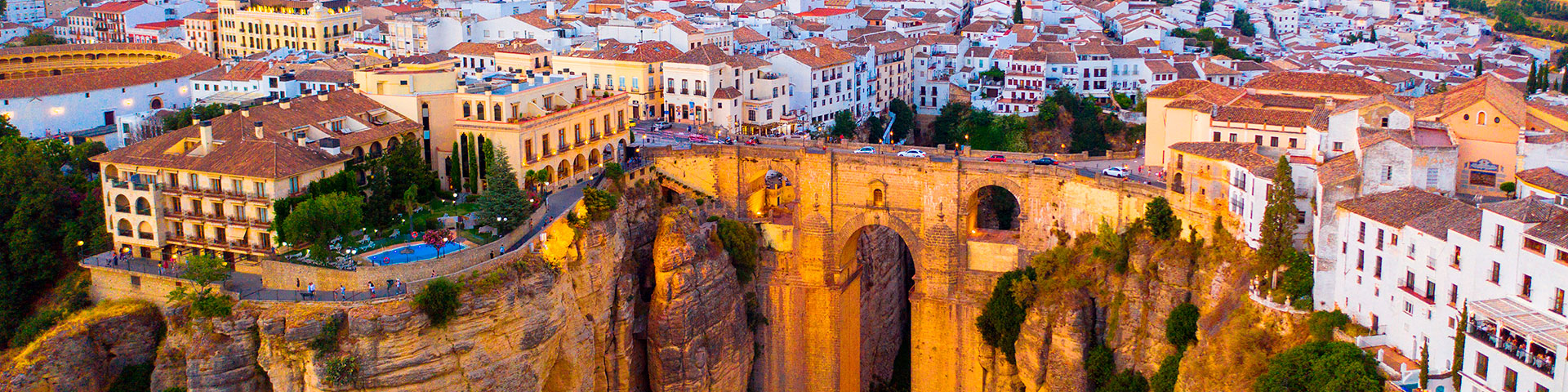
The White Villages of Andalusia unite some of the most representative towns in southern Spain, characterized by their whitewashed architecture, historical heritage, and close relationship with the landscape. Spread across the provinces of Cadiz and Malaga, these urban centers offer a measured journey through centuries of history, tradition, and culture, via urban layouts of medieval origin with Andalusian roots. The route is organized around municipalities that maintain a strong and distinctive personality, united by a common aesthetic and a deep historical continuity. The omnipresent lime white acts as a unifying thread among villages settled in natural surroundings of remarkable scenic value, where light and terrain enhance façades and streets. Ronda is one of the major landmarks of this area. In its vicinity lies Acinipo, an ancient Roman city located in Malaga, which highlights the historical importance of the area and its role as a strategic enclave since Antiquity. Strolling through this landscape involves entering a superimposition of times, where the Roman imprint coexists with later stages and the current life of the municipality. Medina Sidonia offers another complementary perspective on Andalusian historical legacy. Nearby are the remains of Asido Caesarina, a city of Roman origin that reinforces the archaeological dimension of the White Villages, especially in the province of Cadiz. This town perfectly encapsulates the essence of the whole: an urban core to be explored on foot, with steep and winding streets leading to natural viewpoints, and spaces of high heritage value.

Beyond these specific sites, the White Villages share a way of life closely linked to the rhythm of the land. Their historic centers invite visitors to explore them without predefined routes, to pause in plazas, and to observe how traditional architecture adapts to the terrain. The Andalusian influence, decisive in its urban configuration, is evident in the street layout and the relationship between houses and their surroundings. The social component is an essential part of this journey. Everyday life, the use of public space, and the close relationship between residents and visitors add a human dimension that complements the heritage interest. The constant presence of activity in streets and squares reinforces the perception of these villages as living spaces. The cuisine and local products complete this experience. Traditional cuisine and regional wines reflect the agricultural and cultural diversity of the area. Sharing a table is part of the journey and helps visitors to understand the identity of the White Villages. Exploring the Andalusian White Villages provides an opportunity to approach a group of towns that can be discovered at a leisurely pace, where each municipality offers its own unique nuance and where the use of the color white, far from homogenizing, highlights the cultural and landscape diversity of the south. Location Andalusia is located in the south of Spain, bordering Portugal, the Mediterranean Sea, and the Atlantic Ocean. It has an extensive road network, high-speed rail connection, and international airports in Seville, Malaga, Granada, Jerez, and Almeria, as well as commercial and tourist ports on the Atlantic and Mediterranean coasts.