
Thirteen routes to discover Galicia by train: lighthouses, monasteries, and vineyards
Themed routes between the Atlantic coast and the Galician wine-growing hinterland
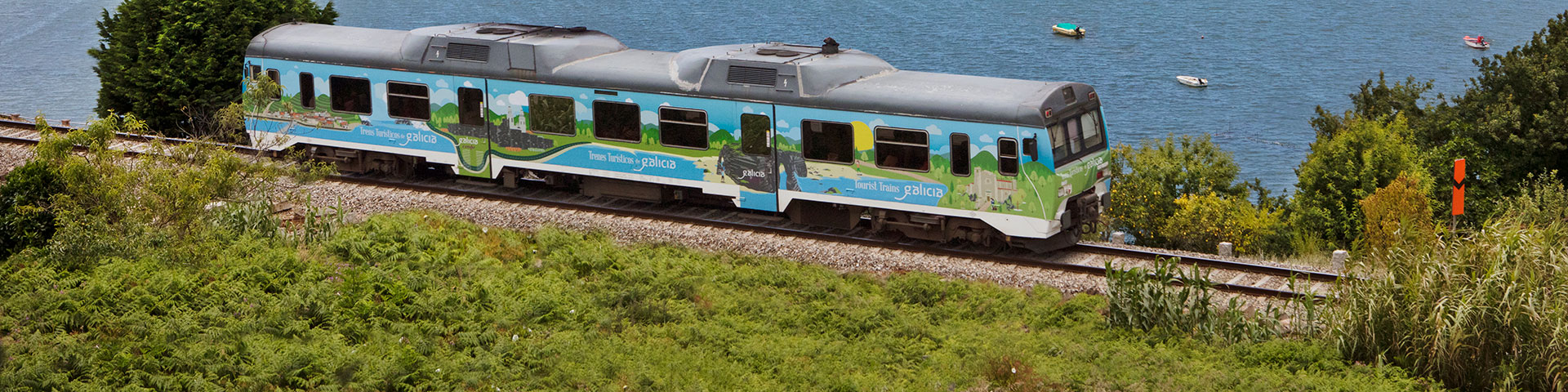
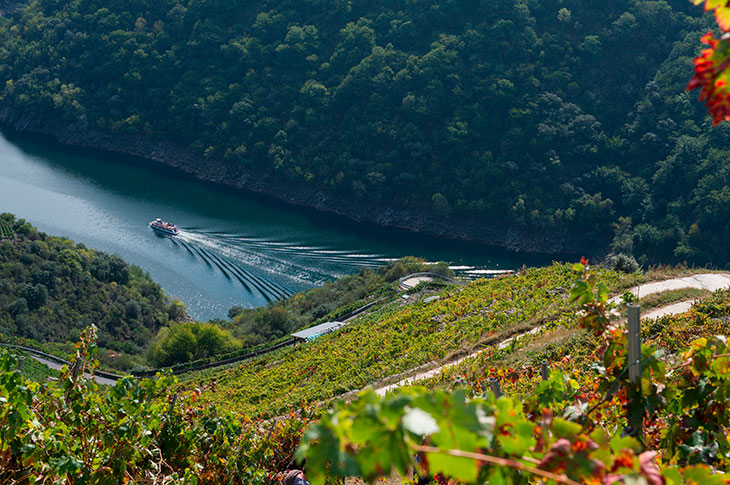
The itineraries of Renfe’s tourist trains that travel through Galicia offer up a unique and authentic way to explore the territory through initiatives that combine landscape, heritage, culture, and gastronomy. Thirteen different railway routes connect some of the most representative sites in the community, from medieval monasteries and historic vineyards to Atlantic lighthouses and botanical gardens. As a result, the train journey becomes a gateway to Galician cultural and natural diversity. Exploring the region aboard a tourist train allows tourists to discover the territory from a leisurely perspective, as the journey itself forms an essential part of the experience. These railway routes combine train travel with guided tours, visits to historic towns, and river crossings, shaping itineraries that connect some of the most emblematic landscapes and traditions of the Galician community. In 2026, a total of 2,530 places will be offered, distributed across 13 routes and 33 departures. The Atlantic coast takes center stage in one of the most spectacular journeys along the Lighthouse Route, leading to the northernmost point of the Iberian Peninsula. This itinerary includes sites such as the Cabo Ortegal Geopark, the Vixía Herbeira Viewpoint—located atop one of Europe’s highest cliffs—the Santo André de Teixido Sanctuary, and the Estaca de Bares Cape. This journey can be complemented with visits to the town of Viveiro and the cliffs of Loiba, where the coastal landscape reveals itself in all its glory. Inland Galicia, meanwhile, offers different perspectives of the territory, especially around the wine-producing regions. In the Ribeira Sacra, the train journey links up with catamaran routes along the Sil River, crossing its well-known canyon where vineyards cling to the slopes in what is known as heroic viticulture. This experience is rounded off with visits to historic wineries and monasteries, such as San Pedro de Rocas, as well as river journeys along the Miño River: the chance to contemplate the landscape from a unique perspective.
Historical heritage steps into the spotlight along recognized itineraries such as the Monasteries Route, which connects spaces like the Pazo de Oca, the Benedictine Carboeiro monastery, and the Cistercian Oseira monastery. In addition to these sites, other routes focused on cultural landscape emerge, such as the Mariñas Route—which traverses Betanzos, Pontedeume, and Ferrol—and the Route of Historic Pazos and Gardens, offering visitors the opportunity to explore botanical spaces like the gardens of Pazo Quinteiro da Cruz, home to over a thousand camellia varieties. Of course, gastronomy occupies a central position in this tourism proposal. The Cheese Route brings visitors closer to artisanal dairies and varieties with protected designation of origin, such as Tetilla, Arzúa-Ulloa, or San Simón da Costa. Meanwhile, other trails explore the world of Galician beer with experiences linked to hop cultivation. Throughout these itineraries, the railway establishes itself as a tool to discover Galicia in a different way, linking landscapes, cities, and traditions. Each journey offers an approach to the territory that combines nature, history, and culture, transforming the trip into a complete experience on rails.
Location
Galicia is located in the northwest of Spain, bordering Portugal, the Atlantic Ocean, and the Cantabrian Sea. It enjoys access via highways (AP–9, A–6, A–52, and A–8); airports in Santiago de Compostela, A Coruña, and Vigo; a medium- and long-distance railway network; and ports in A Coruña, Vigo, Ferrol, and Vilagarcía de Arousa.
Further information
Fares from €50 for adults and €25 for children aged 3 to 13, available to purchase online (other channels may include handling fees). 15% discount for groups of ten or more adults. Tickets are available at Renfe station ticket offices, on the official website, at authorized agencies, and by telephone (+34 912 320 320). Information: +34 912 555 912. You’ll find a timetable here.